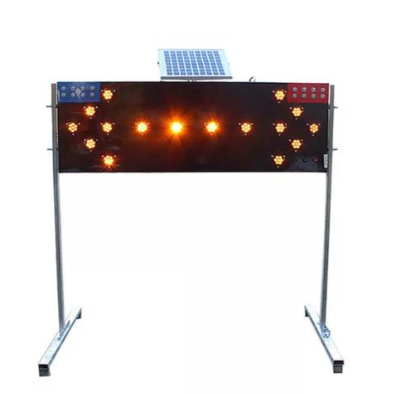
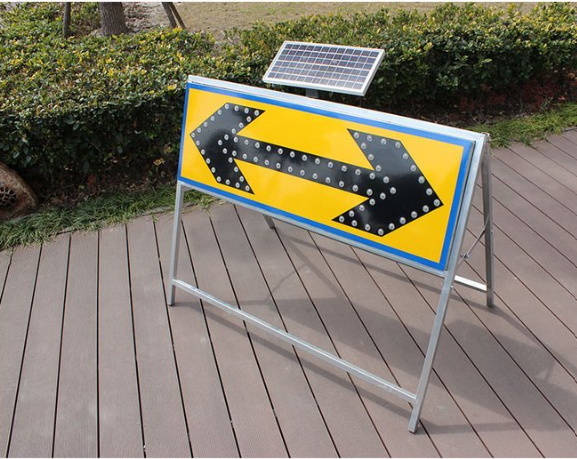





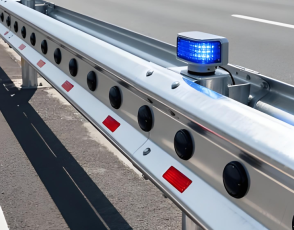
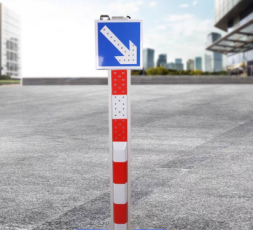
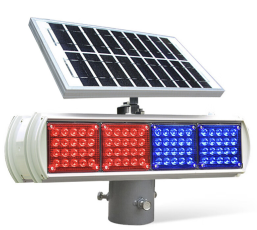
The product has three unique advantages that set it apart from traditional warning signs. First, high-brightness active illumination: equipped with high-power LED lamp beads with a brightness of up to 12000mcd, it provides a visible distance of over 2000 meters at night, which is 5 times that of ordinary reflective signs. The stroboscopic mode can effectively attract drivers' attention, reducing the reaction time to identify warning information by 30%. Second, independent and stable power supply: using a 10W monocrystalline silicon solar panel with a conversion efficiency of 22%, it can fully charge the 12V/24Ah lithium battery within 6 hours of sunlight, supporting continuous operation for 15 days in rainy weather without external power supply. Third, with an IP67 protection grade, it can resist immersion in 1-meter deep water for 30 minutes, and the shell is made of UV-resistant PC material, preventing yellowing and cracking after 5 years of outdoor use. It can be customized with various warning patterns such as speed limits, detours, and construction signs to meet different road warning needs.
The sign has a standard size of 600mm×600mm, with a PC material shell thickness of 5mm, and a backplane made of galvanized steel plate with a thickness of 2mm. The LED lamp beads are SMD type, with a color temperature of 6500K, and support two working modes: constant light and stroboscopic (frequency adjustable between 1-5Hz). The solar panel has a size of 400mm×300mm, and the built-in lithium battery has a cycle life of over 1000 times. The column-mounted installation adopts a 114mm diameter galvanized steel column with a height of 2500mm, and the wall-mounted installation uses expansion bolts with a diameter of 10mm. The operating temperature range is -30℃ to 70℃, and it can withstand wind loads of up to 120km/h. All electrical components meet the requirements of IEC 60529, ensuring safe and reliable operation in various harsh environments.
This product is suitable for a wide range of road scenarios where enhanced visibility is required. In urban roads, it is installed at crossroads, school zones, and construction sections to remind drivers to slow down and pay attention to pedestrians. In expressways, it is used at sudden curve sections, gradient change points, and fog-prone areas to provide early warning and reduce the risk of chain rear-end collisions. In rural areas, it is set up on narrow mountain roads, bridge heads, and intersection without traffic lights to improve the safety level of rural road travel. It can also be used in temporary emergency scenarios such as traffic accident sites and natural disaster relief roads, where it can be quickly installed to guide vehicle diversion. Target industries include municipal traffic management, highway operation and maintenance, and rural road construction.










 Post RFQ


 Chat
Chat


 ALL CATEGORIES