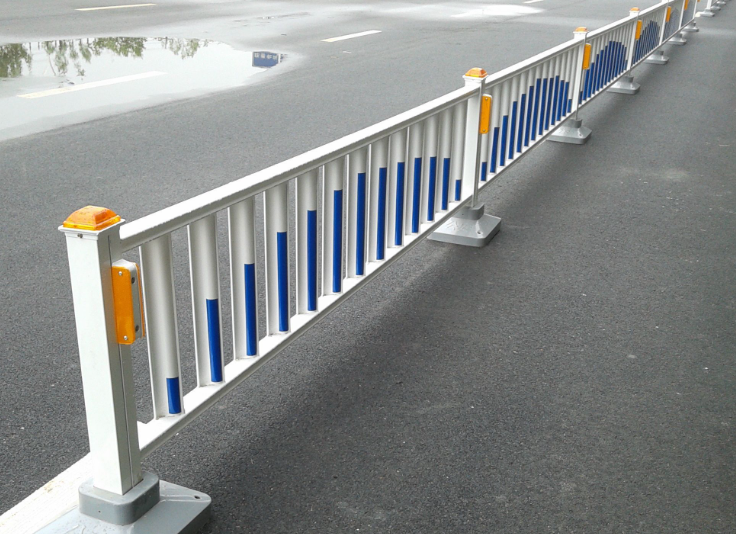
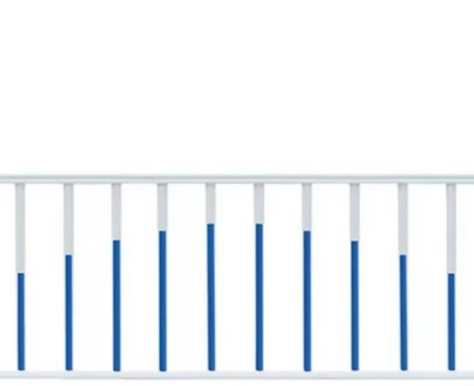





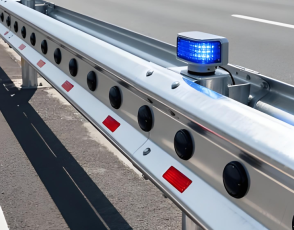
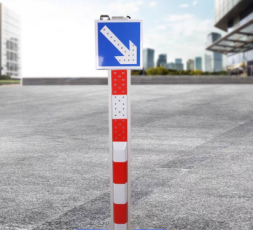
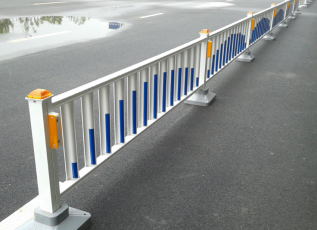

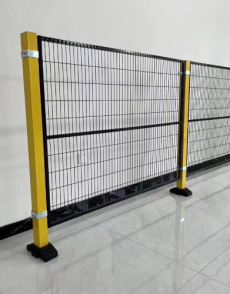
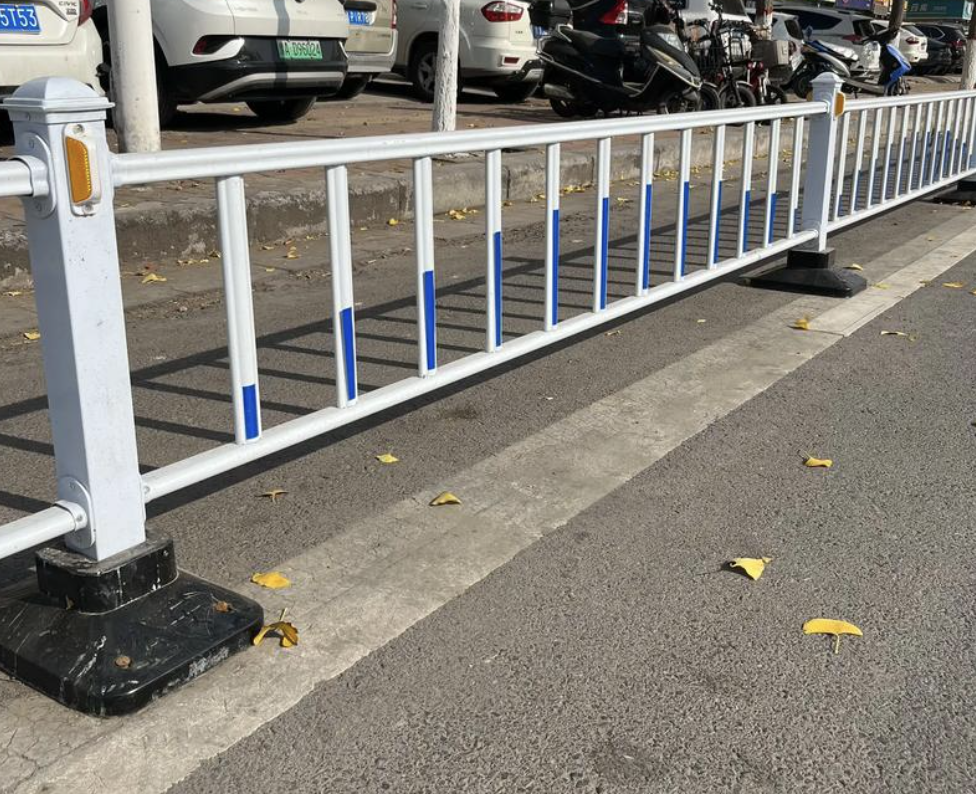
The most notable feature of this barrier is its quick snap-in splicing system, which eliminates the need for tools or fasteners, allowing one person to complete module connection in 5 seconds or less. The HDPE panel is made from food-grade, UV-stabilized material, offering excellent resistance to corrosion, aging, and impact, withstanding collisions from vehicles traveling at speeds of up to 20km/h without deformation. The galvanized steel frame is hot-dip galvanized to prevent rust, ensuring a service life of ≥8 years. Its 1200mm protection height effectively blocks vehicle intrusion into restricted zones, while the wind resistance grade of ≥10 levels ensures stability in strong wind conditions. The high-visibility reflective strips are 150mm wide, complying with ASTM D4956 standards for reflective materials, ensuring visibility from a distance of up to 200 meters. In addition, its modular design allows for flexible configuration to adapt to different road shapes and diversion requirements.
Each standard module of the Modular Emergency Road Diversion Barrier measures 1000mm in length, 2000mm in width, and 1200mm in height, with a 50mm thick HDPE panel and a 2mm thick galvanized steel frame. The HDPE panel has a tensile strength of ≥20MPa and a elongation at break of ≥300%, providing excellent impact absorption. The galvanized steel frame has a zinc coating thickness of ≥80μm, ensuring corrosion resistance for ≥8 years. The reflective strip is made of micro-prismatic reflective material, with a reflectivity of ≥500cd/lx/m², complying with ASTM D4956 standards. Each module weighs 25kg, making it easy to handle by two people, and the snap-in connection system has a bearing capacity of ≥10kN, ensuring stable connection between modules. The barrier can be configured into straight, curved, or angled shapes to adapt to different road scenarios, and its recycling rate of ≥90% allows for material reuse at the end of its service life.
This product is primarily used in emergency traffic control scenarios, including highway accident scenes to prevent secondary collisions, urban road construction sections to guide traffic around work zones, large-scale event sites to manage pedestrian and vehicle flow, and scenic area roads to restrict access during peak seasons. For traffic management departments, its quick deployment capability reduces the time required to restore traffic order, minimizing traffic congestion and economic losses. For construction companies, its modular design reduces installation and dismantling costs, while its high durability ensures repeated use across multiple projects. It is also suitable for temporary traffic control during natural disasters such as floods or landslides, guiding traffic to safe evacuation routes. By providing a safe, efficient, and sustainable traffic diversion solution, it plays a critical role in maintaining road safety and order in emergency and temporary scenarios.








 Post RFQ


 Chat
Chat


 ALL CATEGORIES