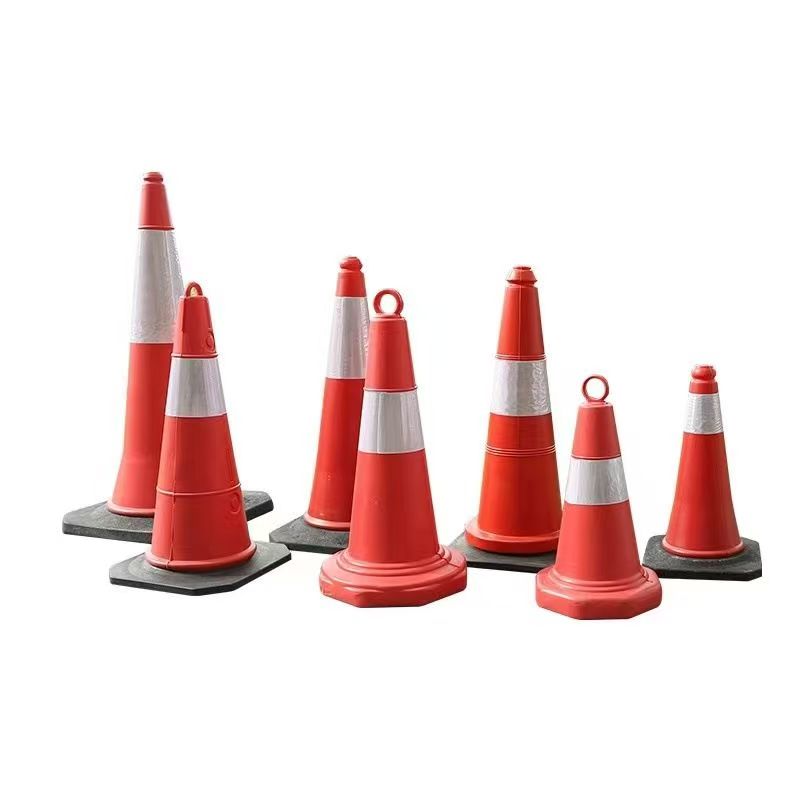
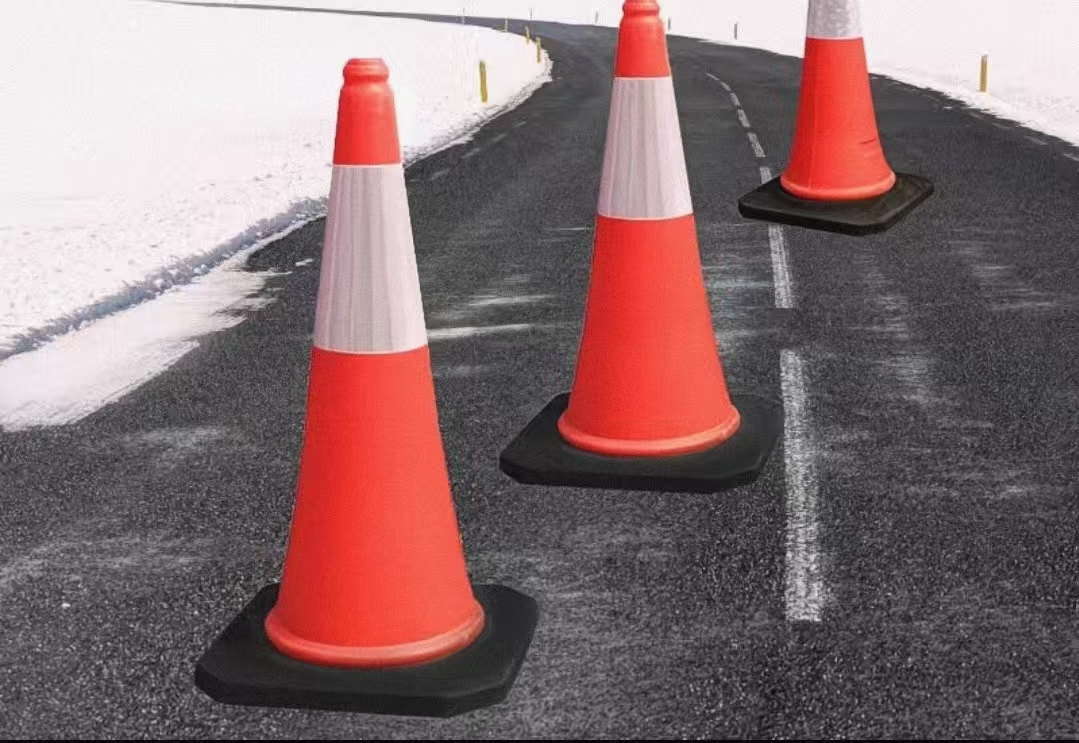





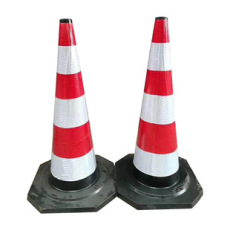
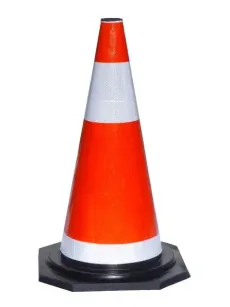
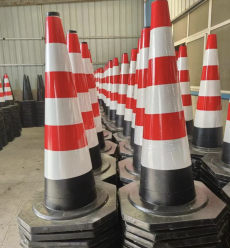
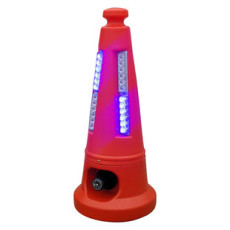
Made from high-density polyethylene (HDPE), this municipal cone offers excellent impact resistance, able to withstand collisions from vehicles traveling at 5km/h without cracking or deforming, and quickly recover its shape. The ASTM Class 2 reflective strips are bonded with high-strength adhesive, resisting peeling or fading for up to 3 years, maintaining consistent visibility day and night. The 350mm-diameter weighted base provides stable placement, preventing tipping in winds up to 50km/h. Unlike low-quality plastic cones, it features UV-stabilized material, ensuring the bright orange color does not fade for 5 years under direct sunlight. The cone’s smooth surface is easy to clean, removing dirt or graffiti with simple water washing. It is stackable up to 50 units high, saving storage space in municipal warehouses. The product complies with MUTCD standards, making it suitable for official traffic control use. The 3kg weight balances portability and stability, allowing quick deployment by municipal workers.
The cone has a standard height of 700mm, with a 350mm-diameter base and a 150mm top opening, fully conforming to ASTM E1709 and MUTCD regulations. The HDPE material has a density of 0.95g/cm³, with a wall thickness of 4mm to ensure durability. The reflective strips are 120mm wide, wrapped around the upper 180mm of the cone, providing 360° visibility up to 400 meters at night. The cone weighs 3kg, with the base accounting for 60% of the total weight to enhance stability. It can be stacked up to 50 units, reducing storage space by 70% compared to non-stackable cones. The operating temperature range is -25°C to 65°C, suitable for use in most urban environments. It passes ISO 9001 quality certification, with a service life of 3 years under normal outdoor use. The surface is treated with anti-static coating to prevent dust accumulation, and the base is equipped with non-slip rubber pads for better grip on wet roads.
This municipal standard traffic cone is widely used in urban traffic management scenarios. Municipal transportation departments deploy it for road diversion during construction or maintenance projects, guiding vehicles to alternative routes and ensuring smooth traffic flow. Property management companies use it in residential parking lots to mark disabled parking spots, fire lanes, or temporary no-parking zones. School districts place it around campus entrances and exits during peak hours to slow down vehicle speed and protect student safety. It is also used in urban events, such as parades or street fairs, to establish pedestrian-only zones and manage vehicle access. Additionally, it serves as a warning tool in public parks, bike lanes, or sidewalk repair projects, alerting pedestrians and cyclists to potential hazards. The bulk-friendly design and affordable price make it an ideal choice for large-scale traffic control initiatives, ensuring consistent safety compliance across urban areas.








 Post RFQ


 Chat
Chat


 ALL CATEGORIES