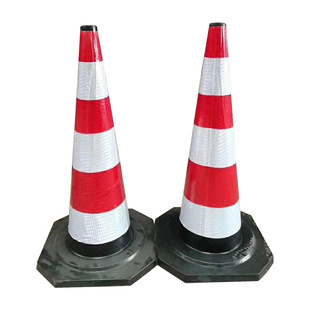
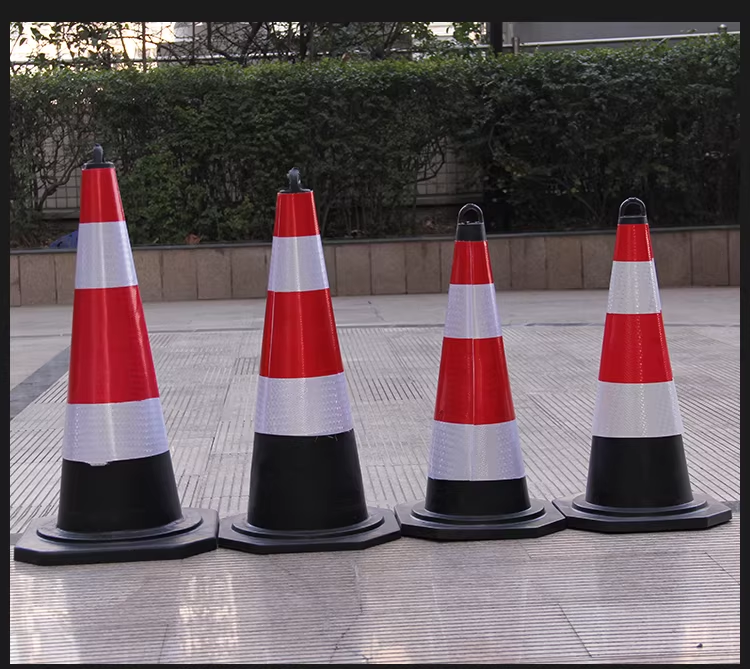





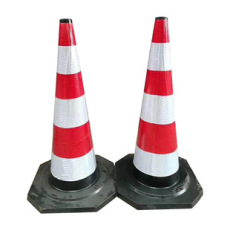
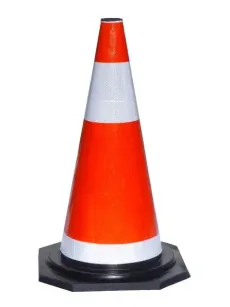
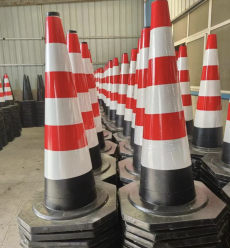
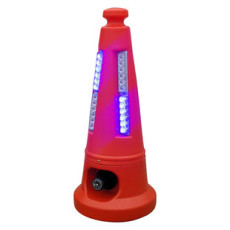
Crafted with premium PVC composite material for the cone body and a thick rubber base, this traffic cone delivers exceptional durability and anti-slip performance. The 3M Super Engineer Grade reflective sheeting is applied using a high-pressure heat-bonding process, ensuring it remains intact even after prolonged exposure to UV rays, rain, and abrasive road debris. The built-in 2kg iron counterweight at the base enhances stability, withstanding strong winds up to 120km/h without tipping over. Unlike ordinary cones, it features a reinforced edge design to prevent cracking from accidental vehicle impacts. This cone effectively solves the pain points of low visibility in adverse weather, easy tipping in windy conditions, and rapid wear and tear in high-intensity use scenarios, providing reliable safety protection for on-site personnel and equipment. It is also stackable up to 20 units, optimizing storage and transportation efficiency.
The overall height of this traffic cone is 750mm, with a base diameter of 450mm, ensuring optimal visibility for drivers from over 300 meters away. The cone body is made of 5mm thick high-density PVC composite, which is resistant to impact, corrosion, and deformation. The rubber base has a thickness of 12mm, providing excellent grip on various pavement surfaces including asphalt, concrete, and gravel. The net weight of the cone is 8kg, with a 2kg built-in iron counterweight for enhanced stability. The reflective sheeting is 100mm wide and wrapped around the upper 2/3 of the cone body, meeting ANSI MUTCD Class 2 standards for visibility. It can withstand a temperature range of -40℃ to 60℃, making it suitable for use in extreme cold or hot climates. The cone’s surface is treated with an anti-fouling coating, making it easy to clean and maintain. Its stackable design allows for efficient storage, with 20 cones occupying only 1.2 cubic meters of space.
This high-visibility traffic cone is ideally suited for a wide range of high-risk and high-traffic scenarios. In highway construction and maintenance projects, it serves as a critical barrier to separate construction zones from passing traffic, alerting drivers to slow down and change lanes in advance to avoid collisions. For large-scale public events such as concerts, sports competitions, and parades, it is used to guide pedestrian and vehicle flow, ensuring orderly access and exit while preventing overcrowding. It is also widely applied in municipal road repair work, airport apron management, and port terminal traffic control, where it helps organize vehicle movement and protect workers. Additionally, it can be used in temporary traffic diversion during emergency situations such as natural disasters or traffic accidents, providing clear and reliable warning signs to prevent secondary incidents and facilitate emergency response operations.








 Post RFQ


 Chat
Chat


 ALL CATEGORIES