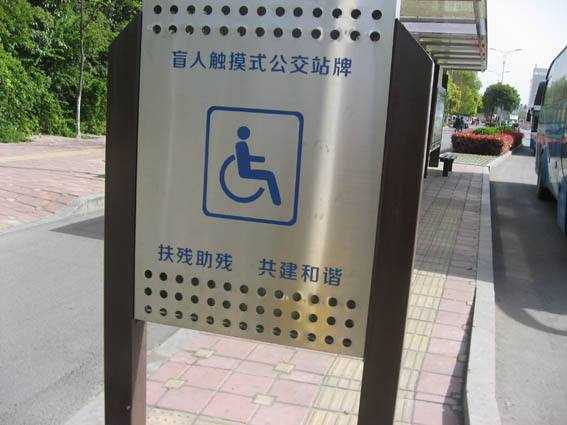
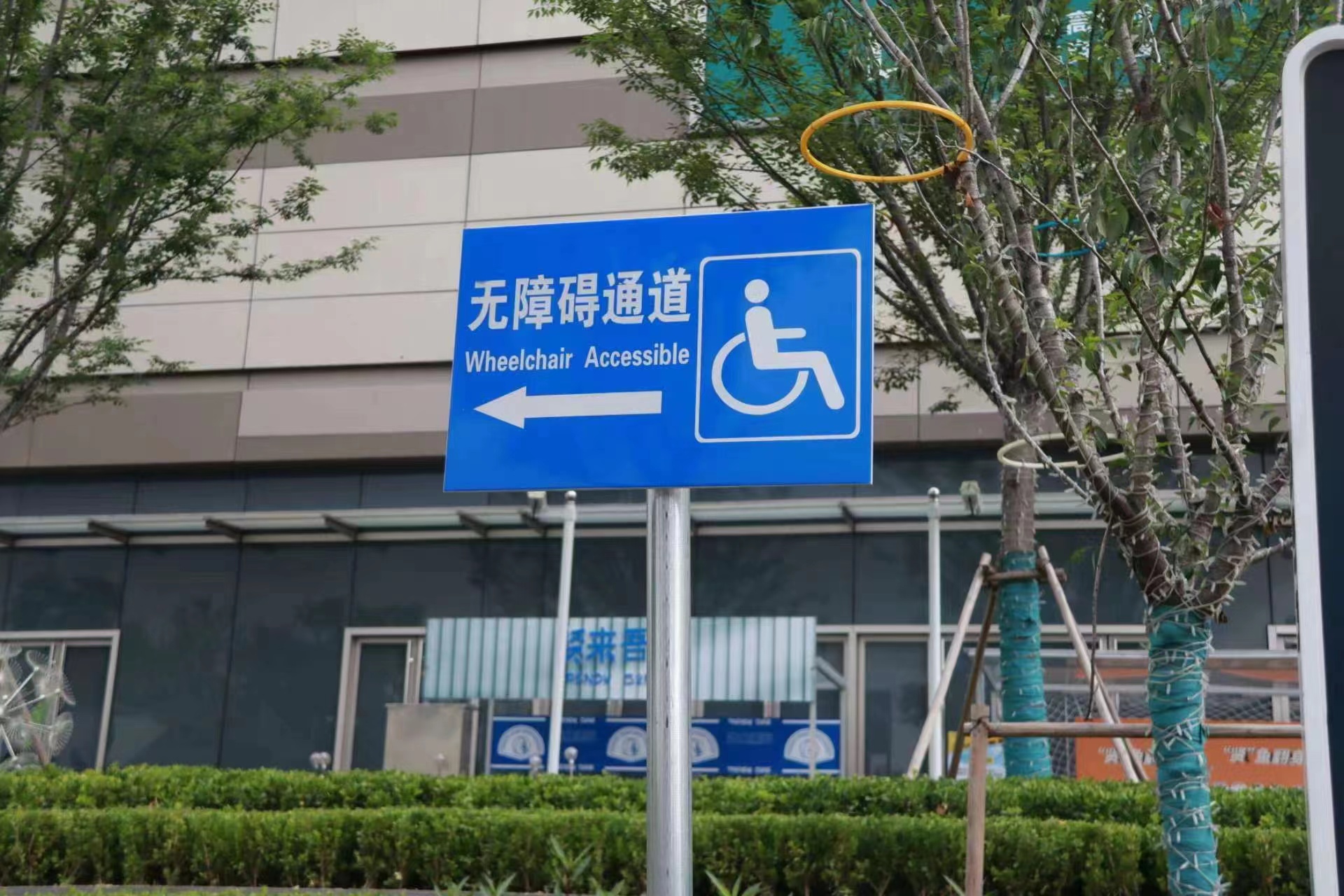










The product’s core advantage is its compliance with ADA standards, featuring high-contrast symbols and tactile elements for visually impaired users, solving the pain point of traditional signs being unrecognizable to people with low vision. The wear-resistant reflective paint maintains its brightness even after years of exposure to sunlight and foot traffic, ensuring 24/7 visibility without the need for power supply. Its dual installation options (ground embedded or column type) allow for flexible placement in various public spaces, such as sidewalks, subway entrances, and shopping mall parking lots. The 304 stainless steel plate resists rust and corrosion, while the IP65 protection grade ensures it remains functional in rain, snow, and dust. Additionally, its standardized symbols are compatible with global accessibility guidelines, making it suitable for international urban projects.
Measuring 600mm in width and 600mm in height, the ground-embedded version has a thickness of 5mm, while the column-mounted version has a thickness of 3mm, with a total weight of 12kg and 8kg respectively. The reflective paint meets EN 12899-1 Class RA2 standards, with a minimum retroreflection coefficient of 150cd·lx⁻¹·m⁻² for white and 100cd·lx⁻¹·m⁻² for blue. The tactile elements on the ground-embedded version have a height of 6mm, conforming to ADA tactile paving standards, providing clear guidance for blind users. The column-mounted version uses a 304 stainless steel column with a height of 1200mm, which can be adjusted to accommodate users of different heights. All materials are non-toxic and comply with REACH regulations, ensuring environmental safety in public spaces.
This sign is widely applicable in urban public spaces, including sidewalks, subway and bus station entrances, hospital parking lots, shopping malls, and government buildings. In downtown areas, it guides visually impaired individuals along safe pedestrian paths and to accessible facilities such as ramps and elevators. In subway stations, it marks the location of wheelchair-accessible entrances and tactile paths, helping mobility-impaired users navigate the station easily. Commercial property managers can install it in shopping malls and office buildings to comply with ADA accessibility requirements and enhance customer experience. Municipal governments can integrate it into urban renewal projects to improve the accessibility of public facilities, demonstrating a commitment to inclusive urban development. Additionally, it is suitable for school campuses and public parks to ensure equal access for all students and visitors.














 Post RFQ


 Chat
Chat


 ALL CATEGORIES