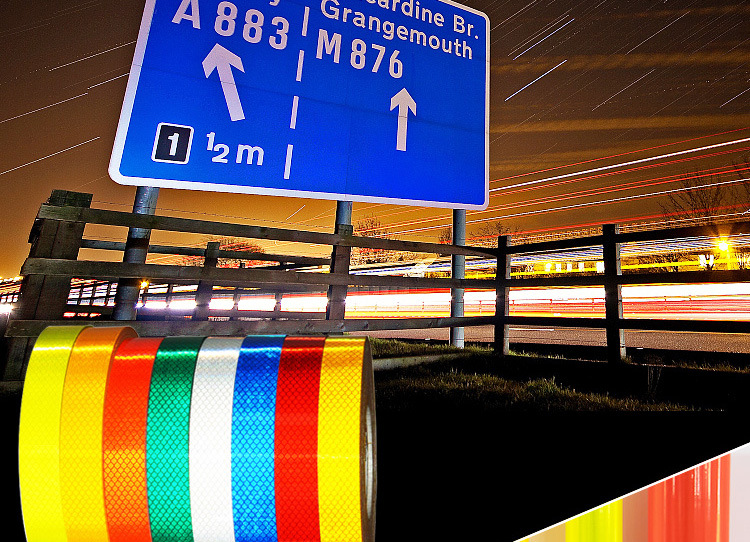





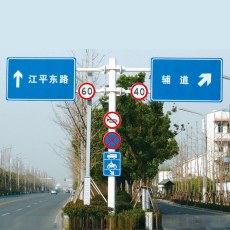
This sign’s key advantages stem from its premium 3M diamond grade reflective sheeting, which uses microprismatic technology to reflect light back to its source with 300% higher brightness than standard engineer-grade sheeting, ensuring visibility from over 2000 meters away at night. The 5052 aluminum alloy base plate is 3mm thick, offering superior structural rigidity and corrosion resistance, making it suitable for coastal areas with high salt content in the air and regions with extreme temperature fluctuations. With a wind resistance rating of ≥14 levels, it can withstand strong gusts common in open highway sections. The sign complies with USDOT FMVSS 108 and ASTM D4956 standards, ensuring it meets strict federal and international traffic safety requirements. Additionally, it features fade-resistant UV-stabilized ink, ensuring color accuracy and legibility for over 10 years without significant degradation.
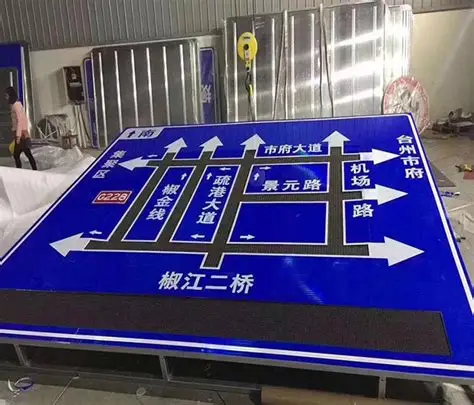
The sign is available in standard sizes of 1500mm × 1500mm for directional arrows and 2000mm × 1000mm for route markers, with a 3mm thick 5052 aluminum alloy base plate that meets ASTM B209 standards. The 3M diamond grade reflective sheeting (Type XI) has a reflectivity of ≥800 cd/lx/m² at 0.2° observation angle and -4° entrance angle, far exceeding the performance of engineer-grade sheeting. The sign’s visible angle is ±45°, ensuring visibility for drivers in adjacent lanes and at high speeds. It can withstand extreme temperatures from -40°C to +70°C, making it suitable for use in both cold northern regions and hot southern climates. The wind resistance rating is ≥14 levels, meaning it can withstand wind speeds of up to 160 km/h without structural damage. The sign uses UV-stabilized screen-printed ink that meets ASTM D4956 standards for color retention, ensuring clear legibility for over 10 years. It weighs 25kg for the 1500mm × 1500mm model, with pre-drilled mounting holes for easy installation on standard highway poles or gantries.
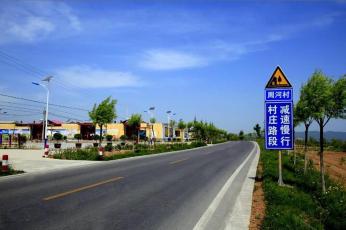
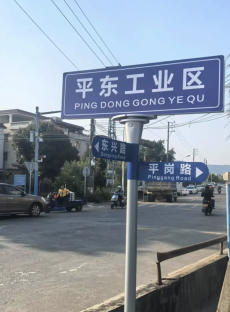
This product is specifically designed for high-speed road networks where clear, long-distance visibility is critical for driver safety and traffic flow. In expressways, it is used for exit guidance, route markers, and lane direction signs, helping high-speed drivers make timely navigation decisions without sudden lane changes. In national highways, it provides directional guidance for long-distance travel, reducing driver confusion and improving travel efficiency. In urban express roads, it is used for ramp guidance and traffic lane allocation, ensuring smooth traffic flow during peak hours. Additionally, it can be installed in mountainous highways with sharp curves to provide advance directional guidance, reducing the risk of off-road accidents. Target users include state transportation departments, highway maintenance companies, urban planning agencies, and toll road operators that require durable, high-visibility directional signs for heavy-traffic, high-speed road sections.







 Post RFQ


 Chat
Chat


 ALL CATEGORIES