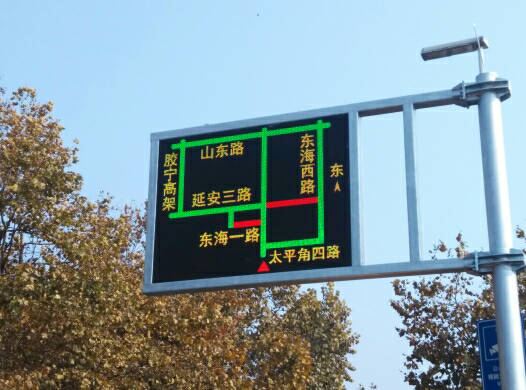
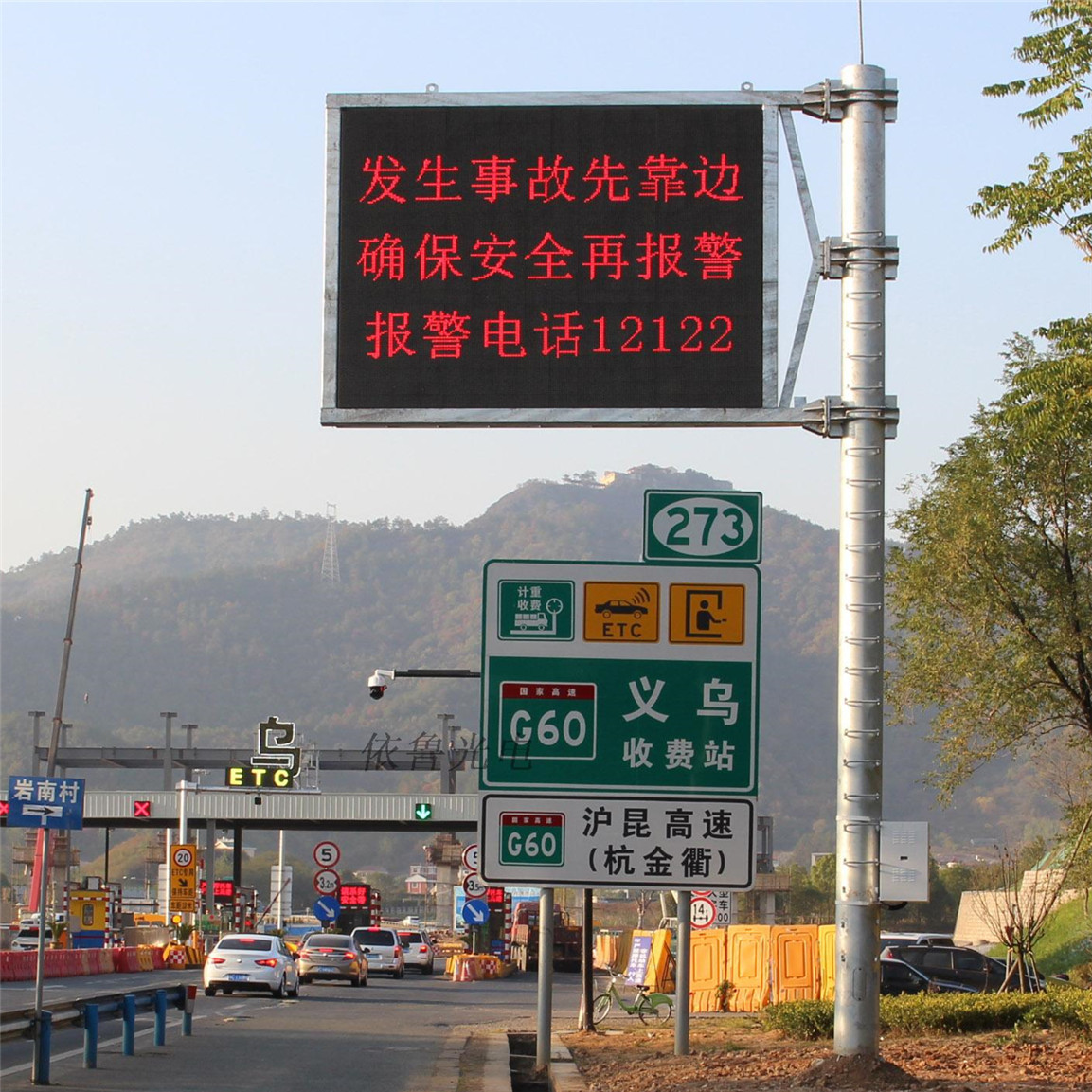





Equipped with full-color high-brightness LED modules, this sign can display text, graphics, and dynamic icons with clear and vivid effects, ensuring recognition even under strong sunlight. The cloud-based remote control system supports one-click update of guidance content, including traffic congestion prompts, accident warnings, and temporary road closure notices, with a response time of ≤10 seconds. It has an intelligent brightness adjustment function that automatically adjusts the display brightness according to ambient light intensity, balancing visibility and energy saving. The aluminum alloy frame is treated with anti-corrosion spraying, and the protective grade reaches IP65, which can resist rain, dust, and extreme temperature changes. Additionally, it supports data interaction with urban traffic management systems, realizing automatic linkage with traffic flow data to achieve intelligent traffic guidance.
The standard display size is 1200mm × 1200mm, with a pixel density of 32×32 dots, and each LED dot has a brightness of ≥6000 cd/㎡. The power consumption is ≤150W in full-brightness mode, and ≤50W in energy-saving mode, which can save 60% of energy compared to traditional fixed brightness signs. The operating temperature range is -25℃ to +55℃, suitable for most urban outdoor environments. The control system supports 4G wireless transmission, with a maximum transmission distance of unlimited range (based on network coverage). The LED modules have a service life of ≥100,000 hours, and the overall service life of the sign is ≥8 years. The installation method includes column mounting and wall mounting, with a wind resistance grade of ≥10 levels. The sign is equipped with an overvoltage and overcurrent protection circuit to ensure stable operation in complex power environments.
This variable message sign is widely used in urban main roads, business district peripheral roads, tunnel entrances, and large-scale event venues. In urban main roads during peak hours, it displays real-time congestion information and alternative route suggestions, guiding drivers to avoid congested sections and reduce travel time. Around business districts and shopping malls on weekends, it prompts parking lot locations and remaining parking spaces, alleviating parking pressure. At tunnel entrances, it displays speed limits, tunnel occupancy rates, and accident warnings, ensuring safe driving in closed tunnel environments. During large-scale events such as concerts and sports games, it can dynamically adjust guidance content to guide traffic flow and prevent traffic jams around the venue. It is also suitable for urban expressway entrances, providing real-time traffic flow data of the expressway to help drivers make travel decisions.







 Post RFQ


 Chat
Chat


 ALL CATEGORIES