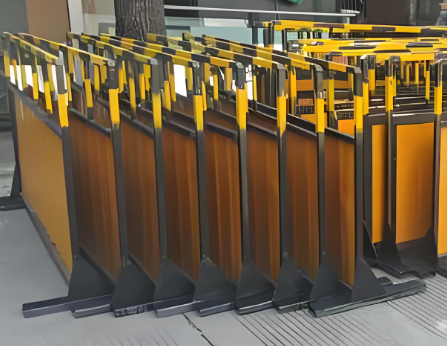
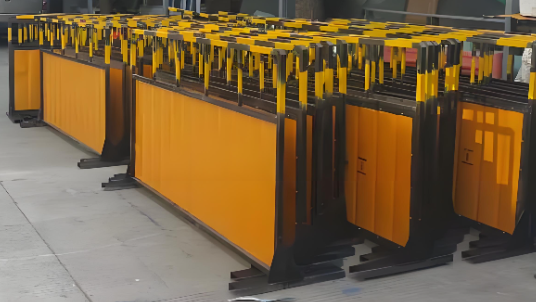





The modular 5-meter sections are the key feature, allowing for quick installation and disassembly without heavy machinery—each section can be set up by two workers in minutes. The UV-resistant HDPE panels are durable and fade-resistant, providing long-term visibility even in direct sunlight. The galvanized steel frame ensures structural integrity, while the portable crash cushion end treatment absorbs impact energy to protect workers and vehicles. Additional benefits include stackable design for compact storage (up to 20 sections per pallet), compatibility with reflective tape for night visibility, and resistance to water and chemicals commonly found in construction zones. Unlike permanent guardrails, this system is reusable for up to 10 projects, reducing material waste and project costs. The lightweight construction (45kg per section) makes it easy to transport to remote work sites with limited access.
Each unit consists of a 5000mm long section, with an overall height of 800mm. The HDPE panel measures 10mm in thickness, with a UV resistance rating of UVA 50+ to prevent fading and cracking. The galvanized steel frame has a diameter of 48mm, and the galvanized steel stakes measure 600mm in length for secure ground anchoring. Post spacing is set at 2500mm, providing consistent structural support. The guardrail is rated for maximum impact speeds of 70km/h, with a maximum deflection of 2.0 meters to redirect vehicles safely. Each unit weighs 45kg, and the operating temperature range spans from -30°C to 60°C, suitable for both cold and hot climates. Installation requires two workers per 10 units in 2 hours, with no concrete or heavy equipment needed—stakes are driven into the ground with a hand or pneumatic hammer. The guardrail is compatible with MUTCD-approved reflective tape for night visibility, and all components meet OSHA safety standards for work zone barriers.
This guardrail is ideal for temporary traffic control scenarios, including highway construction zones where traffic is redirected to narrow lanes, urban road repair sites with limited space, event detours such as marathon routes or festival closures, and utility work areas (water, gas, electrical) on public roads. It is also commonly used for emergency road closures due to accidents or natural disasters, bridge repair work zones where temporary barriers are needed, school zone construction areas to protect students, rural road maintenance sites with low traffic volume, parking lot construction or expansion, and airport runway repair detours. The portable design makes it easy to transport to remote work sites with limited access, and the reusable nature reduces material waste and project costs for construction companies and government agencies. OSHA compliance ensures that workers are protected from vehicle intrusion, reducing liability and improving job site safety.









 Post RFQ


 Chat
Chat


 ALL CATEGORIES