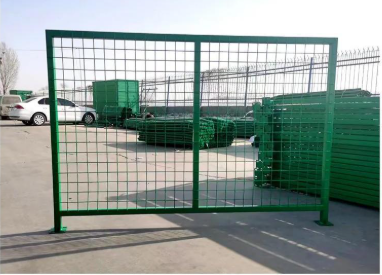
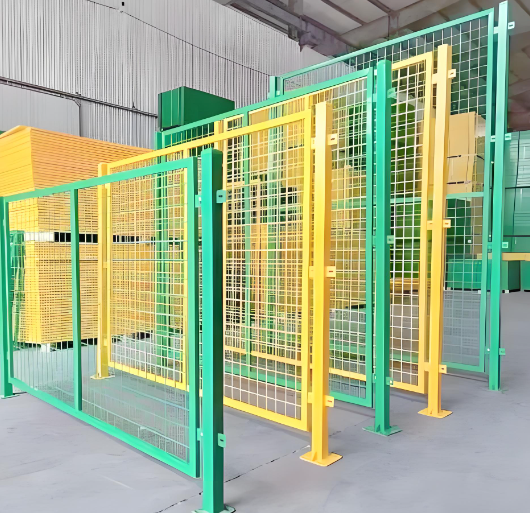





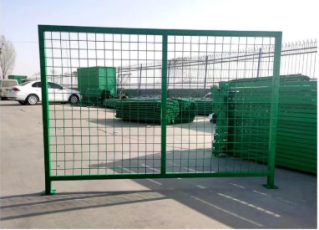
The key advantage of this guardrail is its balance of affordability and functionality. The low-carbon steel wire core delivers sufficient strength to resist livestock impacts and minor vehicle collisions, while the PVC dipped-plastic coating provides a smooth, non-toxic finish that resists rust, fading, and chemical corrosion. Its mesh design allows for natural airflow and visibility, avoiding the oppressive feel of solid barriers and preserving the rural landscape. The ground-driving installation method eliminates the need for concrete foundations, reducing installation time by 60% compared to traditional barriers. It also features a clip-based fixing system that allows for quick adjustment and replacement of damaged sections, minimizing maintenance costs. This barrier directly addresses the pain points of rural areas with limited budgets and insufficient technical support, providing an accessible safety solution.
The rural economy dipped-plastic wire mesh guardrail features a 1000mm overall height, with a wire mesh panel made of 4.0mm diameter low-carbon steel wire and 100*200mm square mesh openings. The supporting posts are 60*2.0mm galvanized steel tubes, installed at a 2500mm spacing with a driving depth of 600mm below ground. The PVC dipped-plastic coating has a thickness of 0.8-1.0mm, providing a uniform protective layer that meets RoHS environmental standards. Each unit weighs approximately 10kg, making it easy to transport and install manually. The maximum impact force it can withstand is 15kN, sufficient to resist impacts from cattle, sheep, and small agricultural vehicles. The mesh panel has a tensile strength of ≥300MPa, ensuring long-term structural integrity. All components comply with national rural road safety guidelines.
This guardrail is primarily used in rural road scenarios, including township roads, village roads, and farm access roads, to separate traffic lanes and prevent livestock from entering roadways. It is also ideal for pasture boundaries, orchard perimeters, and agricultural field divisions to protect crops and livestock from external disturbances. Township governments and rural construction teams often deploy this barrier for rural road safety upgrading projects, as it requires minimal investment and can be installed by local workers without specialized training. Additionally, it can be used for temporary installations during rural events, such as harvest festivals or livestock markets, to guide pedestrian and vehicle traffic and ensure event safety. It is also suitable for small-scale residential communities in rural areas to enhance perimeter security and prevent unauthorized access.








 Post RFQ


 Chat
Chat


 ALL CATEGORIES