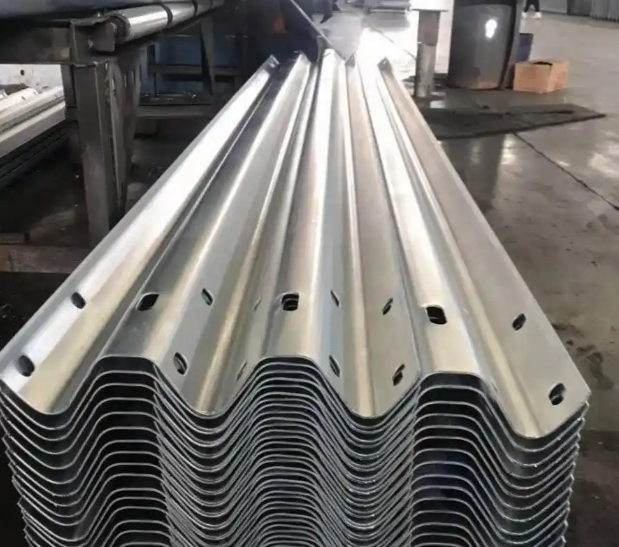
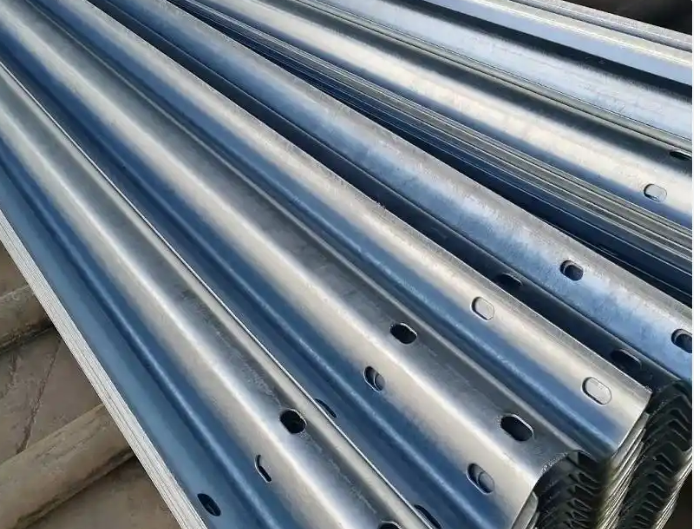





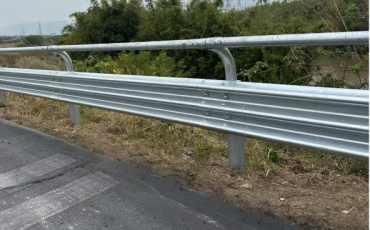
The thrie-beam (three-wave) structure is the defining feature of this guardrail, as it distributes impact energy across a wider area than standard W-beam barriers, preventing vehicle penetration or vaulting even at speeds up to 120km/h. The Q355 high-strength steel provides 20% more tensile strength than Q235 steel, making it ideal for heavy truck traffic. The dual coating system—hot-dip galvanized (120μm) plus polyethylene (80μm)—offers superior corrosion resistance, even in snowy, icy, or salt-spray environments. The H-shape steel posts are anchored 1200mm deep into rocky terrain, providing exceptional structural stability against lateral impact forces. Additional benefits include rigid end terminals that prevent vehicle snagging, narrow 1.5-meter post spacing for enhanced support, and compatibility with energy-absorbing blocks for sharp hairpin curves. Unlike concrete barriers, this guardrail can be easily modified to fit uneven mountain terrain, reducing installation time and costs.
Each meter of the guardrail features a thrie-beam with dimensions of 506mm (width) x 1000mm (height) x 4.0mm (thickness), constructed from Q355 high-strength carbon steel. The H-shape steel posts measure 150x150mm in cross-section, with a 1200mm buried length and 4.5mm thickness to withstand lateral impact forces. Post spacing is set at 1500mm to provide consistent structural support in uneven terrain. The dual coating system includes a 120μm hot-dip galvanized layer and an 80μm polyethylene layer for maximum corrosion resistance. The guardrail is rated for maximum impact speeds of 120km/h for 10-ton trucks, with a maximum deflection of 1.0 meters to redirect vehicles safely. Each meter weighs 78kg, and the operating temperature range spans from -50°C to 65°C, suitable for extreme alpine climates. Installation requires three workers per 50 meters in 8 hours, with anchor bolts sized M24 for rocky terrain anchoring.
This guardrail is specifically designed for mountainous and steep terrain applications, including alpine roads with sharp hairpin curves, mining access roads with heavy truck traffic, forest service roads with limited visibility, and rural roads adjacent to cliffs or ravines. It is also ideal for mountain pass roads with extreme weather conditions, logging roads with oversized vehicle traffic, and scenic mountain roads with tourist vehicles. The guardrail’s ability to withstand heavy impact forces makes it a critical safety solution for areas near rockfall zones, where debris could damage standard barriers. Additionally, it is commonly used in remote mountainous regions where emergency response is delayed, as it reduces the severity of crashes and provides a protective barrier between vehicles and fatal drop-offs. Mining companies rely on this guardrail to protect equipment and workers on access roads leading to mining sites.







 Post RFQ


 Chat
Chat


 ALL CATEGORIES