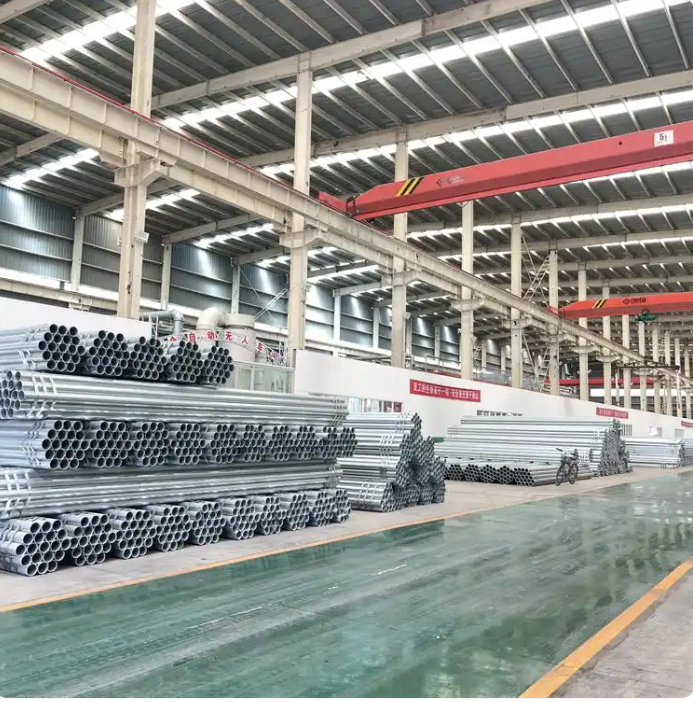
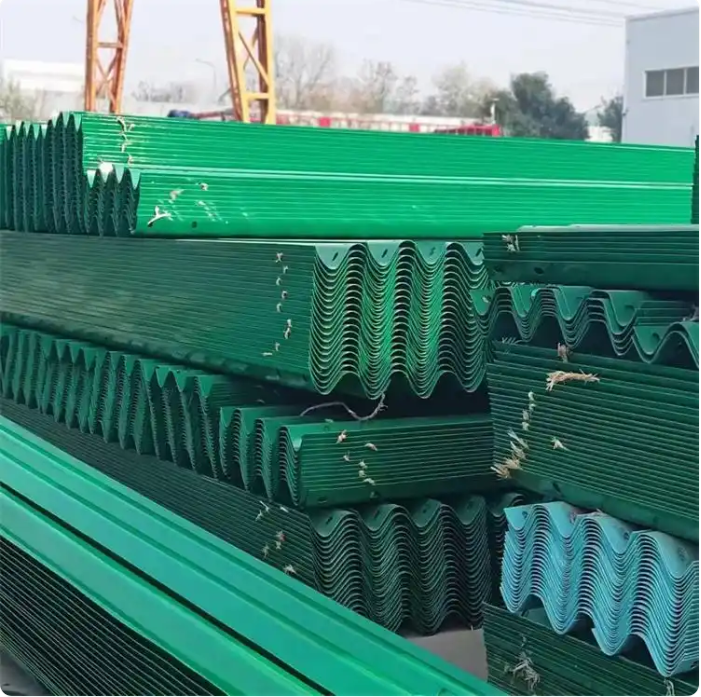





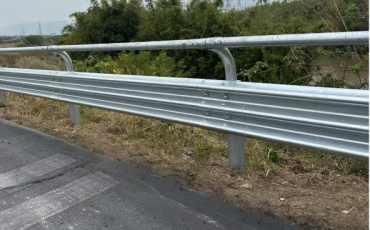
The W-beam (two-wave) structure is the defining feature of this guardrail, as it distributes impact energy across multiple sections to prevent vehicle penetration or vaulting. The hot-dip galvanized coating ensures superior corrosion resistance, even in coastal or industrial environments where salt and airborne chemicals accelerate wear. The flared end terminal is a critical safety enhancement, eliminating the risk of vehicles snagging on barrier ends and reducing secondary crash risks. Uniform 2-meter post spacing provides consistent structural support, while the lightweight yet rigid design allows for quick installation without heavy machinery. Additional benefits include compatibility with cable attachments for pedestrian protection, easy field modification to fit curved road sections, and low maintenance requirements—no repainting or major repairs needed for decades. Unlike concrete barriers, this guardrail can be easily removed and reused for road expansion projects, reducing material waste and project costs.
Each meter of the guardrail features a W-beam with dimensions of 310mm (width) x 810mm (height) x 3.0mm (thickness), constructed from Q235 carbon steel for optimal strength-to-weight ratio. The round steel posts measure 140mm in diameter and 1500mm in length, with a 4.5mm thickness to withstand lateral impact forces. Post spacing is set at 2000mm, and the galvanizing layer thickness meets a minimum of 85μm to ensure long-term corrosion protection. The flared end terminal extends 3 meters from the main barrier, with a design that redirects vehicles at speeds up to 100km/h with a maximum deflection of 1.2 meters. Each meter of guardrail weighs 52kg, and the operating temperature range spans from -40°C to 60°C, making it suitable for extreme climate conditions. Installation requires two workers per 100 meters, with a typical completion time of 4 hours, and the guardrail is compatible with all standard highway mounting hardware including anchor bolts and splice plates.
This guardrail is ideal for a wide range of permanent highway safety applications, including median separators between opposing traffic lanes to prevent head-on collisions, roadside barriers to stop vehicles from hitting trees, embankments, or fixed structures, and interchange ramp barriers to guide traffic through curved sections. It is particularly well-suited for rural roads with high heavy truck traffic, coastal highway sections where corrosion is a major concern, and areas near schools or residential zones adjacent to highways to protect pedestrian safety. Additionally, it is commonly used on highway rest area entrances and exits, bridge approaches, and mountainous roads with moderate slopes. Its modular design allows for customization to fit both straight and curved road segments, making it a versatile solution for transportation departments, road construction contractors, and infrastructure management firms worldwide.










 Post RFQ


 Chat
Chat


 ALL CATEGORIES