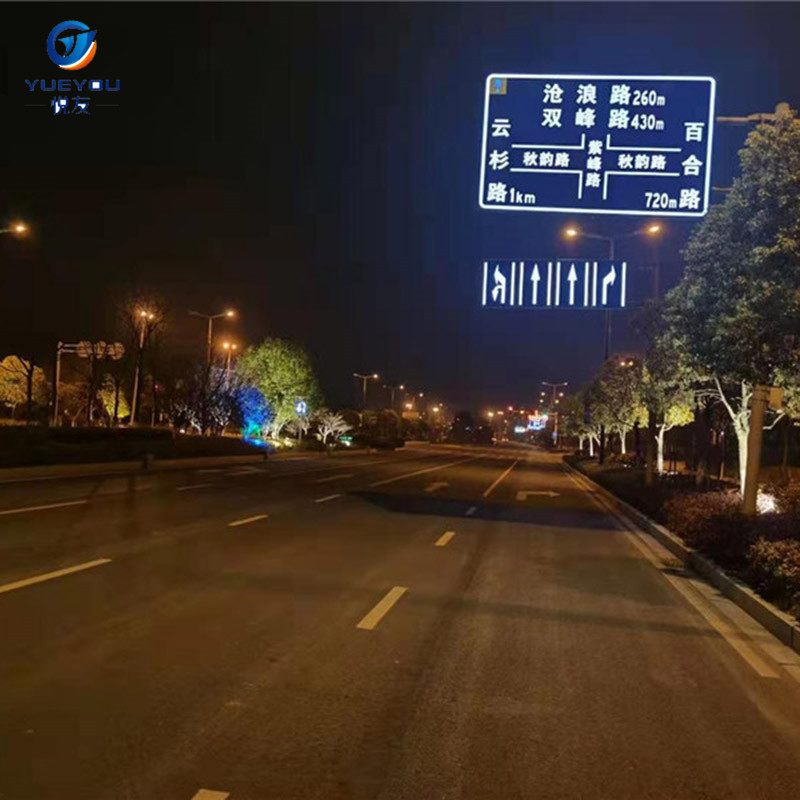
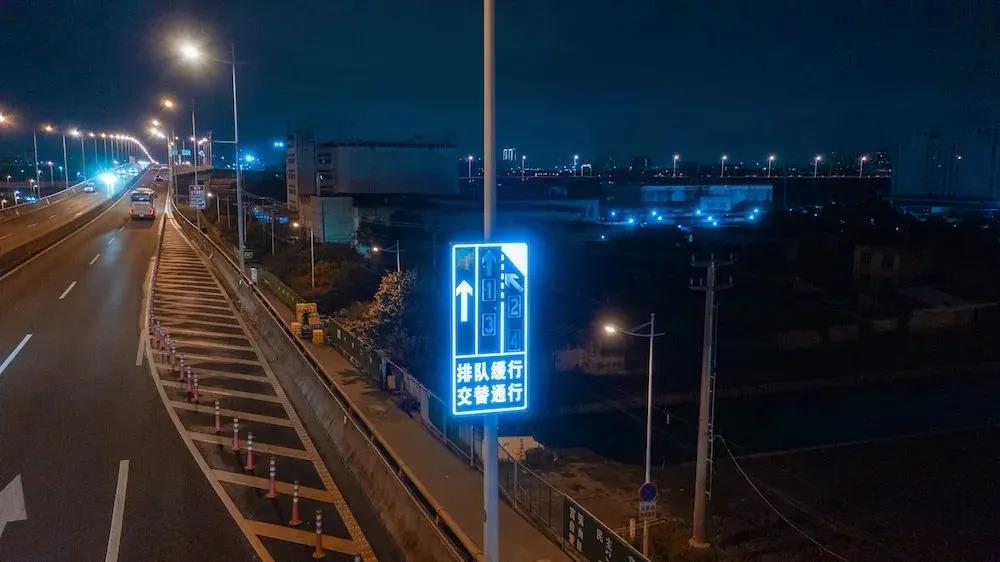





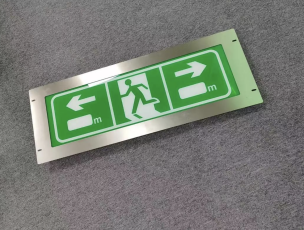
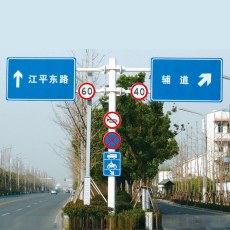
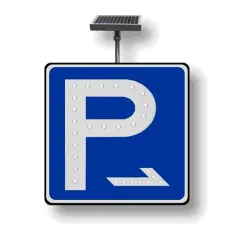
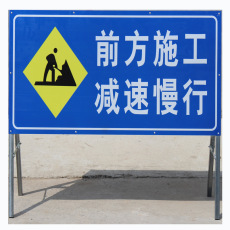
The product’s standout advantage is its advanced long-lasting photoluminescent technology, which outperforms traditional glow signs by 30% in glow duration and brightness retention. The UV-resistant coating on the surface effectively prevents fading and aging caused by prolonged sunlight exposure, maintaining clear visibility for over a decade. With an IP67 protection grade, it can withstand full immersion in water and dust intrusion, making it ideal for coastal or mountainous highway sections. Unlike passive reflective signs that rely on vehicle headlights, this sign actively emits light in dark environments, solving the pain point of insufficient visibility for vehicles traveling in the opposite lane or in areas with no headlight coverage. Additionally, its dual mounting options (cantilever and post type) provide flexible installation solutions for different road widths and traffic flow requirements.
The sign measures 1200×1200mm with a 5mm thick engineering-grade acrylic front panel and a 2mm aluminum back substrate, ensuring structural rigidity against wind loads up to 120km/h. The photoluminescent layer has a thickness of 0.4mm, with an initial glow brightness of ≥300mcd/㎡ and a 12-hour residual brightness of ≥10mcd/㎡, meeting EN 12899-1 Class XI standards. It has a temperature resistance range of -40℃ to 80℃, suitable for both frigid northern regions and hot southern areas. The surface coating has a pencil hardness of 3H, preventing scratches during transportation and installation. The aluminum substrate undergoes a corrosion-resistant treatment, with a salt spray resistance test passing 1000 hours without rusting. All components comply with DOT and CE safety certifications, ensuring compliance with international highway traffic sign standards.
This sign is primarily applicable to highway sections without street lighting, including remote mountain highways, coastal expressways, and rural intercity expressways. It is also suitable for temporary road construction zones where power supply for lighting is unavailable, providing continuous safety guidance for construction workers and passing vehicles. For highway management departments, it can be installed at curve sections, downhill slopes, and merge zones to reduce the risk of rear-end collisions and lane departure accidents during night-time driving. In areas with frequent power outages, it serves as a reliable backup safety facility, ensuring traffic order is maintained even when traditional lighting systems fail. Additionally, it can be used in national and provincial roads that connect remote villages, improving the safety of night-time travel for rural residents and freight vehicles.












 Post RFQ


 Chat
Chat


 ALL CATEGORIES