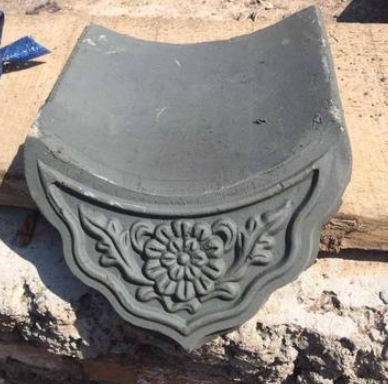
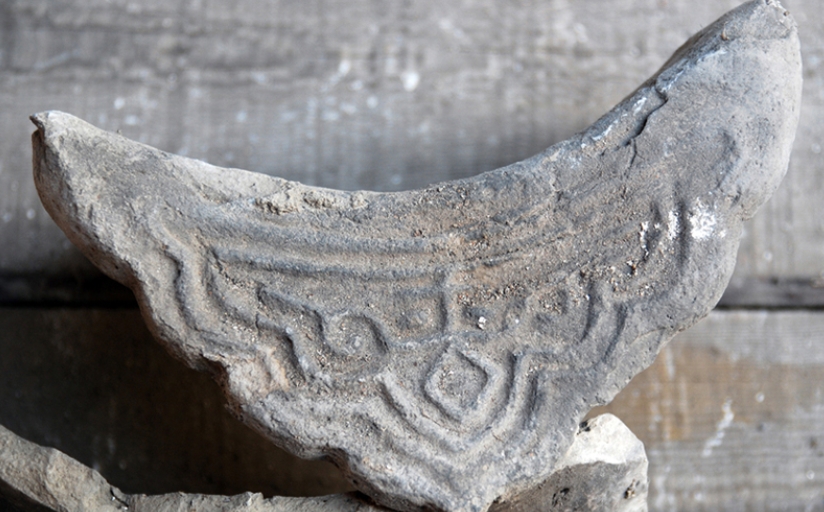


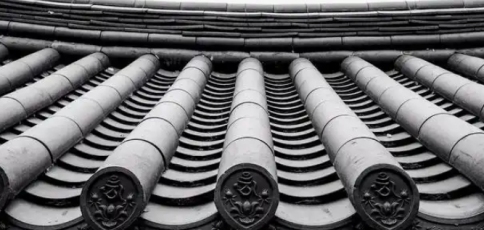
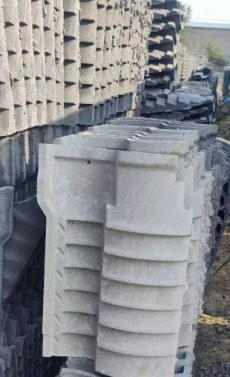
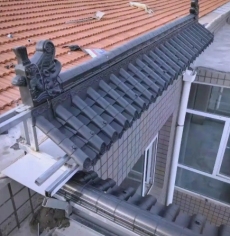
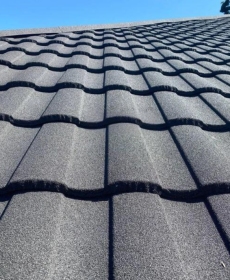
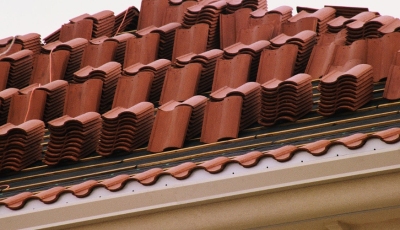
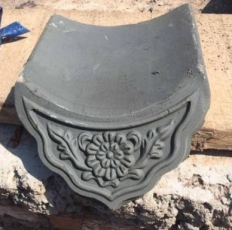
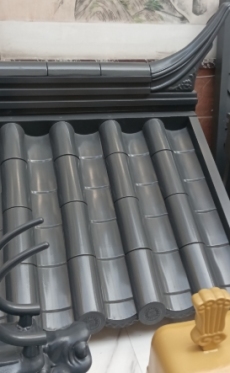
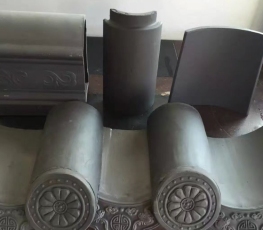
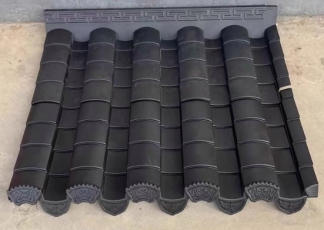
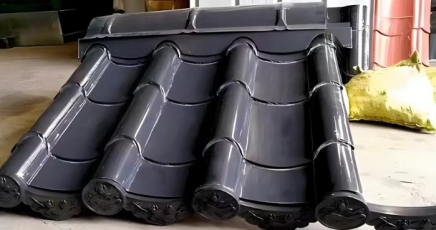
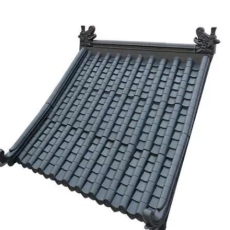
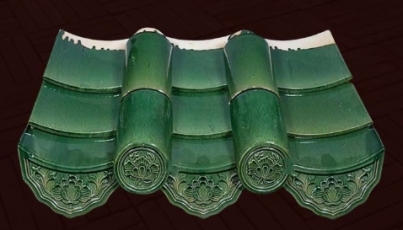
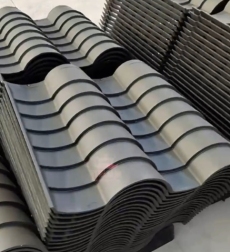
This stoneware ceramic antique roof tile has superior performance compared to ordinary clay tiles. First, it is fired at a high temperature of 1250°C, making its water absorption rate less than 3%, which is far lower than the 8% standard of ordinary clay tiles, effectively preventing water seepage and frost damage. The high-temperature glazed finish provides excellent stain resistance, making it easy to clean and maintain, even in areas with heavy pollution. It can pass 100 freeze-thaw cycles, ensuring that it can be used in cold northern regions without cracking or peeling. The classic arc-shaped design perfectly restores the elegant appearance of traditional roof tiles, while the rich color options meet the needs of different architectural styles. Additionally, it is non-toxic and harmless, meeting modern environmental protection requirements.
The standard tile size is 320mm in length, 220mm in width, and 16mm in thickness. Each tile weighs approximately 3.2kg, with approximately 14 pieces required per square meter. It has a water absorption rate of less than 3%, which effectively prevents water seepage and mold growth. It can pass 100 freeze-thaw cycles, making it suitable for areas with harsh freeze-thaw cycles. The fire resistance rating reaches Class A, meeting the most stringent fire safety requirements. The installation uses mortar-based overlapping installation, which ensures a tight and stable roof structure. Each package contains 10 square meters of tiles, along with matching installation accessories such as mortar and fixing clips.
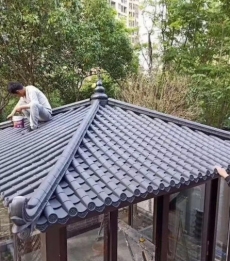
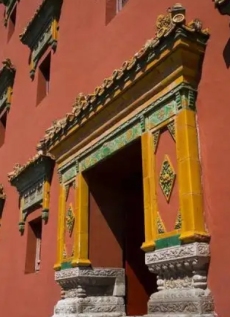
This stoneware ceramic antique roof tile is primarily designed for high-end heritage restoration projects, such as ancient palace renovations, temple restoration, and historical building protection to preserve the original architectural style. It is also ideal for high-end boutique hotels, traditional Chinese courtyard residences, cultural and tourism scenic spots, and private villas that pursue classical architectural aesthetics. Its excellent weather resistance and non-toxic, environmentally friendly material make it suitable for long-term outdoor use in various climatic environments, from cold northern regions with harsh freeze-thaw cycles to humid southern areas with heavy rainfall. It is especially suitable for projects that require high aesthetic value and long-term durability.







 Post RFQ


 Chat
Chat


 ALL CATEGORIES