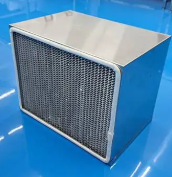
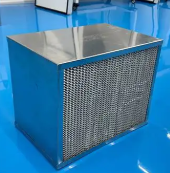


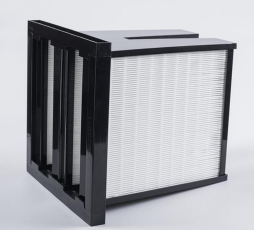
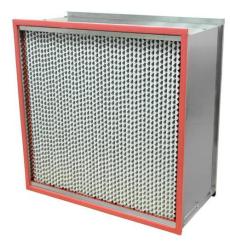

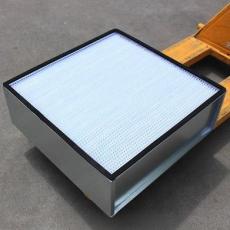
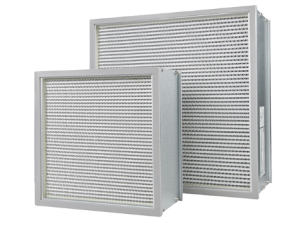
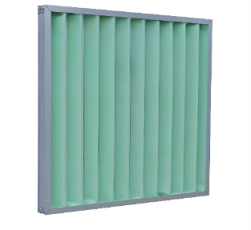
Its core advantage lies in the use of high-temperature resistant basalt fiber material, which can maintain stable filtration performance in a high-temperature environment of 450℃ without material softening and degradation. The shell is made of 304 stainless steel integrated molding process, which has high temperature resistance, corrosion resistance and oxidation resistance, and can be used for a long time in high-temperature and high-humidity flue gas environments. It adopts a folded filter medium structure, which increases the filtration area and reduces air resistance. In addition, this filter is equipped with high-temperature resistant silicone strips, which can maintain good sealing performance in high-temperature environments to avoid the decline of filtration efficiency caused by air leakage, and adopts a quick-release buckle design, which facilitates quick replacement of filter materials in high-temperature environments.
The conventional sizes are 600*600*300mm and 1200*600*400mm, the filtration area is 8-15㎡, the air volume adaptation range is 500-1000m³/h, the initial resistance is ≤250Pa, the filtration efficiency for 0.5μm particles can reach 99.5%, the maximum working temperature is 450℃, the shell thickness is 1.5mm 304 stainless steel, the sealing material is high-temperature ceramic strip, passes ASME high-temperature equipment certification, and the weight is about 16.2kg per standard unit.
It is mainly suitable for high-temperature flue gas purification in casting workshops, waste gas filtration in glass furnaces, high-temperature air filtration in heat treatment workshops, sintering flue gas pretreatment in steel production and other scenarios. Typical use scenarios include flue gas filtration in the casting section of foundry factories, waste gas purification in melting furnaces of glass factories, quenching flue gas treatment in heat treatment workshops, etc., which can effectively intercept dust and harmful particles in high-temperature flue gas, reduce the temperature of waste gas discharge, and protect subsequent environmental protection equipment from high-temperature damage.


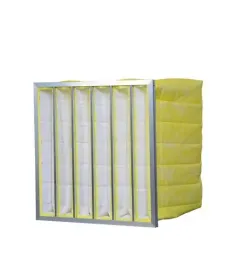
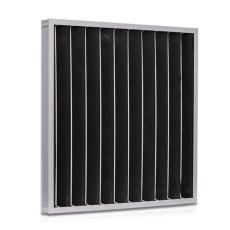
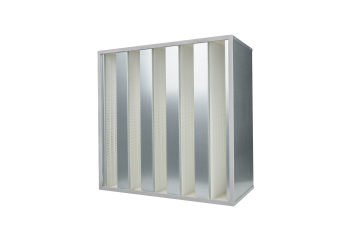
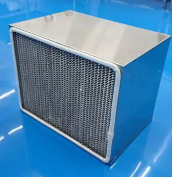





 Post RFQ


 Chat
Chat


 ALL CATEGORIES