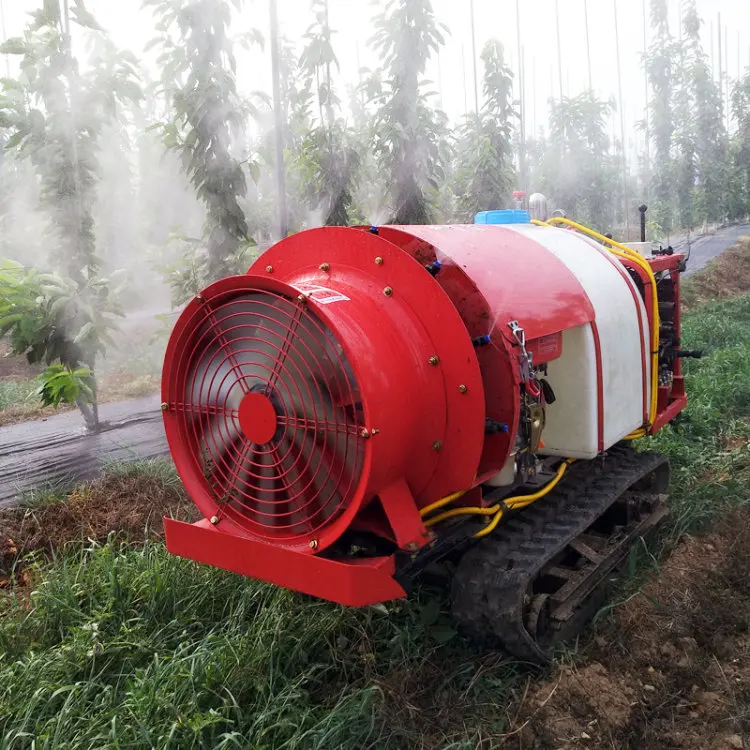
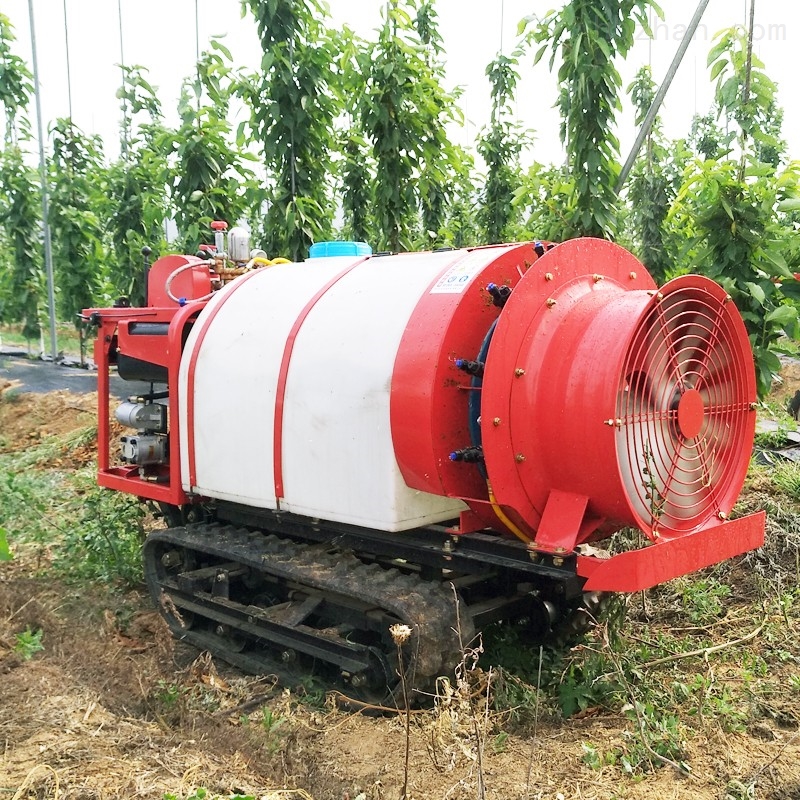

Basic Info
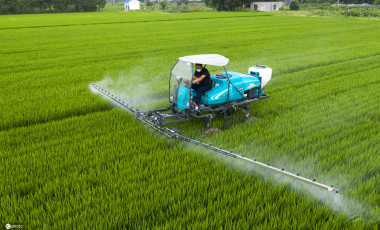
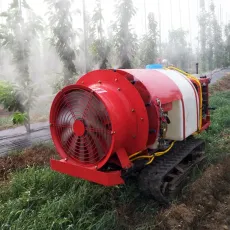
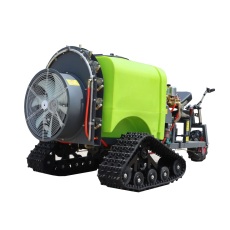
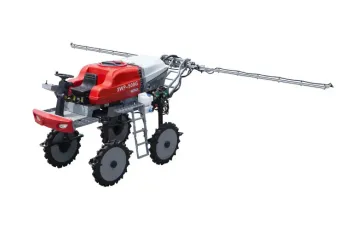
A self-propelled boom sprayer with a rubber-tracked chassis.Low ground pressure and superior anti-sinking capability make it particularly suitable for plant protection in paddy fields,wetlands,muddy ground,and hilly slopes where wheeled machinery cannot operate.
Customer reviews
Sophie Weber · Family Farm Owner
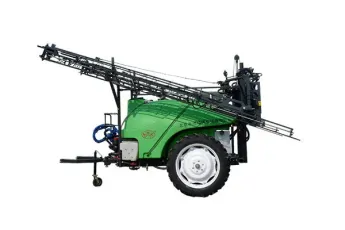
The tractor-mounted sprayer for our 35 HP tractor has boosted efficiency in our cornfield. The 6-meter spray width perfectly matches our row spacing, and hydraulic lift is very practical. The tank’s wide-mouth design facilitates cleaning, which is a thoughtful detail.
Anna Kowalski · Blueberry Farm Manager
The boom height adjustment range of the small mounted sprayer perfectly fits our blueberries at different growth stages. Nozzle anti-drip design prevents chemical waste when shutting off, important for precise application.
Thomas Berg · Greenhouse Technical Director
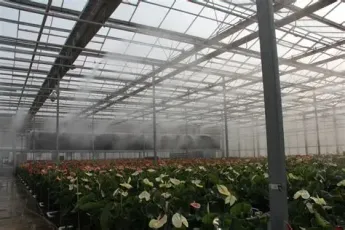
The greenhouse rail sprayer enables precise, automated management. It runs smoothly on the rails, with fine and consistent droplet distribution ensuring even coverage on both the upper and lower surfaces of leaves. It saves labor and has significantly reduced disease incidence.
Product Description
Product Features
Rubber tracks provide excellent traction and flotation,minimizing soil compaction and damage.Four-wheel drive combined with tracks ensures flexible steering.Comfortable cab with good visibility.Intelligent spraying system comparable to wheeled self-propelled models.Some models feature chassis leveling for sloped terrain.Ground clearance is adjustable.

Product Specifications
Track width and length vary by model.Small turning radius.Strong climbing ability(over 20 degrees).Powerful,smooth hydraulic system.

Product Application
Primarily for full-season plant protection in rice paddies,especially during rainy seasons or on muddy fields.Also suitable for crops like sugarcane,potatoes,and rapeseed in fields prone to getting stuck.Useful for spraying crops like corn and tea on hills and gentle slopes.Key equipment for solving plant protection challenges in difficult terrain.
Frequently Asked Questions (FAQ)
Q:What is the core advantage of a crawler self-propelled sprayer compared to wheeled equipment?
A:Its core advantage lies in the low ground pressure of its rubber tracks, providing excellent passability in wetlands and muddy fields, effectively preventing getting stuck. It also minimizes crop damage from compaction, significantly widening the application window.
Q:On what slope gradient is the crawler self-propelled sprayer suitable for operation?
A:Thanks to the superior traction of its tracks and low center of gravity design, this model can safely operate on slopes up to 15° (approximately 26.8% grade), offering better stability than comparable wheeled models on hilly and gentle sloping terrain.
Q:What is the ground clearance of the crawler self-propelled sprayer, and which tall crops can it be used for?
A:The standard adjustable ground clearance ranges from 1.2 to 1.5 meters, allowing it to easily enter and complete crop protection operations for tall crops like corn, sugarcane, and sorghum during their mid-to-late growth stages without damaging the plants.
Q:Is the maintenance and repair of the crawler self-propelled sprayer complicated?
A:Maintenance points are clear, primarily requiring regular cleaning of debris from the tracks, checking tension, and lubricating the carrier rollers. It employs a modular design, making key components easy to disassemble and reassemble for high maintenance convenience.
Q:What is the operational efficiency of the crawler self-propelled sprayer?
A:Matched with a high-power engine and a large-capacity tank, combined with an efficient spraying system, it can achieve a daily operational area of 300-500 acres, with efficiency over a hundred times greater than manual labor, making it suitable for large-scale operations.
Q:Does the steering of the crawler self-propelled sprayer damage the soil?
A:It utilizes differential steering technology. When turning on the spot, one track brakes, causing far less shearing and damage to the soil compared to the skid-steer turning of wheeled equipment, effectively protecting the farmland.