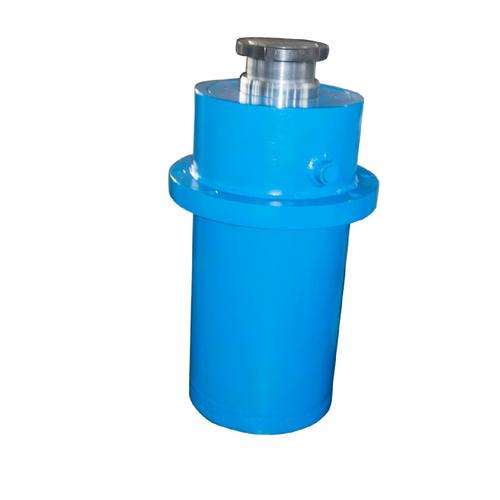
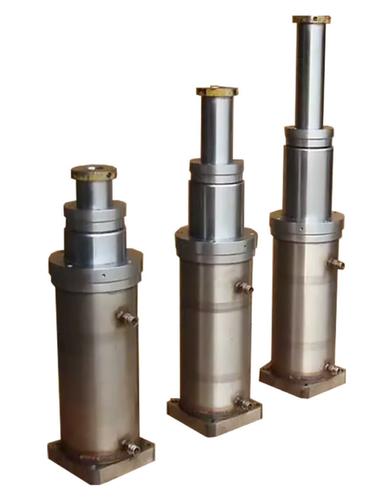





The main advantage is an excellent stroke-to-retracted-length ratio.Stages are nested concentrically by diameter and extended in a controlled sequence(typically largest to smallest for extension,smallest to largest for retraction)via complex internal or external hydraulic circuitry.Each stage acts as the piston rod for the preceding stage and the barrel for the next,resulting in a compact design.Internal sequence valves or external control circuits ensure reliable extension order.The sealing system is complex,requiring independent dynamic and static seals for each stage.Demands high material strength,machining precision,and balance to prevent stage binding.
Typically has 3-6 stages,more for special needs.Total stroke can be several times the retracted length.Working pressure varies:16-21 MPa for truck applications,potentially higher for industrial use.Force and speed vary with extended stages;the final stage(smallest diameter)provides the least force but highest speed.Various control methods:single-acting(gravity/external return),double-acting,or differential.
Most typical in specialized vehicles:lifting for dump trucks,compaction/tipping for refuse collection,lifting arms for recovery vehicles,and ladders for fire trucks.In construction machinery,for elevating booms on aerial platforms and telescoping crane booms.In agricultural machinery,for grain tank lifting on large harvesters.Also used in stage equipment lifts,warehouse stackers,and various industrial devices requiring long strokes stored in compact spaces.









 Post RFQ


 Chat
Chat


 ALL CATEGORIES