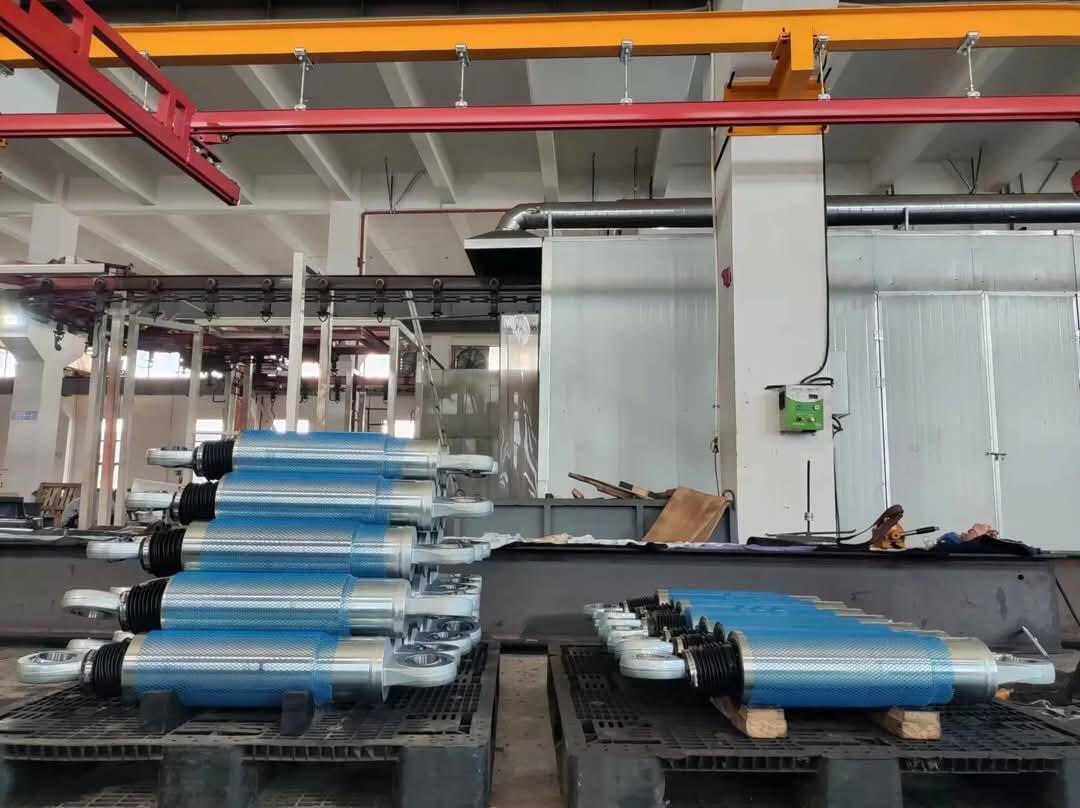
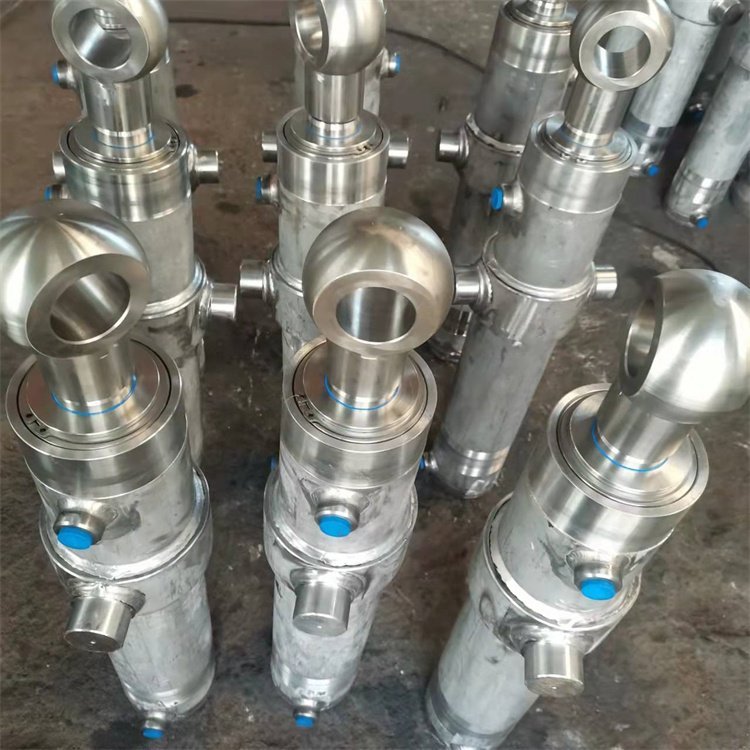





The all-stainless-steel construction fundamentally solves corrosion issues,extending service life in corrosive media.All seals are selected from materials compatible with the working medium,such as Fluorocarbon Rubber(FKM),Polytetrafluoroethylene(PTFE),or Perfluoroelastomer(FFKM),capable of withstanding various chemicals and high temperatures.Surfaces undergo electropolishing or passivation to achieve very low roughness,which reduces bacterial adhesion(suitable for food-grade applications)and minimizes seal wear.Design and manufacturing processes avoid galvanic corrosion caused by contact between dissimilar metals.
Working pressure can reach 16-21 MPa depending on the design.Bore sizes and stroke ranges are extensive.Piston rods are typically made of 316 stainless steel,with a high-gloss mirror polish or hard chrome plating applied to further enhance wear resistance.All welding is performed using TIG(GTAW),with weld seams polished to ensure strength and surface finish.FDA/USDA certified lubricants and seal options are available.Corrosion-resistant mounting accessories can be supplied.
The preferred choice in corrosive environments.On offshore platforms,ship ballast systems,and desalination plants,they resist salt spray corrosion.In chemical plants and wastewater treatment plants,they control valves and adjust mixer heights while exposed to acids,alkalis,and solvents.In the food and beverage industry,they are used in filling machines and sterilizers,complying with hygiene and safety standards.In electroplating lines and PCB manufacturing equipment,they maintain performance stability when exposed to strong acid/alkali electrolytes.They are also used in outdoor equipment in coastal or high-humidity areas.









 Post RFQ


 Chat
Chat


 ALL CATEGORIES