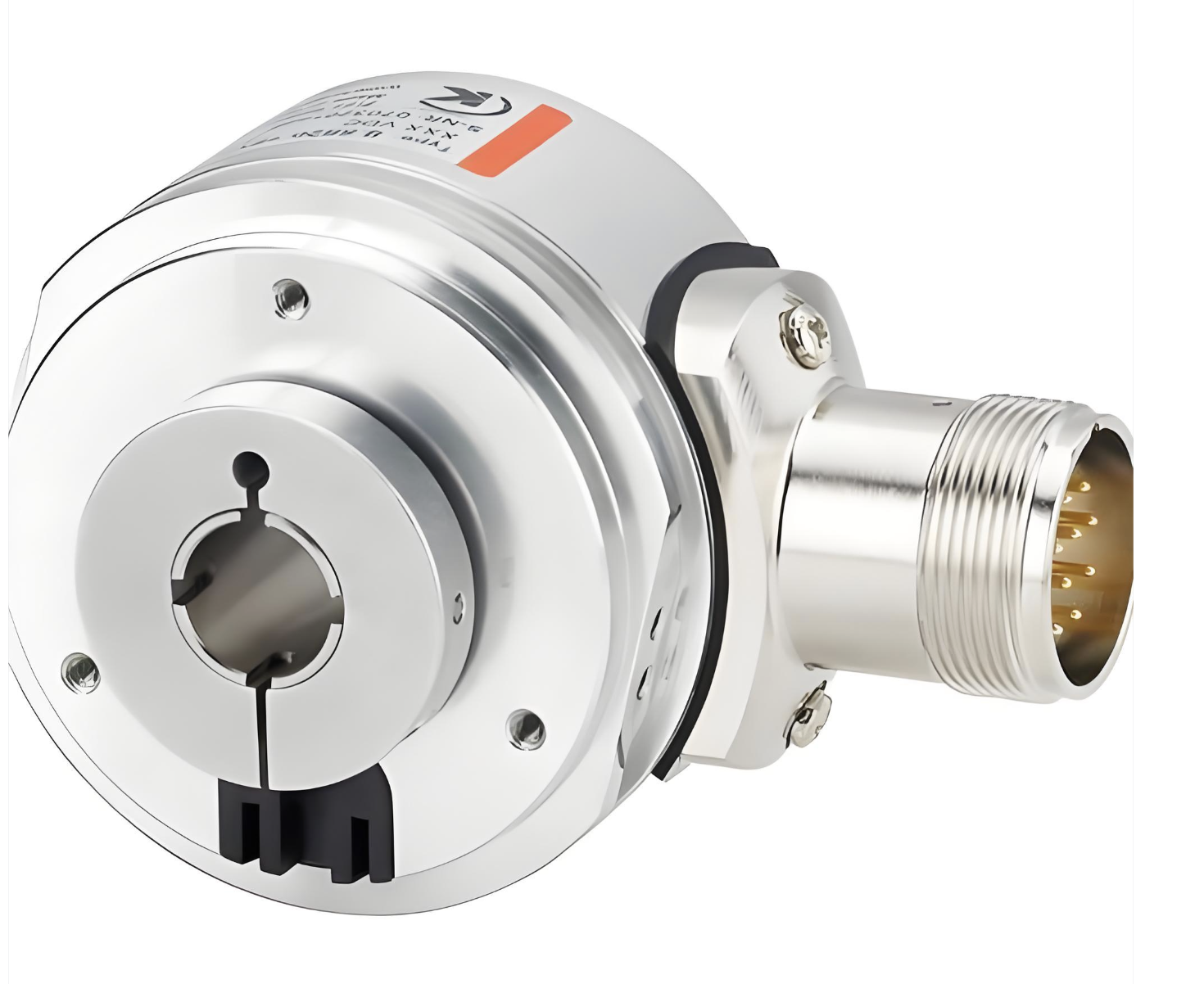
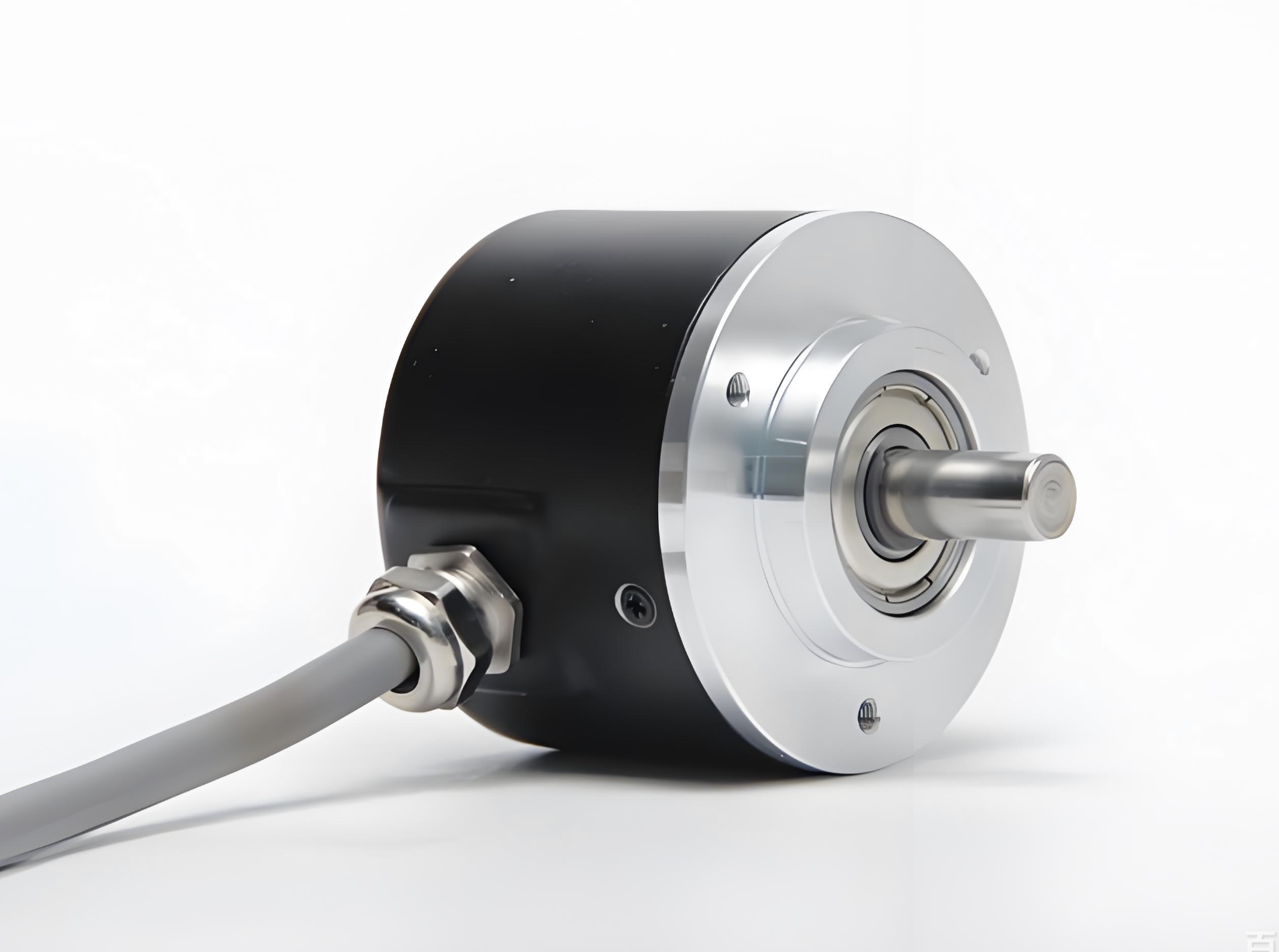





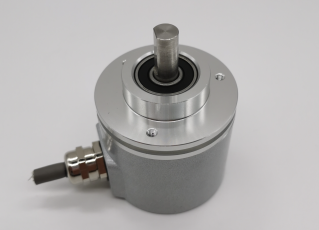
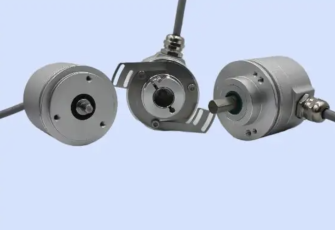
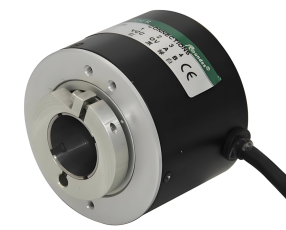
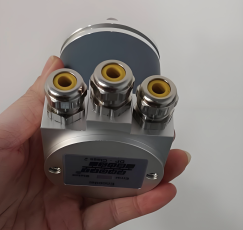
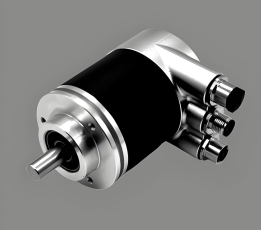
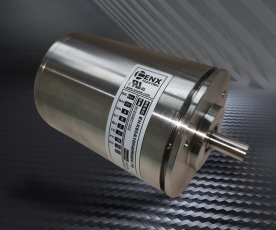
The encoder’s standout feature is its ultra-compact design, measuring just 25mm in diameter and 18mm in thickness, weighing only 35g—ideal for installation in space-constrained devices. Its high-strength PPS housing offers excellent impact resistance and chemical stability, suitable for medical and laboratory environments where exposure to cleaning agents is common. The low-power consumption of ≤10mA at 5V DC makes it perfect for battery-operated devices, extending operational time without frequent charging. Dual I2C and SPI output interfaces provide flexible compatibility with embedded systems and microcontrollers, simplifying integration into custom automation solutions. With ±0.02° accuracy and ≤0.5μs response time, it delivers real-time, high-precision position data to ensure smooth operation of robotic joints and precision instruments. The IP65 protection class prevents dust ingress and low-pressure water jets, ensuring durability in daily use.
This miniature encoder features a 4mm hollow shaft for seamless integration into compact machinery, with a maximum rotational speed of 10,000 RPM to support high-speed applications. Its 16-bit resolution provides 65,536 distinct position counts per 360° rotation, delivering ultra-fine precision for medical and robotic applications. The operating temperature range of -20°C to +70°C ensures consistent performance in both indoor laboratory settings and outdoor field use. Supply voltage ranges from 3.3V to 5V DC, compatible with most embedded systems and battery-powered devices. Compliance with CE and FCC standards guarantees electromagnetic compatibility and adherence to global safety regulations. The encoder uses a contactless magnetic sensing technology, eliminating mechanical wear and extending service life to over 10 million rotations. Shielded cables are available to reduce electromagnetic interference, ensuring stable signal transmission in crowded electronic environments.
This miniature encoder is widely used in medical devices, including minimally invasive surgical robots, where it provides precise position feedback for robotic arm joints and endoscope controls, enabling surgeons to perform complex procedures with high accuracy. In dental equipment, it controls the angle of dental drills and imaging systems, ensuring consistent patient care. For small robotics, it is deployed in AGV steering systems and collaborative robot joints, enabling smooth and precise movement in tight warehouse or factory spaces. In laboratory precision instruments, it adjusts the position of microscope stages and pipette systems, ensuring accurate sample handling and testing. Additionally, it suits consumer robotics, such as robotic vacuum cleaners and smart home automation devices, providing reliable position tracking for improved navigation and performance. Its small form factor and low power consumption also make it ideal for wearable medical devices, such as prosthetic limbs, to track joint movement and provide feedback to users.















 Post RFQ


 Chat
Chat


 ALL CATEGORIES