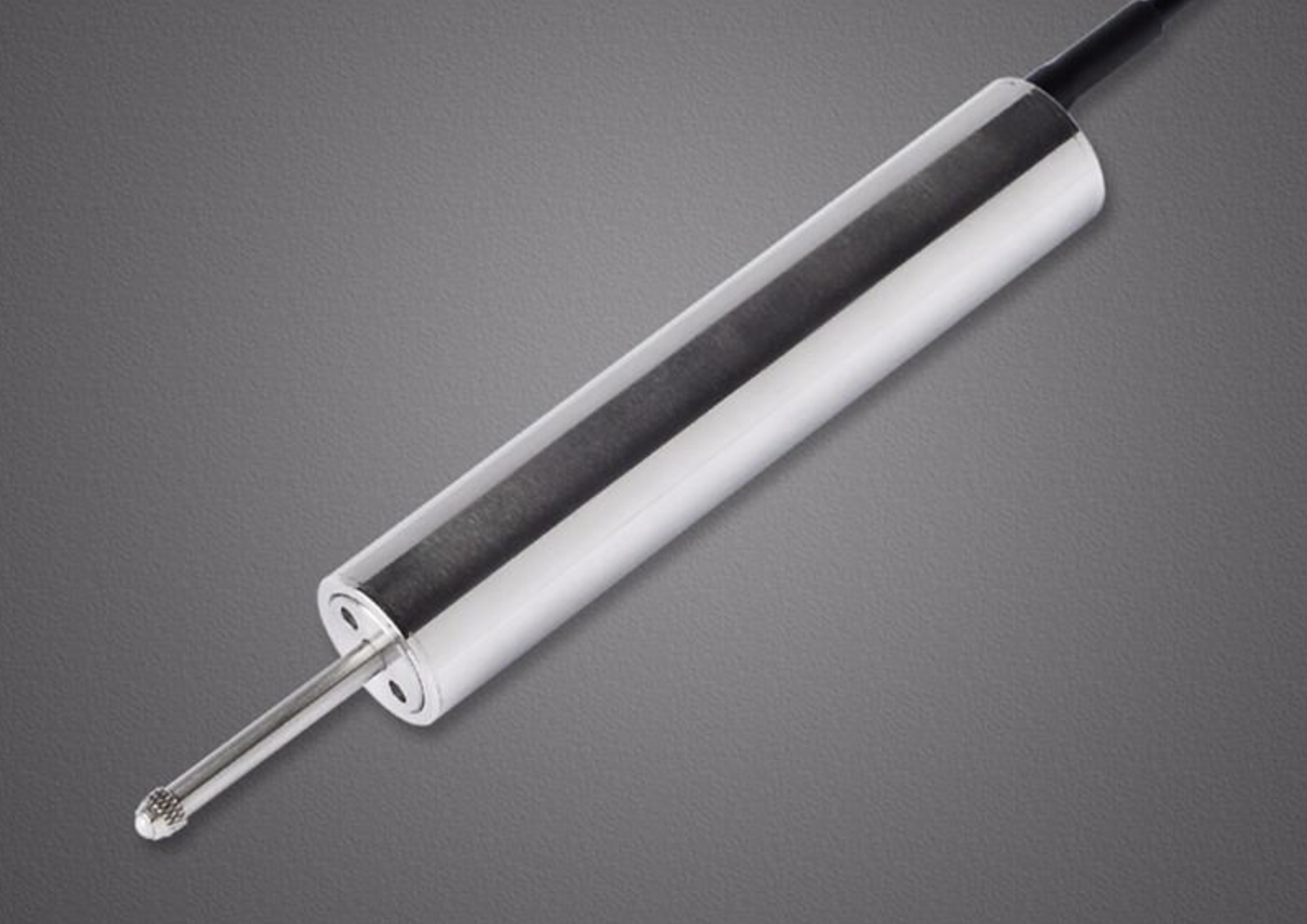
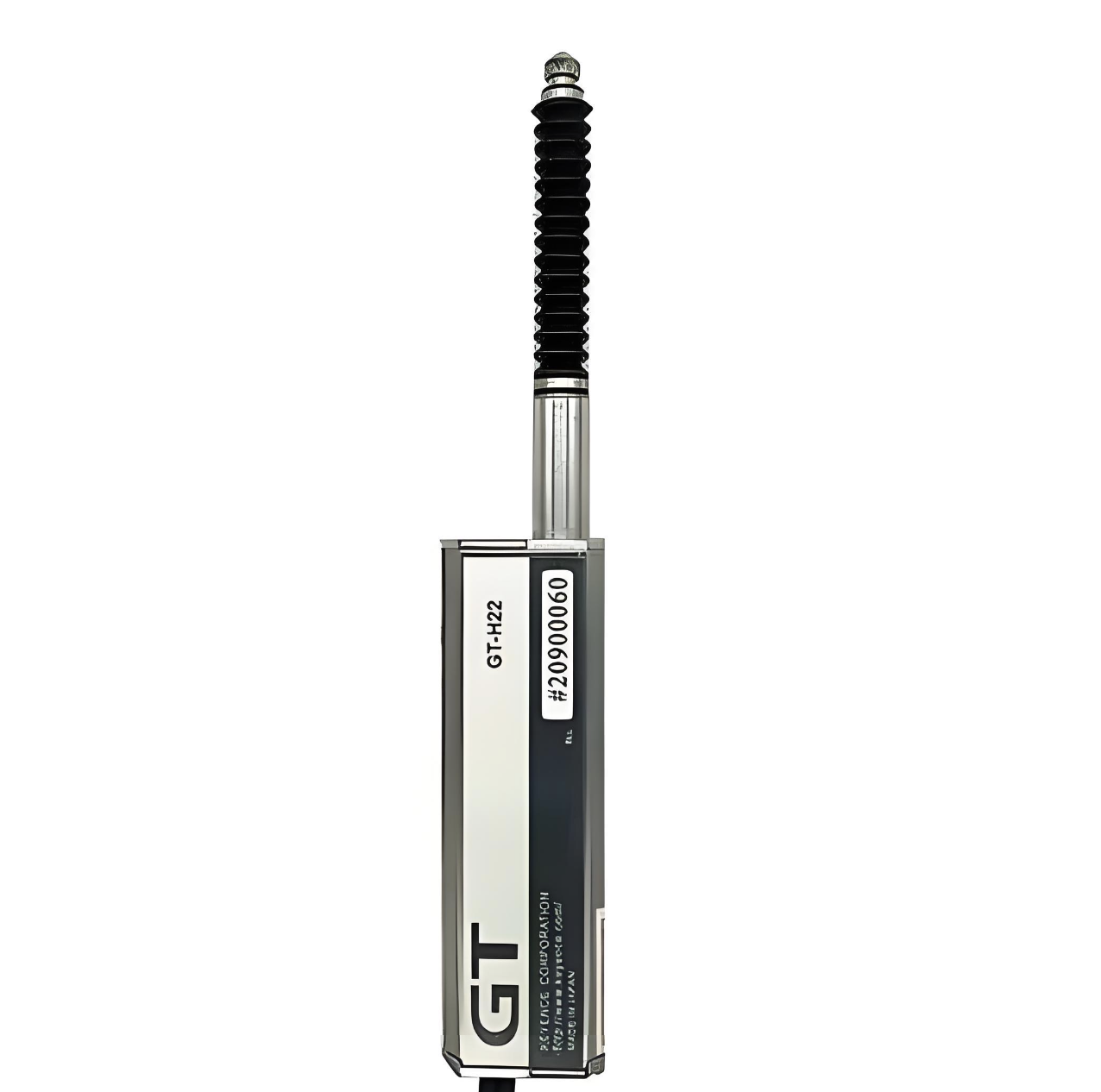






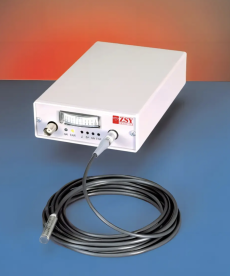
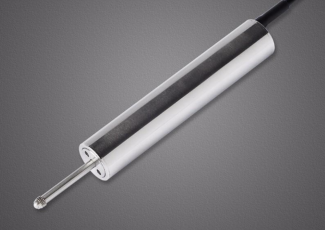
The key advantage of this sensor is its ultra-high linearity of ±0.0005% F.S. and ±0.001% F.S. accuracy, providing consistent and precise displacement data for critical aerospace and defense applications. Its titanium alloy housing is lightweight, high-strength, and corrosion-resistant, withstanding extreme temperatures from -55°C to +125°C and strong radiation in space environments. The non-contact LVDT measurement principle ensures zero wear and long service life up to 20 years, critical for equipment that cannot be easily maintained. Built-in anti-vibration and EMI shielding circuits maintain measurement stability in high-vibration and high-electromagnetic interference environments. The IEEE-488 digital output supports high-speed data transmission and remote control, integrating seamlessly with aerospace test systems for centralized data management.
This aerospace-grade LVDT displacement sensor offers a measurement range of 0-50mm, with optional ranges of 0-10mm and 0-20mm for small-displacement testing. It achieves an accuracy of ±0.001% full scale, a resolution of 0.001μm, and an ultra-high linearity of ±0.0005% F.S., meeting the strict requirements of aerospace precision measurement. Powered by 115V AC or 28V DC (compatible with aerospace power systems), it operates within a temperature range of -55°C to +125°C and resists radiation up to 10^6 rad. The response time is ≤0.5ms, capturing real-time displacement changes. Its housing is made of titanium alloy, with an IP66 protection class to resist dust and heavy splashing water. The output signals include ±10V analog and IEEE-488 digital, with overall dimensions of 150×40×30mm and a weight of 0.6kg.
This high-stability LVDT sensor is essential in aerospace, defense, and advanced scientific research. In aerospace, it measures wing deformation during flight, monitors engine component displacement, and positions satellite antenna mechanisms to ensure flight safety and equipment performance. In defense, it supports missile guidance system positioning, radar antenna fine-tuning, and armored vehicle suspension displacement testing. In scientific research, it is used in high-temperature material deformation testing, space simulation environment experiments, and particle accelerator component positioning. It also applies to high-precision laboratory testing, such as precision mechanical structure vibration analysis and material fatigue testing. All these scenarios require reliable displacement measurement in extreme environments, and this sensor provides stable, high-precision data to support technological innovation and critical equipment operation.









 Post RFQ


 Chat
Chat


 ALL CATEGORIES