Basic Info
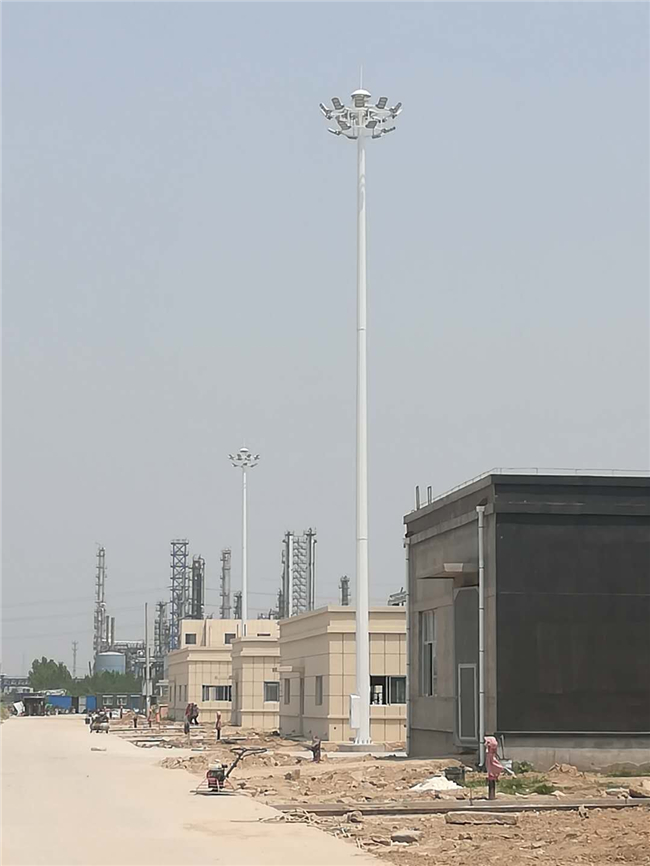
The Phoenix Landmark series high mast light is designed for special environments like landfills,wastewater treatment plants,and composting facilities,which expose equipment to corrosive gases,dust,and humidity.Atmospheres may contain hydrogen sulfide,methane,and ammonia,which are highly corrosive to metals and electronics.The design focuses on providing sealing and corrosion protection beyond standard levels to ensure long-term survival.
Product Description
Features
Utilizes fully welded housings or special sealing techniques to prevent ingress of corrosive gases.The optical chamber and driver compartment are often physically isolated.All exposed metal surfaces,including poles and bolts,receive a multi-layer heavy-duty coating system(e.g.,epoxy primer+polyurethane topcoat or specialized fluoropolymer).Electrical components may be potted.Smooth structural design facilitates rain cleaning.
Specifications
Materials and coatings must resist specific chemical agents.Luminaires require high IP ratings and may need air-tightness testing.As landfills can generate combustible gases(methane),explosion-proof considerations may apply in specific zones.High-efficacy LEDs with relatively low heat output are preferred to reduce internal temperature rise and the need for vents.
Applications
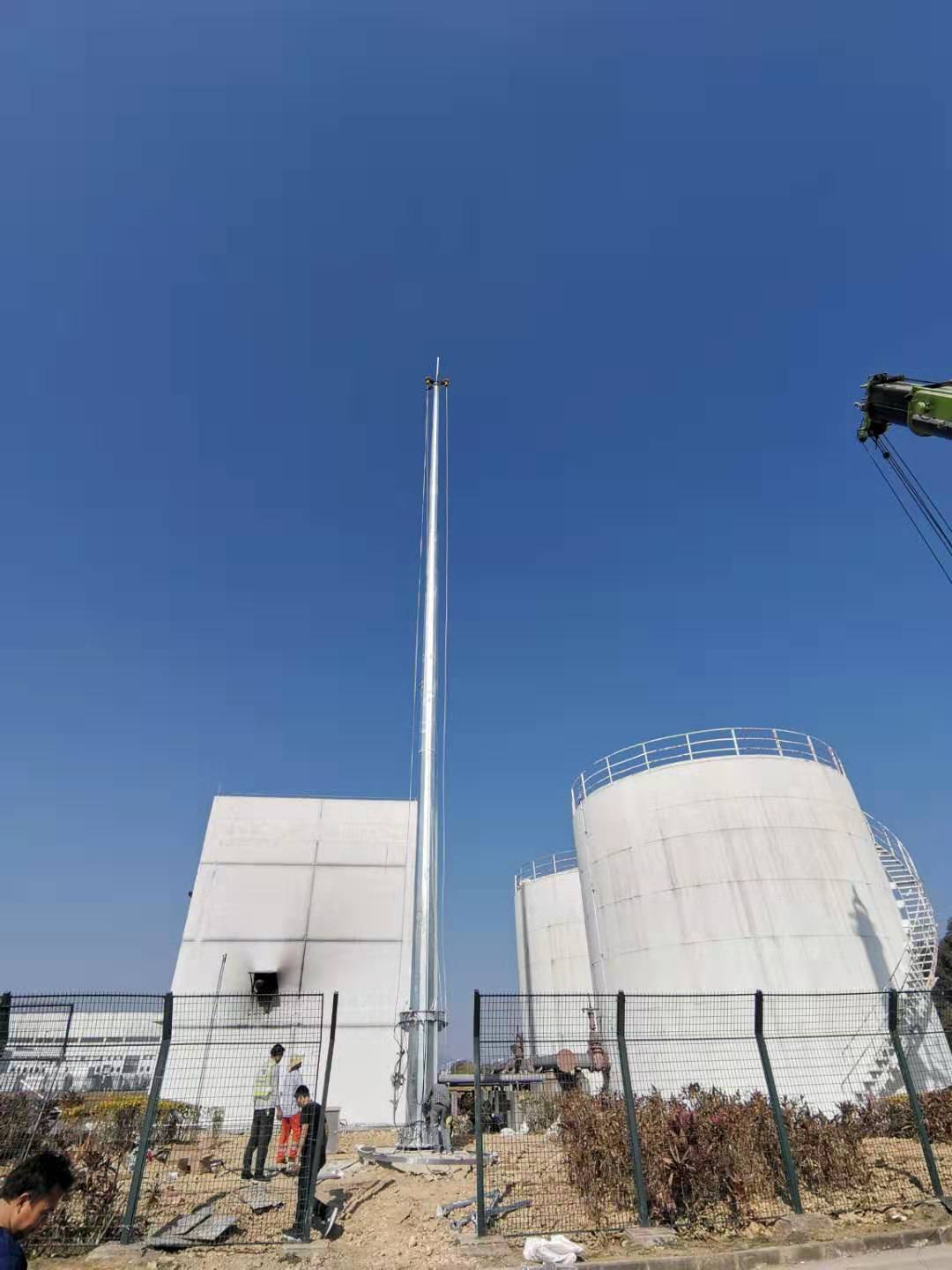
Used over landfill working faces,leachate treatment stations,around aeration tanks and clarifiers in wastewater plants,and outside sludge processing buildings.Lighting must provide safety for nighttime operations and inspections,while the fixtures themselves must withstand prolonged exposure to chemically aggressive atmospheres.
Frequently Asked Questions (FAQ)
Q:What challenges does uneven landfill settlement pose for high mast foundations?
A:Settlement causes tilting.Solutions include:using deep pile foundations penetrating weak layers;employing adjustable flange connections for leveling;or concentrating masts in stable areas.
Q:How to mitigate safety risks from landfill methane gas for the lighting system?
A:In areas with potential gas accumulation(e.g.,near gas wells),luminaires and electrical equipment must have appropriate explosion-proof ratings.All junction boxes and controllers also require explosion-proof compliance.
Q:How are luminaires and poles protected in the highly corrosive leachate environment?
A:Poles use hot-dip galvanizing plus powder coating or solid stainless steel.Luminaire housings use acid/alkali-resistant alloys or engineering plastics with IP66/IP67 rating,and internal electronics have conformal coating.
Q:With frequent vehicle movement,how does lighting ensure operational safety and efficiency?
A:Provide sufficient,uniform horizontal and vertical illuminance,especially at key points like loading docks,weigh stations,and sorting lines,ensuring clear sightlines for drivers and operators without blind spots or harsh glare.
Q:How to reduce the attraction of light to ecology and insects?
A:Use cutoff luminaires.Prioritize amber or narrow-spectrum amber LEDs,which are far less attractive to insects than white light.Precisely control on/off times based on operational schedules.
Q:How are heat dissipation and cleaning addressed for high masts in high-temperature,high-dust incineration plants?
A:Luminaires need efficient thermal management(e.g.,large heat sinks).Regularly clean dust accumulation on housings and heat sinks,potentially using automatic air blowers or scheduled manual cleaning.












 Post RFQ


 Chat
Chat


 ALL CATEGORIES