Basic Info
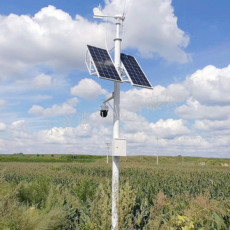
The Yingli SLS series solar high mast light is a standalone off-grid lighting system,particularly suitable for areas where grid power is unavailable or connection costs are prohibitive.It relies on top-mounted solar panels to generate power stored in batteries during the day,powering LED luminaires at night for self-sufficient.It may offer advantages in energy saving,emission reduction,and reducing long-term electricity costs.
Product Description
Features
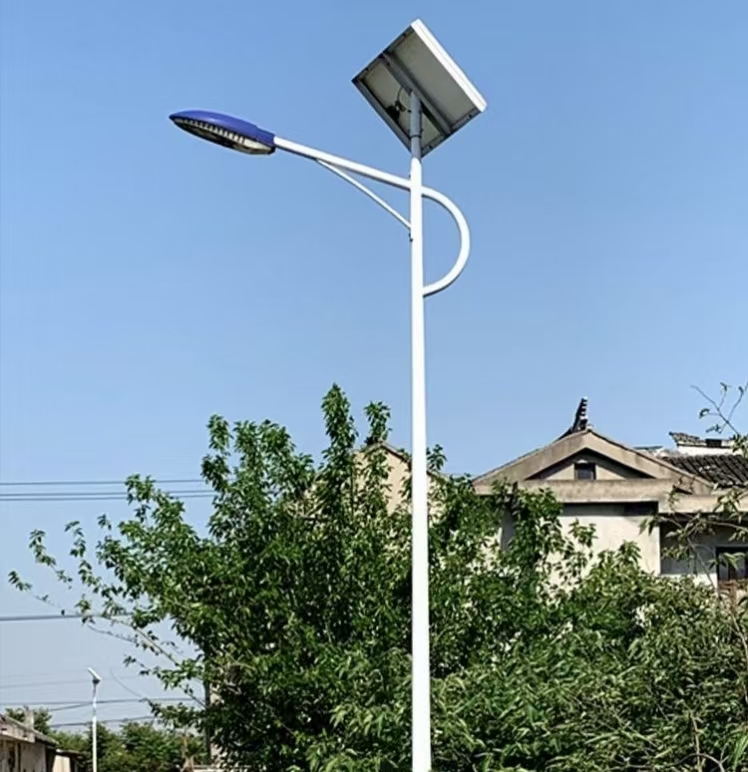
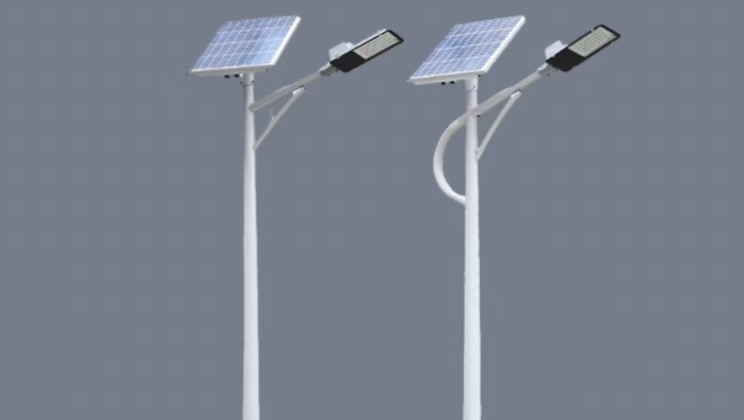
High level of system integration,including PV modules,MPPT smart controller,storage battery,LED luminaire,and pole.Uses smart light+time control for automatic on/off based on ambient light,with power reduction possible after midnight to extend operation.Design must focus on local sunshine hours and required autonomy days to size PV and battery.Pole must withstand wind load from PV array.
Specifications
Core is energy system matching calculation.Requires customizing PV panel tilt and power based on installation latitude,solar irradiance,required operating hours,and power draw.Battery deep-cycle life is a key metric.Luminaire efficacy needs to be high to reduce system cost.System design should guarantee normal operation for a number of consecutive rainy days.
Applications
Widely used in remote village roads,highway rest areas,islands,pastures,border posts,oil pipeline inspection stations,tourist camps,and other off-grid or power-scarce areas.Also serves as a green-concept supplementary lighting option in cities,e.g.,demonstration lighting in ecological parks.
Frequently Asked Questions (FAQ)
Q:How do solar high mast lights ensure operation during consecutive cloudy/rainy days?
A:System design is based on local days to size battery capacity and PV panel power,typically for 3-7 days autonomy.Intelligent discharge management reduces output or operating hours on cloudy days to extend runtime.
Q:Are solar high masts suitable for high-latitude regions or areas with short winter daylight?
A:Yes,but with tailored design:significantly increase PV panel area and tilt angle to capture low-angle sun,use lithium batteries with good low-temperature performance(e.g.,LiFePO4),and possibly integrate wind turbines as hybrid.
Q:What are the key protection functions of a solar system controller?
A:Essential functions include:battery overcharge/over-discharge protection,load overcurrent/short-circuit protection,reverse polarity protection,lightning surge protection,and temperature-compensated charging.These are core to long-term reliability.
Q:What is the recommended cleaning interval for PV panel surfaces?
A:Depends on local dust,bird droppings,etc.Generally recommended every 2-6 months.More frequent in arid,dusty areas.Cleaning can boost generation by 15%-30%,crucial for system autonomy.
Q:How do LED drivers for solar high masts differ from grid-powered street lights?
A:They are designed for DC low voltage(e.g.,12V/24V/48V)to match battery voltage,demanding higher conversion efficiency.Often integrated with the controller or as a unit,with wide input voltage range to accommodate battery fluctuations.
Q:How to evaluate and prevent performance degradation and safety risks of batteries under extreme temperatures?
A:Choose wide-temperature-range batteries(e.g.,LiFePO4,-20℃~60℃)and house them in underground insulated boxes or insulated compartments.The BMS include temperature monitoring and charge/discharge protection to prevent thermal runaway.












 Post RFQ


 Chat
Chat


 ALL CATEGORIES