Basic Info
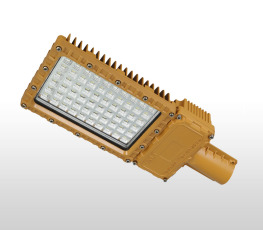
Specifically designed for Zone 1 and Zone 2 hazardous locations where flammable gases,vapors,or dust may be present,such as oil refineries,chemical plants,natural gas facilities,coal mines,oil depots,and port hazardous material storage areas.Its core function is to prevent arcs,sparks,or hot surfaces inside the luminaire from igniting the external explosive atmosphere.
Product Description
Product Features:
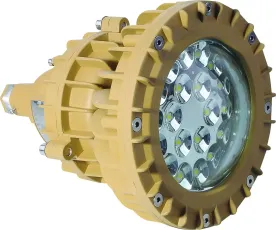
The housing is made of high-strength aluminum alloy or stainless steel,forming a robust structure.The mating surfaces are precision-machined to create a flameproof enclosure.All electrical components(driver,terminals)are sealed within this flameproof chamber.Even if an internal explosion occurs,flames and hot gases are safely cooled and vented through specific flamepaths,preventing ignition of the external environment.Special heat dissipation designs(e.g.,external fins,internal heat pipes)ensure the surface temperature remains below the ignition temperature group of the specific gas/dust(e.g.,T4≤135°C).The glass cover is typically high-strength tempered glass,resistant to impact and thermal shock.

Product Specifications:
The common power range is 50W to 200W,with an efficacy of around 120-140 lm/W.It must be certified by national authorities for explosion protection,clearly marked with the Ex rating,temperature class,and protection rating,e.g.,Ex d IIB T4 Gb/Ex tD A21 IP66 T80°C.The operating voltage is AC220V.It offers excellent corrosion resistance(e.g.,WF2)for corrosive chemical plant atmospheres.Typically includes a convenient explosion-proof junction box and certified cable glands(Grafo fittings).

Product Applications:
Strictly used within designated explosive hazardous areas,such as chemical plant roadways,perimeter areas of refinery units,LNG terminals,mine entrance areas,and perimeters of grain processing facilities.Installation must strictly adhere to explosion-proof electrical codes,including cable selection,routing,grounding,and protection.Maintenance must be performed by qualified personnel,ensuring flameproof surfaces are clean and intact,and fasteners are properly tightened.Selection and procurement must first confirm the hazardous medium,zone classification,and temperature class of the location to ensure the luminaire’s explosion-proof rating matches or exceeds the site requirements.
Frequently Asked Questions (FAQ)
Q:What does the certification 'Ex d IIB T4' mean?
A:'Ex d' indicates a flameproof enclosure. 'IIB' means it's suitable for gases like ethylene. 'T4' signifies the max surface temperature is ≤135°C. This rating must match the hazardous zone's specific gas group and ignition temperature.
Q:Can it be used in Zone 1 and Zone 2 areas?
A:Yes, luminaires with an appropriate 'Ex d' or 'Ex de' rating are certified for use in both Zone 1 (hazard present continuously) and Zone 2 (hazard likely only occasionally) areas.
Q:Why is stainless steel sometimes used for the housing?
A:304 or 316 stainless steel is chosen for its superior corrosion resistance in highly aggressive chemical environments, such as offshore platforms or coastal chemical plants.
Q:How is heat dissipated safely in an explosion-proof fixture?
A:Heat is managed through internal heat pipes or conduction to external, increased-surface-area fins. The design ensures external temperatures stay below the certified T-rating, even at high ambient temperatures.
Q:What is the proper procedure for maintenance?
A:Power must be disconnected. Only trained personnel should open the fixture, ensuring all flameproof joint surfaces are clean and undamaged, and bolts are re-tightened to the specified torque to maintain the explosion-proof integrity.
Q:Are special cables required for installation?
A:Yes, cables with appropriate certifications for hazardous areas must be used. They must be securely connected via certified explosion-proof cable glands to maintain the seal at the entry point.











 Post RFQ


 Chat
Chat




 ALL CATEGORIES