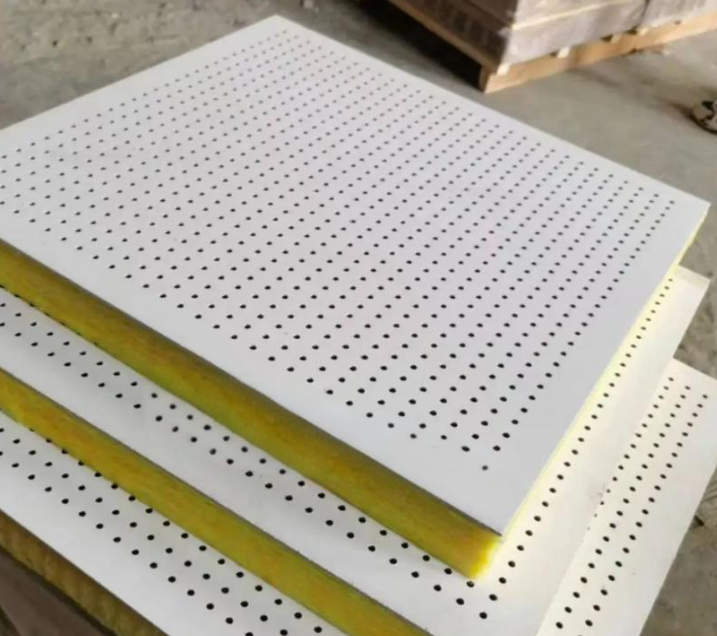
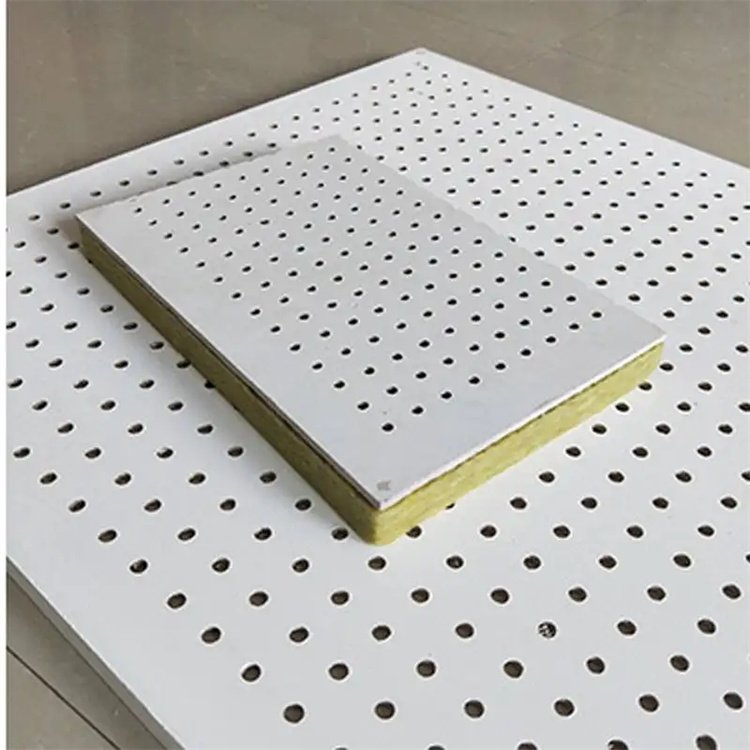


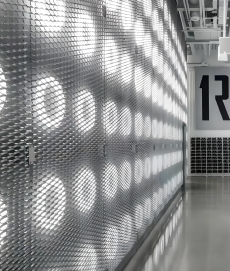
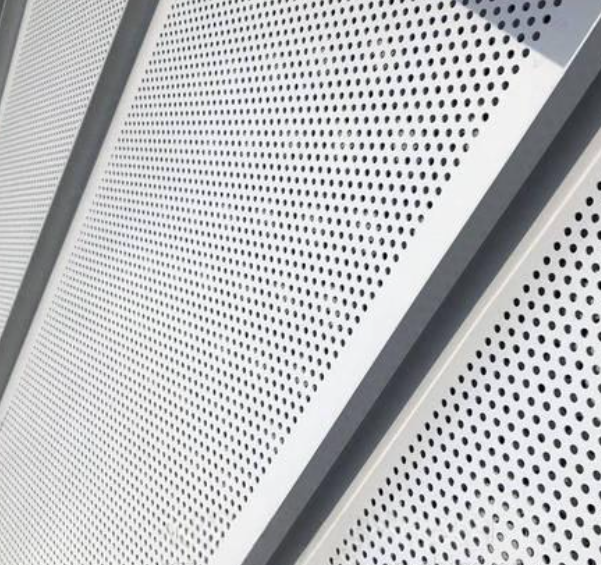
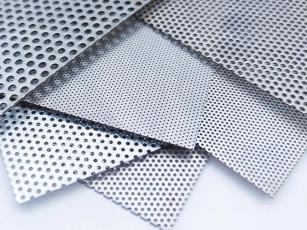
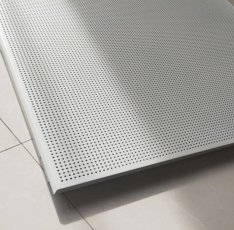
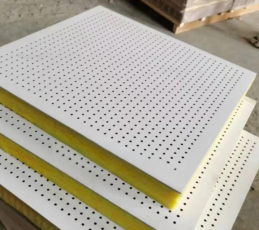
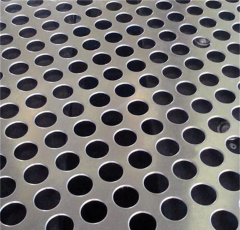
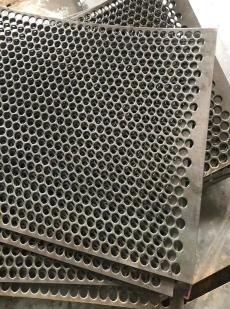
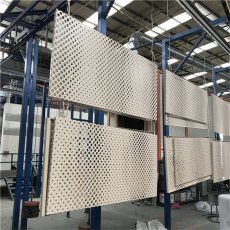
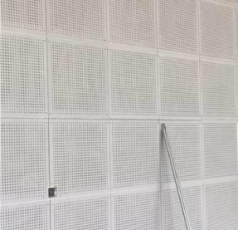
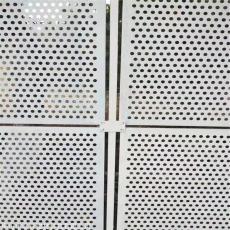
This composite sound-absorbing perforated panel adopts a double-layer structure design, with an outer layer of galvanized steel micro-hole mesh and an inner layer of high-density centrifugal glass wool interlayer, achieving high-efficiency noise reduction through dual mechanisms of physical sound absorption and sound wave blocking, with a sound insulation level of over 35dB, which can reduce 100dB noise in industrial machine rooms to below 65dB, complying with national industrial noise emission standards. The outer galvanized steel mesh undergoes hot-dip galvanizing treatment, with salt spray test reaching over 1000 hours, offering excellent corrosion resistance and adapting to harsh outdoor environments with humidity and dust; the inner centrifugal glass wool uses formaldehyde-free environmentally friendly materials, without releasing harmful gases, complying with indoor air quality standards. The card slot installation method is quick and convenient, allowing direct fixation on sound barrier frames without complex construction processes; the product surface is flat without splicing gaps, with uniform sound insulation effect, solving the pain point of sound insulation loopholes at the splicing joints of traditional sound insulation materials. In addition, the product complies with GB 8624-2012 Grade A fire safety standards, does not burn in case of fire, and does not produce toxic smoke, suitable for scenarios with high fire safety requirements such as industrial machine rooms and rail transit.
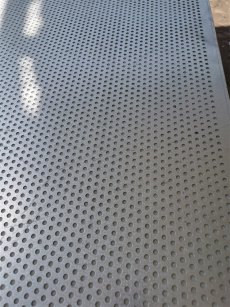
The core specifications of this sound insulation and noise reduction composite perforated panel strictly follow national noise reduction material standards: total thickness of the composite layer is 25mm, with outer galvanized steel thickness of 0.8mm and inner centrifugal glass wool thickness of 24.2mm, ensuring structural strength while providing sufficient sound absorption space; outer steel panel has a hole diameter of Φ2mm, hole pitch of 3mm, and opening rate of approximately 22%, effectively absorbing medium and high-frequency sound waves; sound insulation level is ≥35dB, meeting noise reduction requirements of industrial machine rooms, highways, and other scenarios; fire resistance grade is GB 8624-2012 Grade A, completely non-combustible, complying with fire safety requirements of high-risk places; corrosion resistance reaches 1000 hours salt spray test, suitable for harsh outdoor environments such as coastal areas and humidity; applicable temperature range is -30℃ to 80℃, adapting to cold winters in the north and hot summers in the south; service life is ≥20 years, reducing later maintenance costs due to no frequent replacement; installation method is card slot type, supporting special aluminum alloy card slots with installation accuracy up to ±1mm; product sizes support customization, with a maximum whole sheet size of 2000mm×3000mm; the surface is burr-free and has no sharp edges, avoiding scratches on operators during construction.
This product is widely used in scenarios such as industrial noise reduction, urban traffic noise reduction, and building acoustic optimization. In the industrial field, it can be used for sound insulation walls in power plant machine rooms, chemical plant workshops, and compressor stations, reducing the impact of equipment operation noise on operators and surrounding residents, complying with national industrial enterprise noise emission standards; in urban traffic field, it can be used for highway sound barriers, urban expressway noise barriers, and rail transit noise baffles, absorbing traffic noise to protect the living environment of residents along the line; in the construction field, it can be used for sound-absorbing walls in theaters and concert halls to optimize indoor acoustic environment and improve sound quality; in the commercial field, it can be used for sound insulation partitions in KTVs and bars to prevent noise leakage from affecting surrounding merchants and residents. In addition, it is suitable for noise barriers around airport runways and boundary sound insulation walls in industrial plants, combining noise reduction performance and structural stability.








 Post RFQ


 Chat
Chat


 ALL CATEGORIES