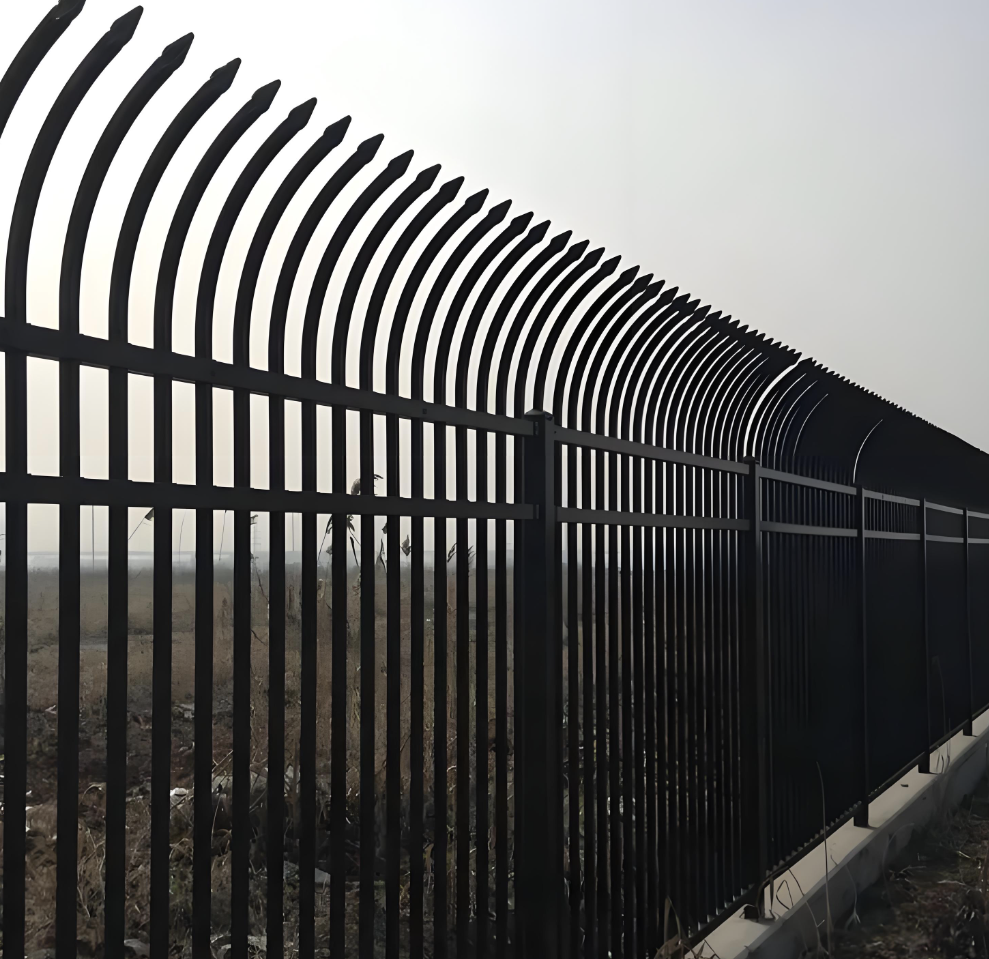
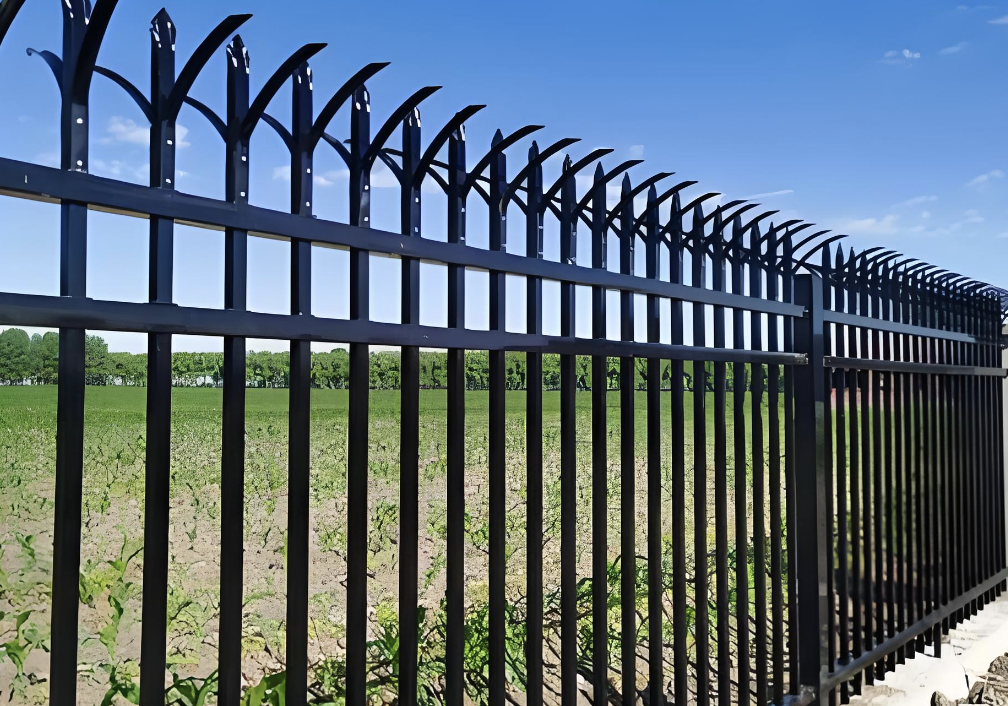


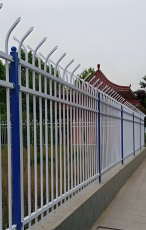
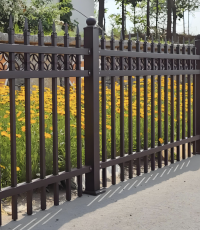
The fence’s heavy-duty Q345 carbon steel material has a yield strength of 345MPa, which is 20% higher than ordinary Q235 steel, providing superior resistance to impact and shear. Robot welding ensures consistent weld quality, eliminating weak points that could be exploited by intruders. The sharpened top spear heads are 15cm long, creating a physical barrier that makes climbing nearly impossible, solving the problem of easy access over standard fences. The integrated anti-cut bars are made of high-strength steel, with a shear resistance of ≥15kN, preventing intruders from cutting through the fence with bolt cutters. The hot-dip galvanized layer thickness of 90μm meets ISO 9227 C4 corrosion resistance standards, suitable for use in industrial areas with high levels of dust or chemical fumes. Additionally, the dark gray powder coating provides camouflage in industrial environments, reducing the fence’s visibility as a target for vandalism.
The fence has an overall height of 220cm, which is tall enough to prevent climbing and provide clear boundary marking for industrial perimeters. The posts have a diameter of 165mm, with an embedded depth of 50cm, fixed with concrete pouring to ensure a stable foundation that can resist strong impacts. The horizontal rails are 60*40mm rectangular tubes, and the anti-cut vertical bars are 20mm in diameter, spaced 10cm apart to enhance shear resistance. Each linear meter of the fence weighs 18kg, providing sufficient weight to resist wind loads up to Grade 13 (≥134km/h). The hot-dip galvanized layer is 90μm thick, followed by a 65μm polyester powder coating, ensuring excellent corrosion resistance. The surface is sandblasted to a roughness of Ra 12.5μm before coating, ensuring strong adhesion between the coating and the steel surface. It is suitable for temperature ranges from -40℃ to 60℃, adapting to both cold northern industrial parks and hot southern chemical facilities.
This industrial perimeter fence is widely used in heavy industrial scenarios, including manufacturing factories, logistics distribution centers, chemical storage parks, thermal power plants, and mining sites. In manufacturing factories, it protects production equipment and raw materials from theft and vandalism, reducing operational losses. In logistics warehouses, it separates storage areas from public access roads, preventing unauthorized personnel from entering sensitive zones. Chemical parks benefit from its high corrosion resistance, as it can withstand exposure to chemical fumes and industrial dust without degrading. It is also suitable for prison auxiliary perimeters, where its anti-climbing and anti-cut features enhance security. Industrial facility managers, security companies, and construction engineering firms are the main customers, as it provides reliable long-term security protection. It is particularly popular in industrialized regions such as the United States, Germany, and China’s Pearl River Delta and Yangtze River Delta.








 Post RFQ


 Chat
Chat




 ALL CATEGORIES