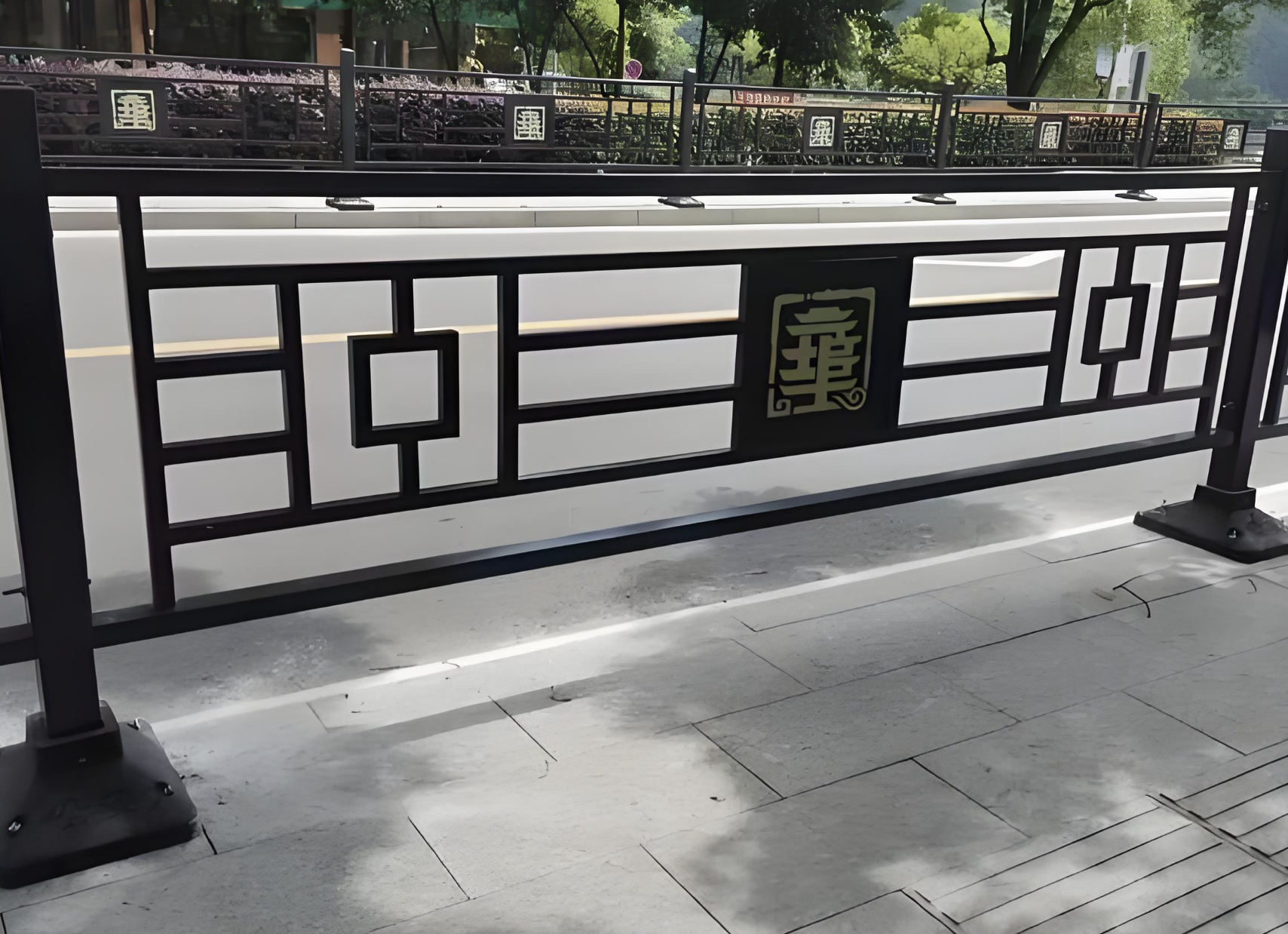
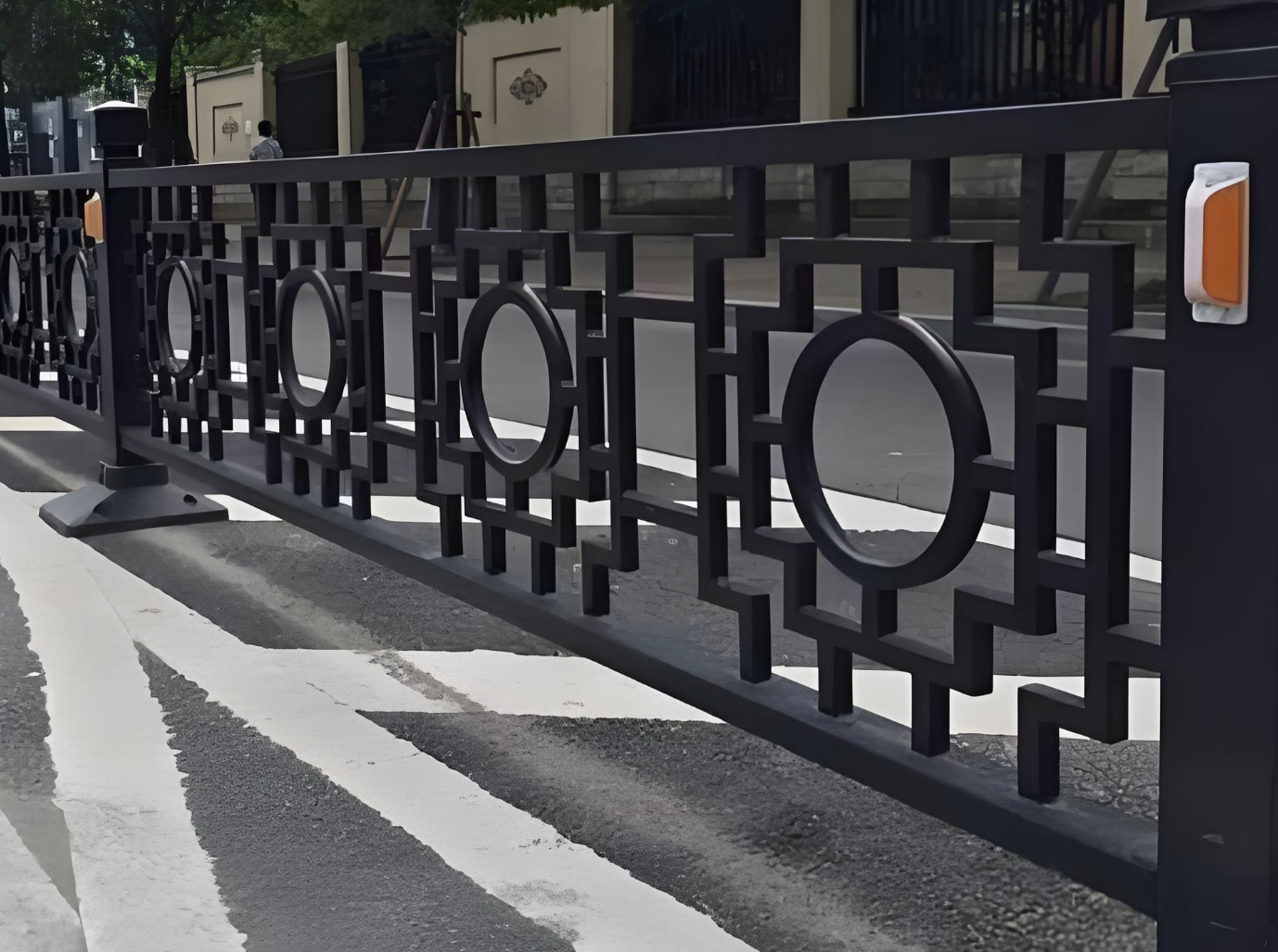


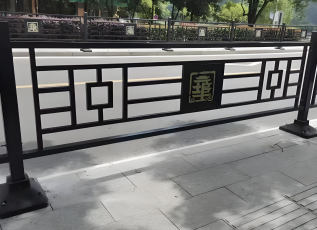
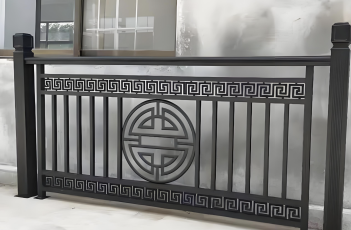
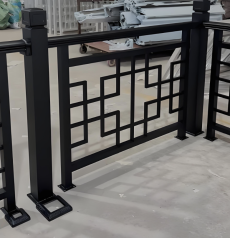
This municipal railing features a batch die-forging process, which ensures consistent dimensions and pattern details across all segments, reducing installation time and maintenance costs for large-scale projects. Its full hot-dip galvanization treatment, combined with epoxy zinc-rich primer, provides reliable corrosion resistance, solving the common problem of rusting in high-traffic public areas. The city brick pattern and interlocking pattern border are carefully designed to match the architectural features of ancient Chinese streets, avoiding the disjointed visual effect caused by generic metal railings. The continuous splicing design ensures seamless connection between segments, enhancing the overall aesthetic coherence of streetscapes. Additionally, the railing uses rounded edge processing to prevent accidental injuries to pedestrians, addressing the safety concerns of public space managers.
Each standard segment measures 1100mm in height and 2500mm in width, with vertical bar diameter of 22mm and horizontal bar diameter of 30mm, ensuring sufficient structural stability. The Q235 low carbon steel material complies with GB/T 700-2006 standards, providing excellent weldability and formability for mass production. The full hot-dip galvanization layer reaches a thickness of 70-90μm, meeting C4-M medium-high corrosion resistance standards, suitable for urban public areas with moderate pollution levels. The epoxy zinc-rich primer has a zinc content of over 80%, providing cathodic protection to the steel substrate, while the acrylic topcoat is 50-60μm thick, offering good weather resistance. Installation flanges are 150mm×150mm in size, compatible with M12 expansion bolts for quick and firm fixation. The weight per meter is 18kg, making it easy to transport and install on large-scale municipal projects.
This municipal antique railing is widely used in public cultural and commercial spaces. In historical protection districts, it lines pedestrian streets, riverbanks, and scenic spots, maintaining the traditional architectural style while providing crowd guidance and safety protection. For antique commercial streets, it can be installed between storefronts or around outdoor seating areas, enhancing the cultural atmosphere and ensuring pedestrian safety. It is also suitable for municipal park renovation projects, where it can be used to separate pedestrian paths from green areas, aligning with the park’s natural and cultural themes. Additionally, it can be applied to the renovation of old urban neighborhoods, helping to restore the historical appearance of the area while meeting modern safety and durability requirements.








 Post RFQ


 Chat
Chat




 ALL CATEGORIES