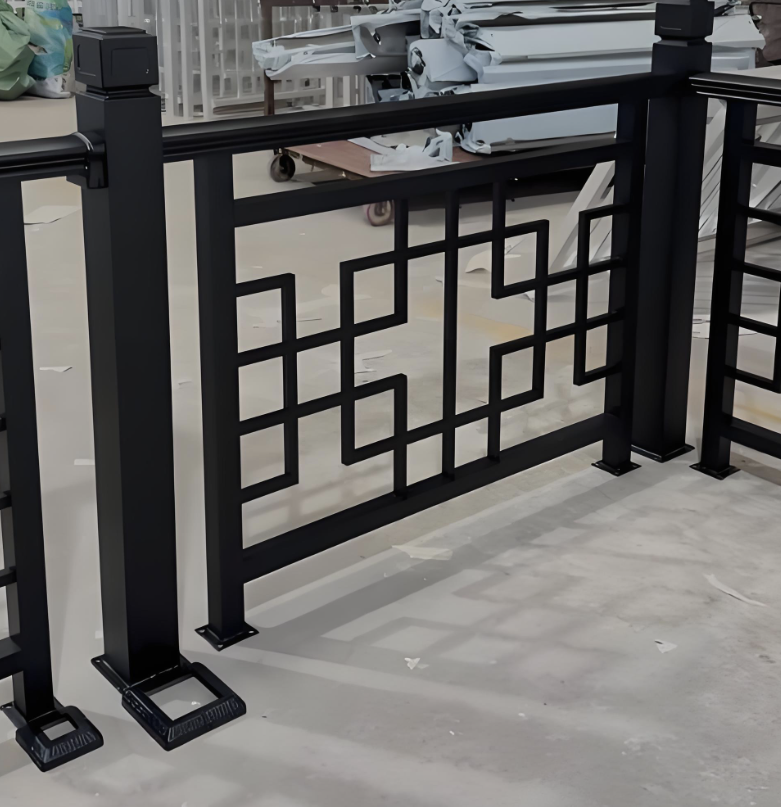
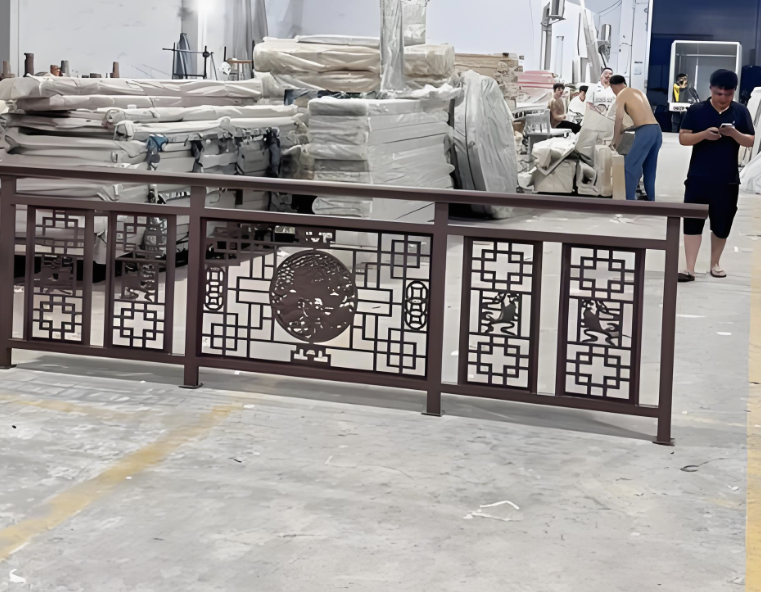


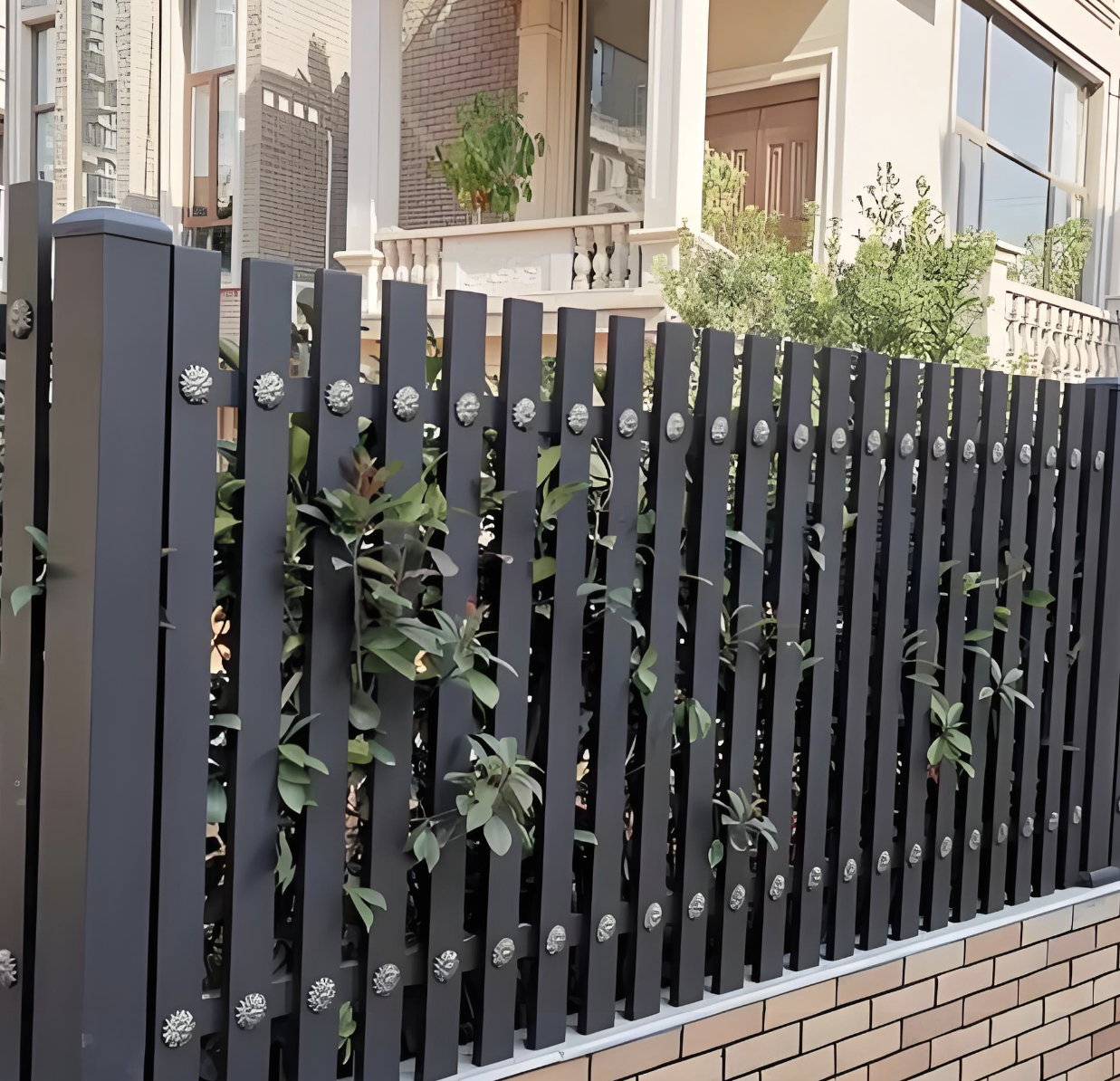
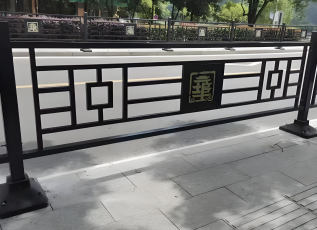
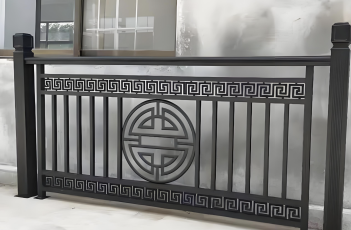
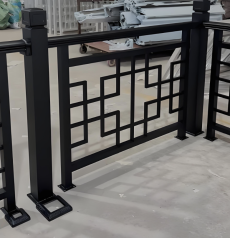
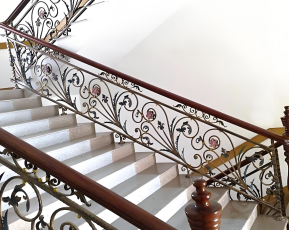
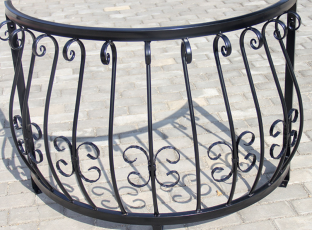
This railing stands out with its hand-forged craftsmanship, where every cloud and interlocking pattern is shaped by skilled artisans, delivering a unique, non-mass-produced aesthetic that cannot be replicated by CNC machining. Its dual anti-corrosion system—hot-dip galvanization paired with UV-resistant electrostatic spraying—effectively solves the common pain points of rusting and fading faced by traditional iron railings in outdoor environments. The anti-climbing structural design, with closely spaced vertical bars (110mm interval), enhances security by preventing unauthorized access. Additionally, the antique copper coloring mimics the patina of aged bronze, adding a nostalgic touch that complements traditional courtyard landscapes without requiring frequent maintenance. The expandable modular design also allows users to adjust the length to fit different courtyard layouts, providing flexible customization options.
The railing is constructed from Q235 low carbon steel, which offers a yield strength of 235MPa, ensuring sufficient load-bearing capacity to withstand external impacts. Each single set measures 1200mm in height and 3000mm in width, with vertical bar diameter of 25mm and horizontal bar diameter of 32mm for enhanced stability. The hot-dip galvanization layer reaches a thickness of 80-100μm, meeting international C5-M high corrosion resistance standards, suitable for coastal or high-humidity areas. The electrostatic spray coating is 60-70μm thick, providing a smooth, scratch-resistant surface. Installation holes are pre-drilled with a diameter of 16mm, compatible with M14 expansion bolts for firm fixation. The overall weight of a single set is 48kg, ensuring structural stability without excessive burden on foundation structures. All materials comply with ISO 9001 quality standards, and the product has passed anti-rust and impact resistance tests conducted by third-party authorities.
This vintage Chinese wrought iron railing is widely applicable to various traditional and semi-traditional outdoor spaces. In private residential courtyards, it can be used to enclose garden areas, separate activity zones, or line walkways, adding a classical touch while preventing pets or children from straying. For Chinese-style B&Bs and guesthouses, it serves as a decorative and functional barrier around outdoor seating areas, courtyards, or rooftop terraces, enhancing the cultural theme and improving guest safety. It is also suitable for heritage sites, such as small courtyard-style museums or cultural centers, where it complements historical architecture without compromising on modern security requirements. Additionally, it can be installed around private villa gardens to create a secluded, aesthetically pleasing outdoor environment that aligns with traditional Chinese design principles.








 Post RFQ


 Chat
Chat




 ALL CATEGORIES