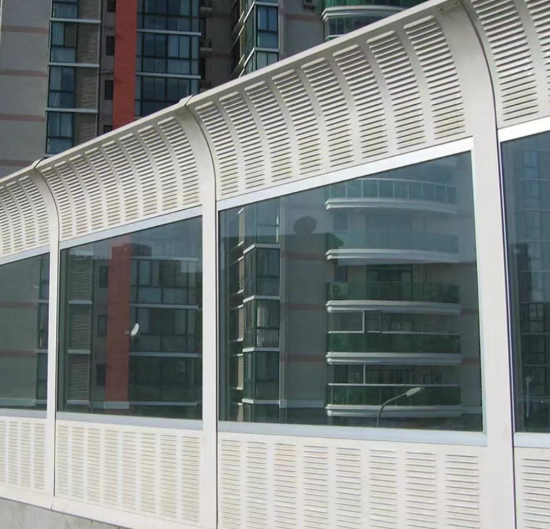
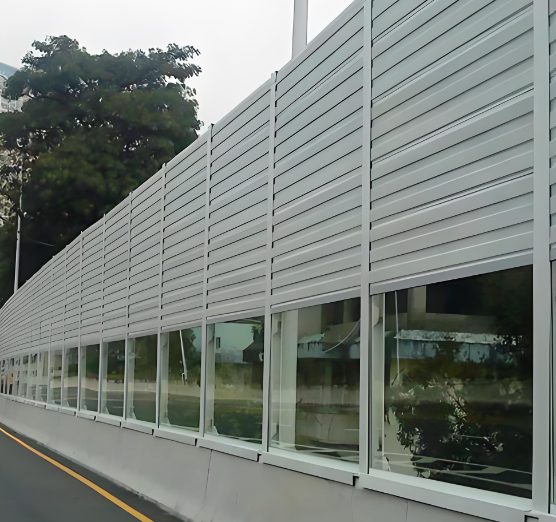


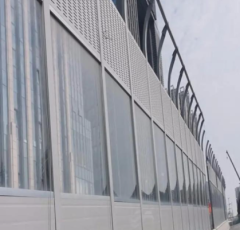
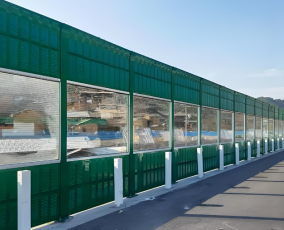
The core innovation of this sound barrier is its acoustic laminated glass technology: the two layers of tempered glass are bonded with a 0.76 mm thick PVB interlayer that not only holds the glass together in case of breakage but also absorbs sound waves, reducing noise transmission by 35 dB. Its 85% light transmission ensures that drivers and pedestrians can enjoy unobstructed views of mountains, coastlines, or city skylines, unlike opaque barriers that disrupt the scenic experience. The tempered glass is 5 times stronger than standard glass, able to withstand impacts from rocks, hail, and minor vehicle collisions without shattering. The stainless steel clamps are polished to a mirror finish, creating a modern, minimalist look that complements architectural designs. Unlike polycarbonate barriers, it does not yellow over time, maintaining clear visibility for 20+ years. Additionally, it is tested to ASTM C1048 standards, guaranteeing resistance to thermal stress and temperature fluctuations in extreme climates.
Each unit of the scenic road sound barrier measures 2200 mm in height and 1500 mm in width, with a total thickness of 20 mm (8mm tempered glass front, 0.76 mm PVB interlayer, 8mm tempered glass back). The noise reduction rating is 35 dB, tested across 100 Hz to 5000 Hz frequency ranges, effectively blocking traffic noise while preserving scenic views. The temperature resistance range is -40°C to 90°C, ensuring performance in sub-zero winters and hot summer months. The wind resistance class is ASTM E1996 Class 5, capable of withstanding wind speeds up to 200 km/h, ideal for coastal regions with strong typhoons. Each unit weighs 100 kg, requiring heavy-duty lifting equipment for installation. The stainless steel clamps are made of 316-grade stainless steel, which is corrosion-resistant to salt spray and marine environments. The glass has a light transmission rate of 85% and a haze rate of less than 1%, ensuring crystal-clear visibility. All components meet EN 12150 safety standards for tempered glass, providing protection against accidental breakage.
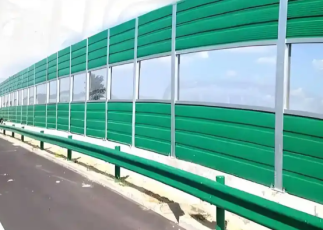
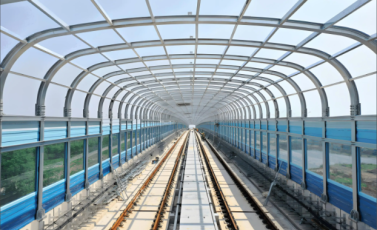
This transparent sound barrier is primarily used for scenic transportation routes, including coastal highways, mountain pass roads, urban waterfront boulevards, and national park access roads. It is also suitable for installation near luxury residential communities, golf courses, and high-end resorts where noise control is needed without sacrificing views. In urban areas, it can be installed along pedestrian walkways and bike paths to reduce traffic noise while maintaining visibility of city landmarks. For bridge projects, it is used to enclose roadways on suspension bridges, reducing wind noise and traffic noise for drivers and pedestrians. Additionally, it is used in airport approach paths near scenic areas, balancing noise control for nearby communities with preservation of natural landscapes. It is a popular choice for tourism boards and municipal governments looking to enhance the driving experience while meeting noise pollution regulations.









 Post RFQ


 Chat
Chat





 ALL CATEGORIES