


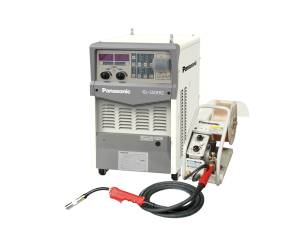
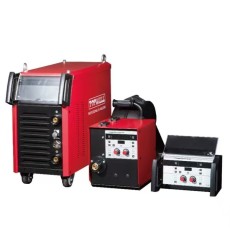
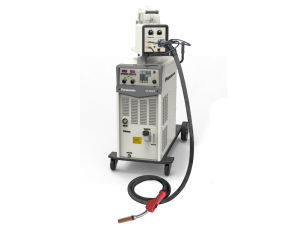
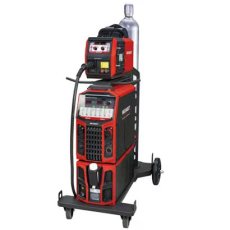
High-current output up to 500A ensures deep penetration and high deposition rates for thick plate welding. Advanced arc control technology with adjustable inductance and voltage compensation optimizes arc stability and reduces defects. Compatible with automation systems, it integrates via PLC interfaces into robotic welding cells to enhance productivity. A forced circulation water-cooling system maintains low operating temperatures, supporting 24/7 continuous operation. Durable industrial construction with IP54 rating resists oil, dirt, and high-temperature environments. Remote control allows operators to adjust parameters from a distance. Intelligent monitoring logs welding data for quality traceability and preventive maintenance.
440V 3-phase input with a 30kVA power requirement ensures stable energy supply. Current range 100-500A, duty cycle 100% @ 450A allows uninterrupted operation. Compatible with 1.0-1.6mm wires, including metal-cored wires, with high feeding precision. Maximum open-circuit voltage is 80V with safe isolation design. Weighs 80kg, equipped with heavy-duty wheels and handles for factory mobility. Water-cooling system flow rate is 5L/min, covering both torch and power source. Wire feed speed range 2-20m/min, finely adjustable. Includes a 10-meter water-cooled torch and 15-meter cables, supports multi-gas regulation, and can store up to 50 program sets.
Primarily used in heavy industry sectors like heavy machinery manufacturing (excavator frames), bridge and building steel structures (A992 steel), pressure vessels (ASME standards), pipeline welding (thick-walled steel pipes), and aerospace components (titanium alloys). Suitable for high-strength steels (e.g., abrasion-resistant steels), stainless steels (e.g., duplex steels), aluminum (e.g., 7xxx series), and nickel-based alloy welding, with thickness ranges from 5-50mm. Common in shipbuilding and energy sectors (e.g., wind turbine towers), where high power supports multi-pass welding. Automated versions are used in automotive chassis and railway vehicle production, ensuring joint strength and fatigue life.









 Post RFQ


 Chat
Chat


 ALL CATEGORIES