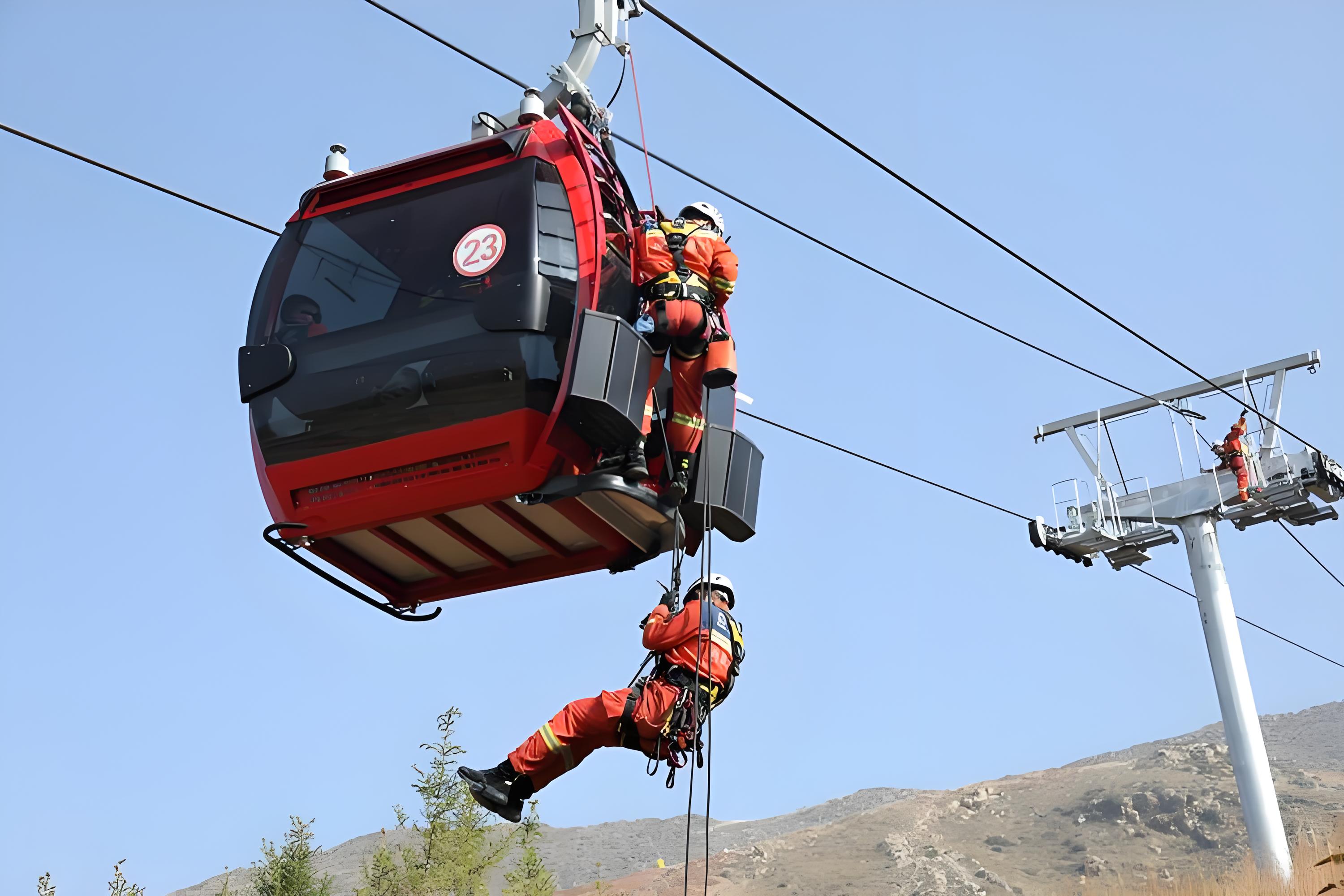
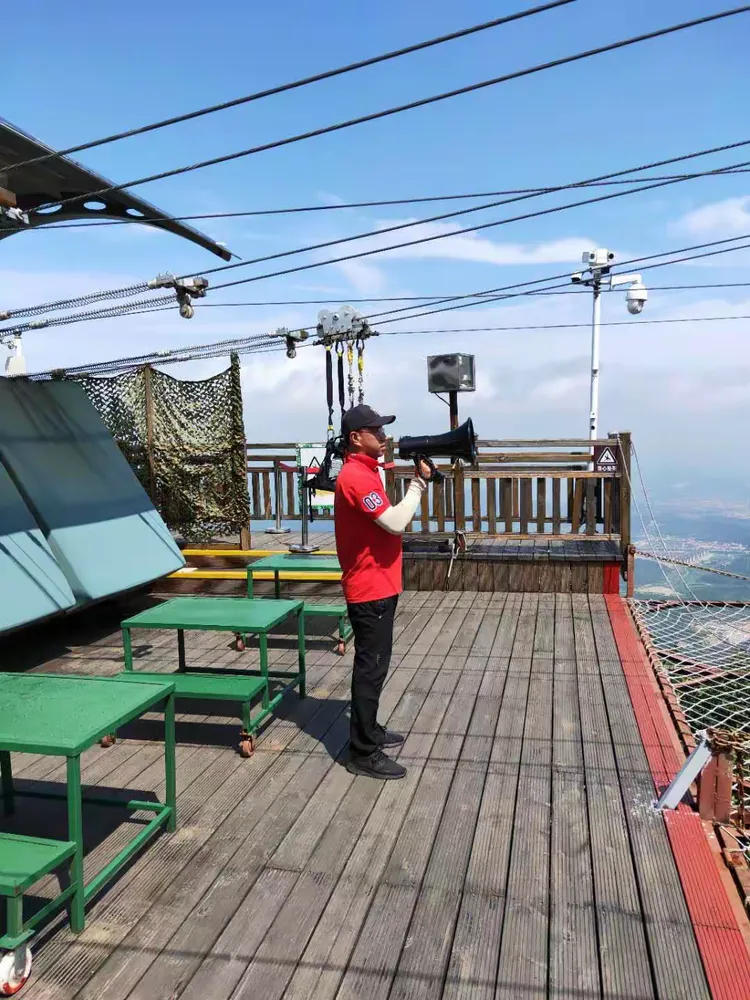


This rescue zipline’s key advantage is its rapid deployment capability, allowing responders to set up a secure evacuation route in less than 5 minutes—critical in time-sensitive emergency scenarios like building fires or landslides. The high-strength aramid fiber cable is fire-resistant and lightweight, offering 2x the tensile strength of steel cables while weighing 70% less, making it easy to handle and deploy in tight spaces. The automatic locking emergency brake activates instantly if the sliding speed exceeds 10 ft/s (3.05 m/s), preventing overspeeding and ensuring safe stops for injured or panicked individuals. The device includes a full-body safety harness with quick-release buckles, designed for fast fitting even in high-stress environments, and heavy-duty carabiners with a breaking strength of 10,000 lbs (4535.92 kg). Its IP67 waterproof rating ensures it remains functional in heavy rain or fire-related water exposure, and the durable storage backpack protects components from damage during transport.
The high-strength aramid fiber cable measures 0.25 inches (6.35 mm) in diameter, with a tensile strength of 20,000 lbs (9071.85 kg) and a maximum length of 100 ft (30.48 m). The automatic locking brake uses a centrifugal force sensor to activate when sliding speed exceeds 10 ft/s, locking the pulley in place within 0.5 seconds to prevent further movement. The full-body safety harness features adjustable chest, waist, and leg straps, fitting users weighing 110-330 lbs (50-150 kg), and includes a quick-release mechanism for emergency exits. The heavy-duty steel carabiners have a breaking strength of 10,000 lbs (4535.92 kg) and are coated with anti-corrosion zinc plating. The folded system weighs 22 lbs (10 kg) and fits into a 24 x 18 x 8 inches (60.96 x 45.72 x 20.32 cm) storage backpack, which is made of fire-resistant nylon fabric. The device operates in temperatures ranging from -30°C to 60°C, ensuring functionality in extreme cold or heat.
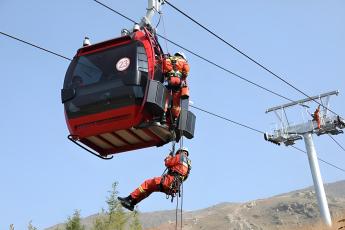
The Fire Emergency Rescue Rapid Zipline Device is designed for fire departments, emergency response teams, and mountain rescue organizations. It is ideal for high-rise building fire rescues, where stairwells are blocked by smoke or flames, providing a secure evacuation route for trapped individuals. In mountain fire rescues, it enables responders to transport injured firefighters or trapped hikers across steep slopes or ravines too dangerous for foot travel. Additionally, it can be used for natural disaster rescues, such as landslides or floods, delivering emergency supplies or evacuating people from isolated areas. Its compact size and rapid deployment make it suitable for urban search and rescue missions, allowing teams to access tight spaces like collapsed buildings or narrow canyons quickly and safely.
















 Post RFQ


 Chat
Chat


 ALL CATEGORIES