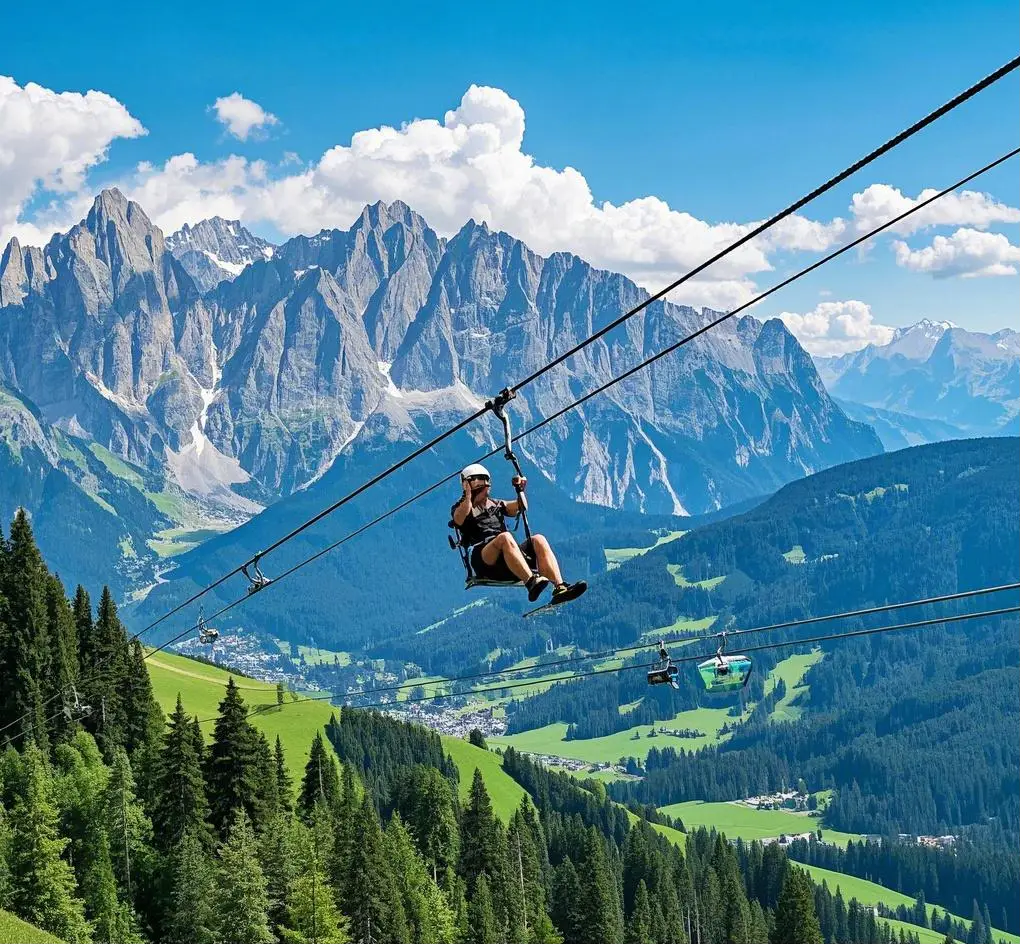
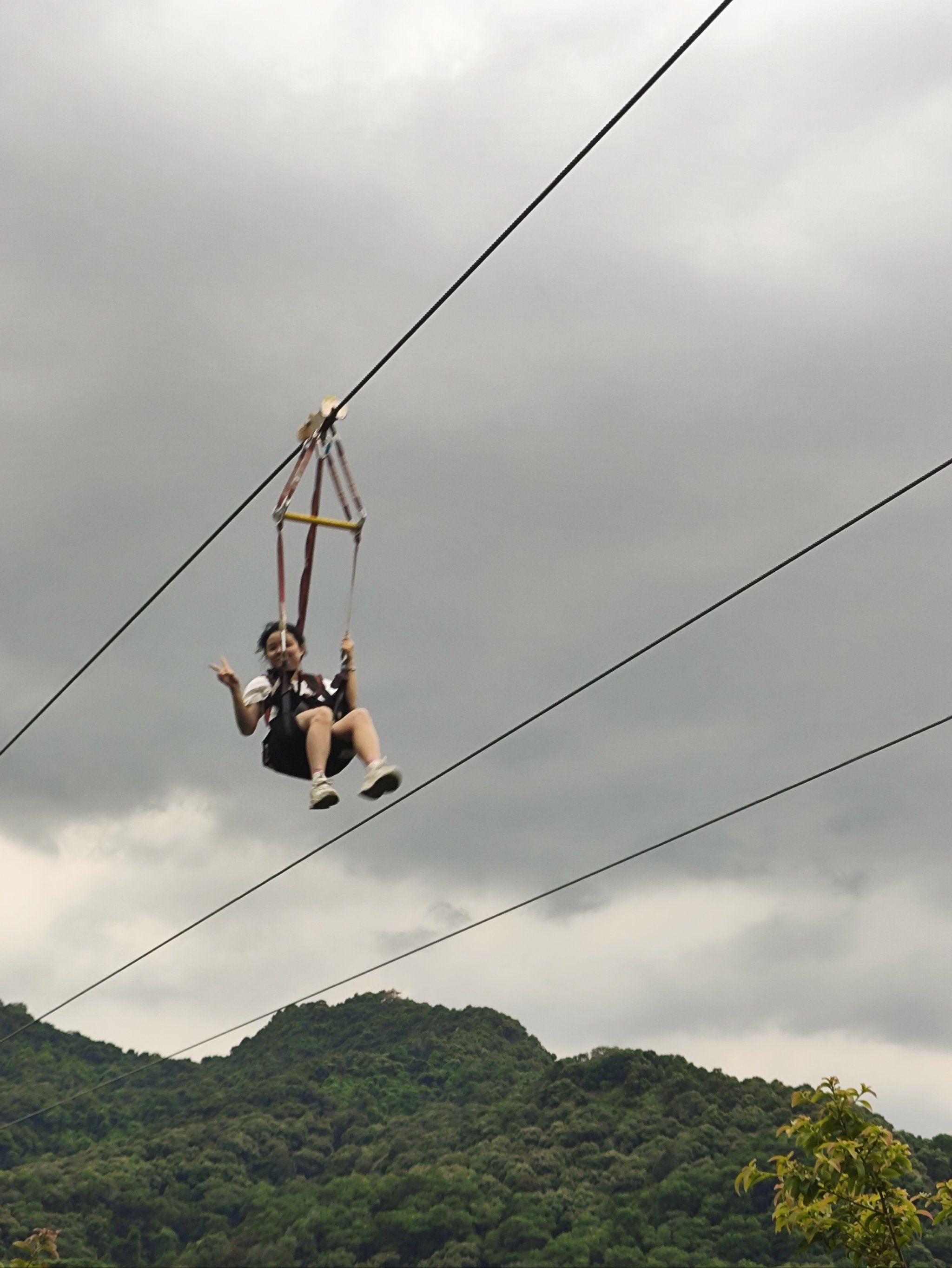


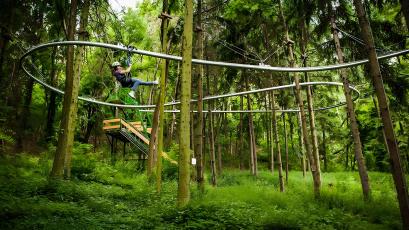
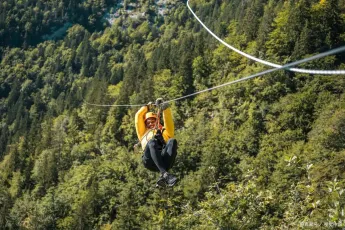
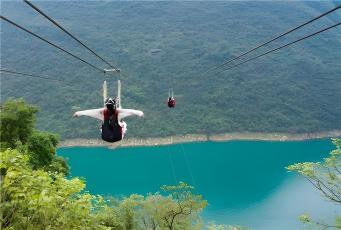
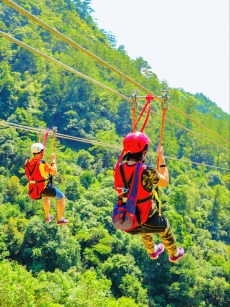
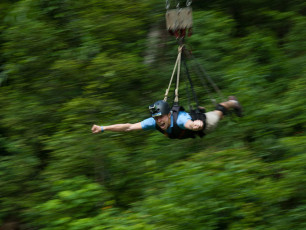
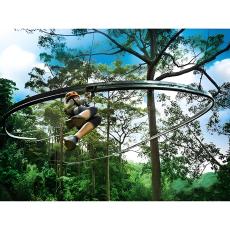
This zip line course features a modular track design, allowing operators to freely combine the number of segments and track length according to the size of the forest area, with a minimum installation space of 5000 square meters. The quick-release safety harness is designed for jungle movement, enabling participants to easily switch between zip lines and ground obstacle courses without removing the harness. The dual safety rope system helps improve safety so that even if one rope is compromised, the other can immediately take over, greatly reducing the risk of falling. The anti-fall lock is automatically locked to the steel cable during gliding, helping prevent accidental detachment. Additionally, the track is installed at a moderate height, allowing participants to closely observe jungle ecosystems such as bird nests and rare plants while gliding, helping enhance the educational value of the experience.
Each segment of the track uses 22mm diameter galvanized steel cables with a tensile strength of 80kN, suitable for short-distance gliding with small height differences. The safety harness is made of high-strength nylon webbing with a breaking strength of 20kN, equipped with adjustable shoulder, chest, and leg straps to fit different body types. The gliding speed is controlled by a speed limiter, with a maximum speed of 25km/h to avoid collisions with tree branches. The ground clearance is set between 8-15 meters to ensure safety while maintaining a sense of immersion in the jungle. All metal fixtures are made of stainless steel to resist corrosion in humid forest environments. The modular components can be installed in 20-30 days, and each maintenance check includes cable tension testing, harness wear inspection, and anti-fall lock performance verification.
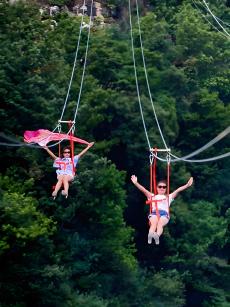
This zip line course is widely used in outdoor adventure camps, forest education bases, and corporate team building venues. Typical application scenarios include: 1. Youth outdoor education: Combining jungle exploration and zip line gliding to cultivate teamwork and problem-solving skills; 2. Corporate team building: Designing obstacle-based group challenges to enhance team cohesion and communication; 3. Parent-child adventure: Offering parent-child packages where parents and children complete the course together, promoting family interaction; 4. Jungle tourism projects: Integrating with hiking trails and observation platforms to create a one-stop forest experience. It is also suitable for small-sized scenic spots to add high-value adventure projects without large-scale infrastructure investment.









 Post RFQ


 Chat
Chat


 ALL CATEGORIES