
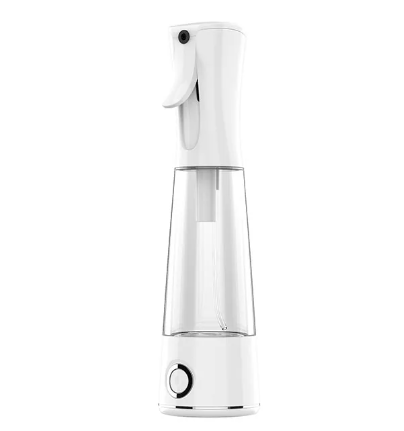







The key benefit of this portable livestock sanitizer is its pre-diluted formulation, eliminating the need for time-consuming on-site mixing that can lead to incorrect concentration levels and safety risks. Its compact, portable design with a built-in hanging rope allows farmers to easily carry and store the spray bottle in farm vehicles, tool sheds, and feeding stations, making sanitization quick and convenient. The fragrance-free, non-irritating formula is safe for use around livestock and farm workers, avoiding the stress and health risks associated with harsh chemical sanitizers. The 1-2 meter spray range allows farmers to sanitize large surface areas quickly, reducing the time spent on daily farm sanitation tasks. This product solves the pain point of complex, time-consuming farm sanitization, helping livestock producers reduce disease risks and improve herd health.
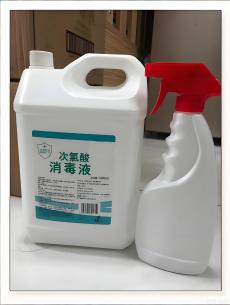
This livestock farming sodium hypochlorite spray has a pre-diluted effective chlorine concentration of 0.5%-1%, packaged in a 500ml food-grade PET spray bottle with a built-in hanging rope. It has a PH value ranging from 10.5 to 12.0, with a spray range of 1-2 meters for targeted sanitization. The product is fragrance-free and non-irritating to livestock and human skin, meeting NY/T 1199-2006 agricultural disinfection standards. It has a 6-month shelf life when stored in a cool, dry environment between 5 and 30 degrees Celsius. It is safe for use on poultry, pigs, cattle, sheep, and other livestock housing surfaces, feeding troughs, and drinking water systems.
This product is designed for use in poultry farms, pig farms, cattle ranches, and other livestock breeding facilities. It is used to sanitize livestock housing walls, floors, and equipment, as well as feeding troughs, drinking water systems, and livestock transport vehicles. It can also be used to sanitize livestock market facilities and animal handling areas to reduce the risk of disease transmission between herds. By using this portable sanitizer spray, livestock producers can quickly and easily maintain high hygiene standards, reduce the risk of disease outbreaks, and improve the overall health and survival rate of their livestock.








 Post RFQ


 Chat
Chat


 ALL CATEGORIES