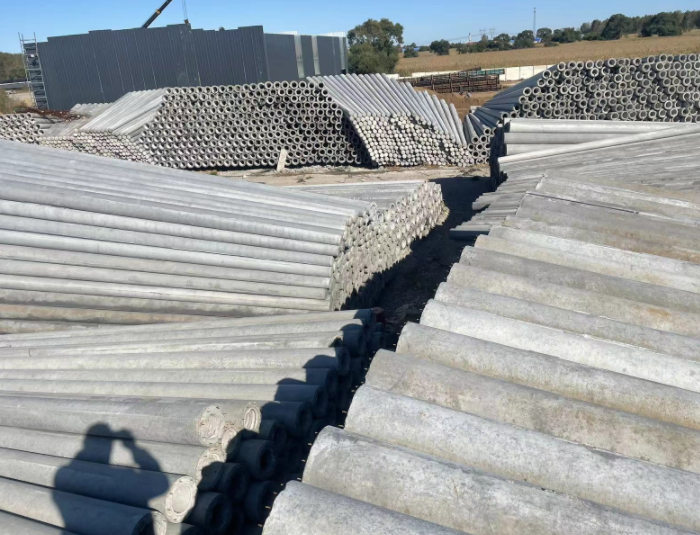
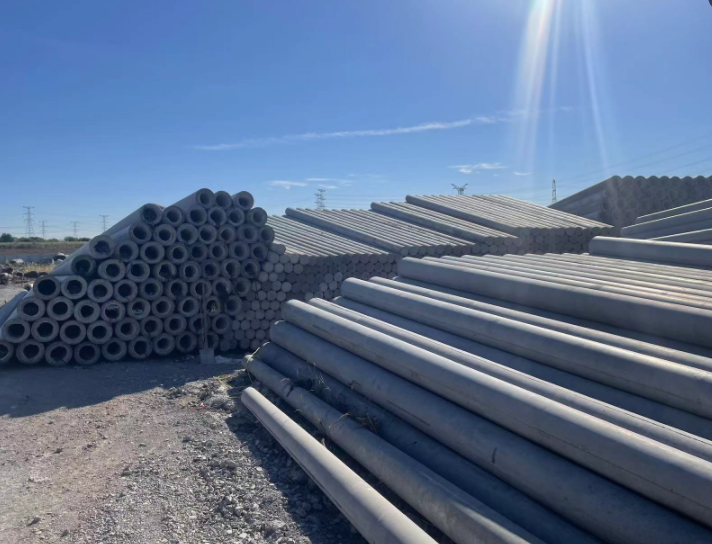
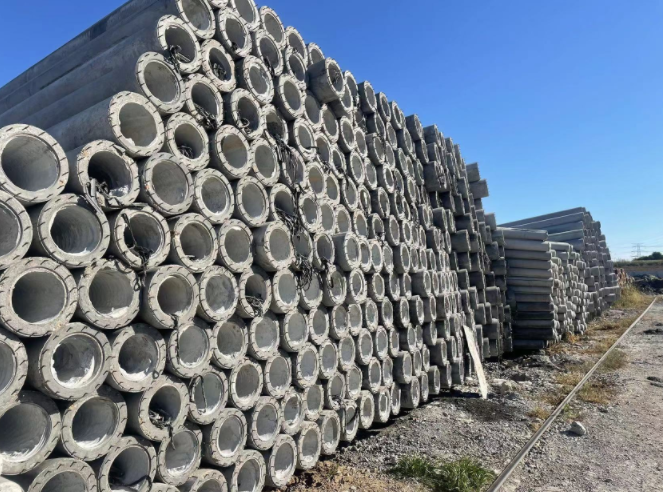





It adopts a systematic engineering approach to address corrosion issues. From internal corrosion-resistant cementitious materials and steel bar rust prevention treatment to external protective coatings, multiple protective barriers are built. This significantly improves the pole’s durability in environments containing Cl⁻, SO₄²⁻ and other ions, resulting in low life-cycle costs.
The core lies in the use of Type II or Type V sulfate-resistant cement, which essentially enhances the impermeability and corrosion resistance of concrete. Steel bars are treated with epoxy coating or galvanization to completely isolate corrosive media. The pole surface is coated with weather-resistant anti-corrosion coatings (e.g., epoxy asphalt, polyurethane) as additional protection.
Mandatorily used in medium to heavy corrosion environments such as coastal tidal flats, saline-alkali areas, industrial pollution zones (near chemical plants and fertilizer plants), sewage treatment plants, and islands. It is the fundamental guarantee for the safe and stable operation of power grids in these areas, avoiding the risk of rapid rust damage to ordinary poles.





 Post RFQ


 Chat
Chat



 ALL CATEGORIES