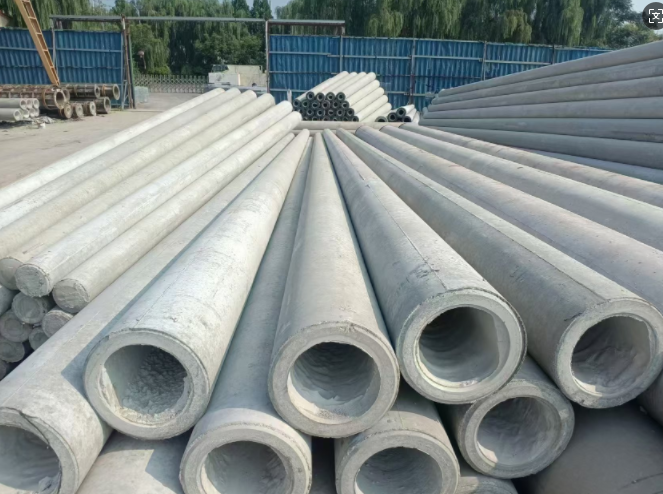
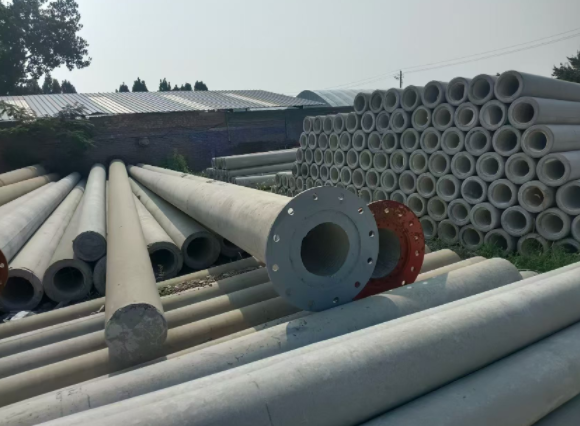
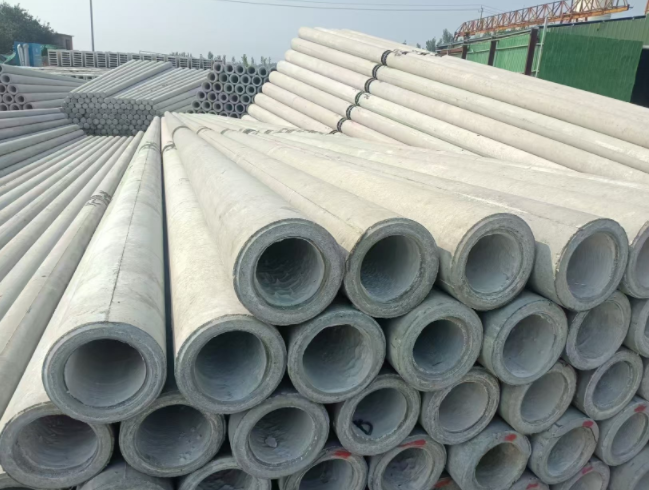


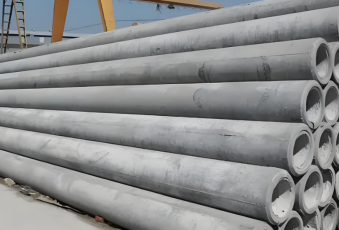
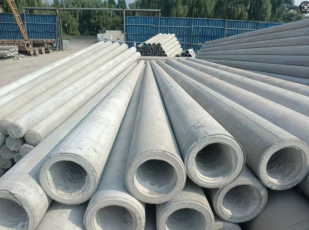
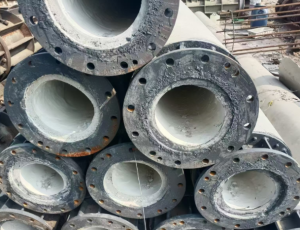
The pole has a uniform diameter from top to bottom, ensuring consistent mechanical performance. Through flange connections, it can be flexibly assembled into towers of various heights and structural forms. Compared with angle steel towers, it requires a narrower line corridor, offers better visual effects, and has stronger corrosion resistance, resulting in low maintenance costs.
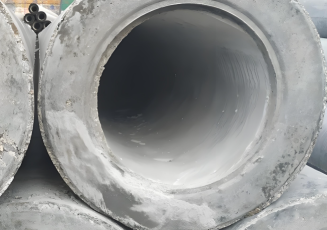
It complies with the standards for circular concrete utility poles. High production precision is required, especially for the flatness of flanges at both ends and the position accuracy of bolt holes. The internal reinforcement often adopts a combination of partial prestress and ordinary steel bars to balance crack resistance and toughness. The section bending moment refers to the load-bearing capacity when both ends are fixed.
Mainly used for assembling straight towers, corner towers, and terminal towers of 110kV and 220kV transmission lines. It is widely applied in areas with high requirements for landscape and corridor width, such as urban peripheries, scenic spots, and highways. It also serves as structural supports in substations.





 Post RFQ


 Chat
Chat





 ALL CATEGORIES