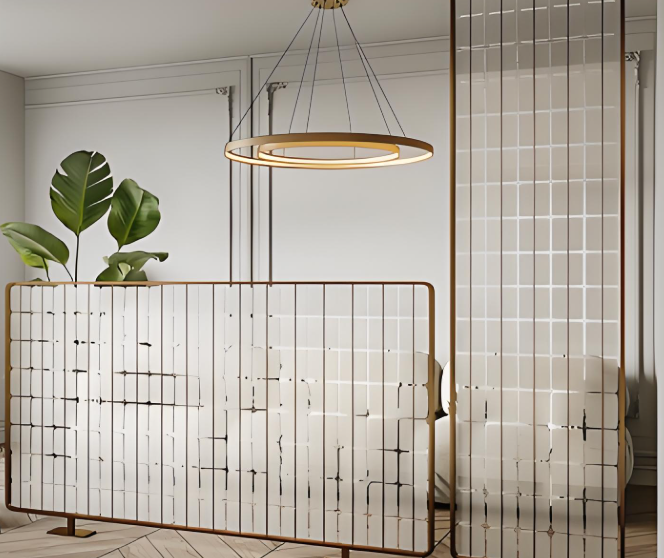
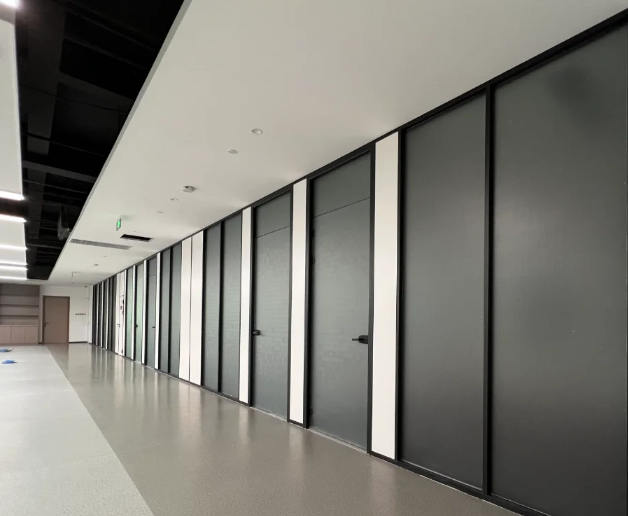


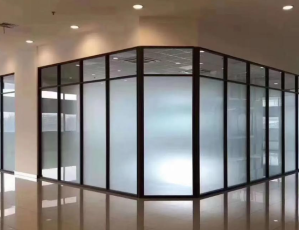
The biggest feature is high functional integration and customizability. The most common combination is "lower solid wall + upper glass window." The lower solid wall (commonly gypsum board or compact laminate) is sturdy and durable, allowing for embedded baseboards, power sockets, data ports, and protecting against chair and foot impact; the upper glass window ensures spatial transparency and daylighting, promoting visual communication. Metal frames, wood veneer elements, etc., can also be incorporated. This design balances the transparency of glass partitions and the practicality of solid walls, with more economical cost, making it a model of functionalist design.
There are no fixed specifications, completely based on design. Usually, the height of the lower solid wall is 1000mm-1200mm (ergonomic), and the upper glass height depends on the floor height. The solid part internally has a light steel keel structure filled with soundproofing cotton, with surface finish treatment (painting, veneering, etc.). The glass part can use single or double glazing paired with aluminum alloy or stainless steel profiles. The treatment of all interfaces and detailing is key to measuring engineering quality.
This is the most widely used form, applicable to almost all office spaces.
1. Partition walls between open office areas and corridors.
2. Partition walls for ordinary employees' independent offices.
3. External walls of training rooms and conference rooms.
4. Background walls in reception areas.
5. Any comprehensive occasion requiring a balance between privacy, wiring, daylighting, and cost.





 Post RFQ


 Chat
Chat



 ALL CATEGORIES