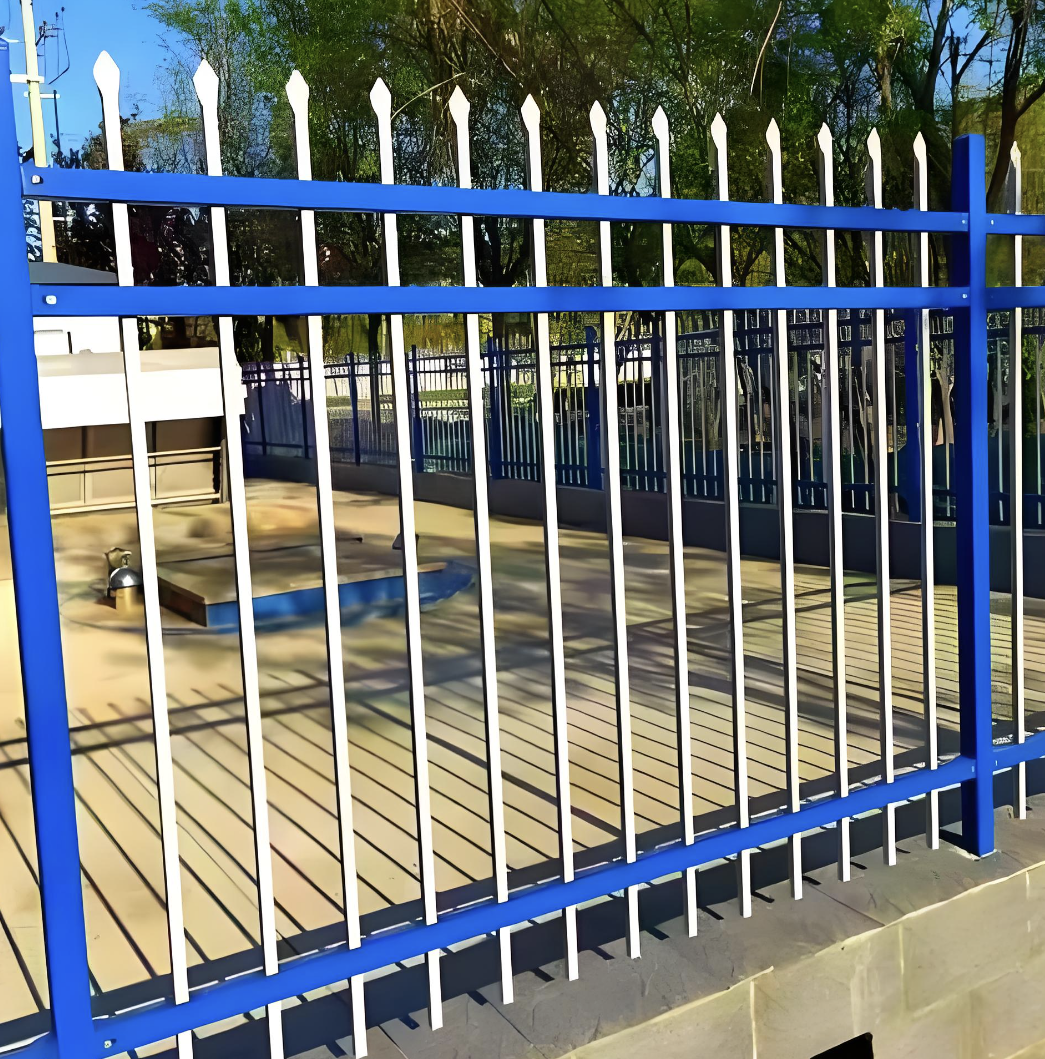
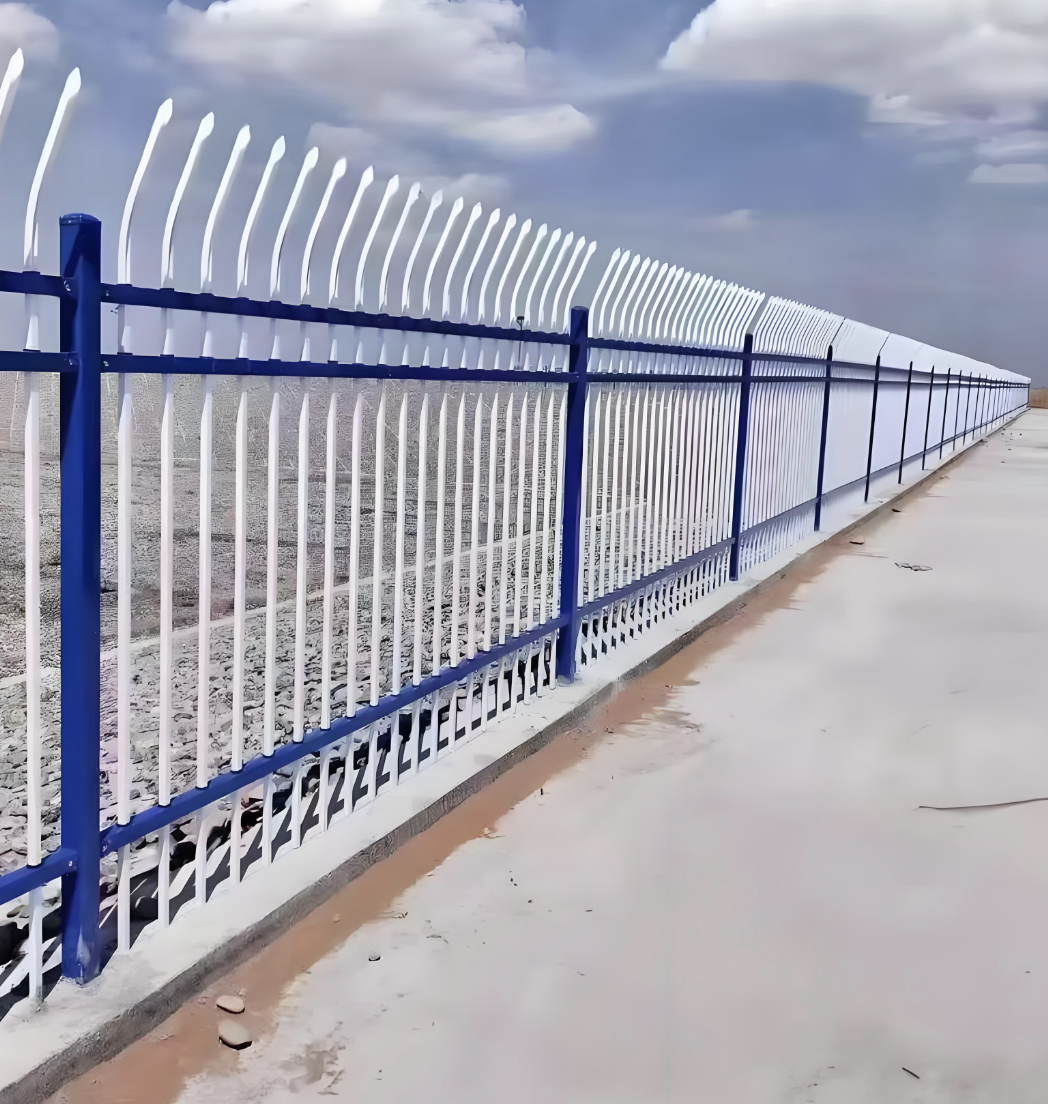


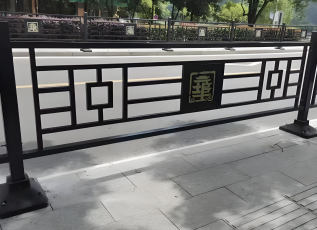
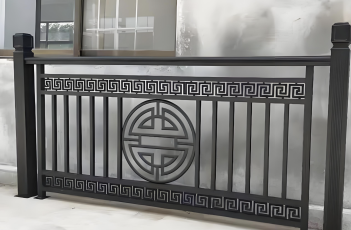
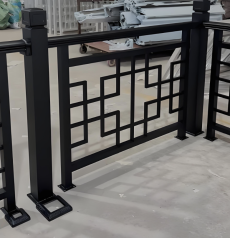
The core features of this fence lie in its high-efficiency construction performance and reliable public security protection. The double-layer anti-corrosion process combines hot-dip galvanizing (≥30 minutes immersion) and electrostatic powder spraying, forming a dense protective layer that prevents rust and corrosion even in harsh environments such as road sections with heavy exhaust emissions or coastal urban areas. It has an anti-climb top design with 150mm sharp spikes, effectively deterring unauthorized climbing and ensuring public area safety. The standardized modular structure allows one worker to install 5 units per hour, reducing construction time by 40% compared to traditional concrete fences. Additionally, the flange plate installation method does not require embedded foundation, making it suitable for various ground conditions, and the fence surface is smooth without sharp edges, avoiding accidental injuries to pedestrians.
This municipal zinc steel fence follows strict national engineering specifications. Each unit has a height of 1.8 meters and a width of 2.5 meters, with a column spacing of 2 meters to ensure structural stability. The main columns are 114mm diameter zinc alloy steel pipes with a wall thickness of 2.0mm, and the horizontal rails are 40*80mm rectangular pipes with a wall thickness of 1.8mm. The hot-dip galvanizing layer thickness is ≥85μm, and the powder coating thickness is 60-80μm, meeting GB/T 1766-2008 Grade 2 corrosion protection standards. It has passed the impact resistance test with a maximum load of 1000N, maintaining structural integrity after impact. The flange plate size is 200*200mm, fixed with 4 M16 expansion bolts, ensuring firm installation on concrete or asphalt ground. The standard color is municipal gray, which is consistent with urban public facility color systems, and can be customized to other colors according to project requirements.
This municipal zinc steel barrier fence is widely used in public infrastructure projects. It is suitable for central isolation of urban main roads, effectively separating motor vehicle and non-motor vehicle lanes to reduce traffic accidents. In urban parks and scenic spots, it serves as a boundary fence to prevent tourists from entering unprotected areas and protect natural vegetation. It is also used for riverbank protection, school perimeter isolation, and bus station crowd management. For municipal emergency repair sites, it can be quickly installed to isolate construction areas and guide pedestrian flow. Target clients include municipal engineering companies, urban management departments, traffic management bureaus, and park management offices. Its standardized design supports unified maintenance and replacement, reducing long-term operation costs for public facilities.








 Post RFQ


 Chat
Chat





 ALL CATEGORIES