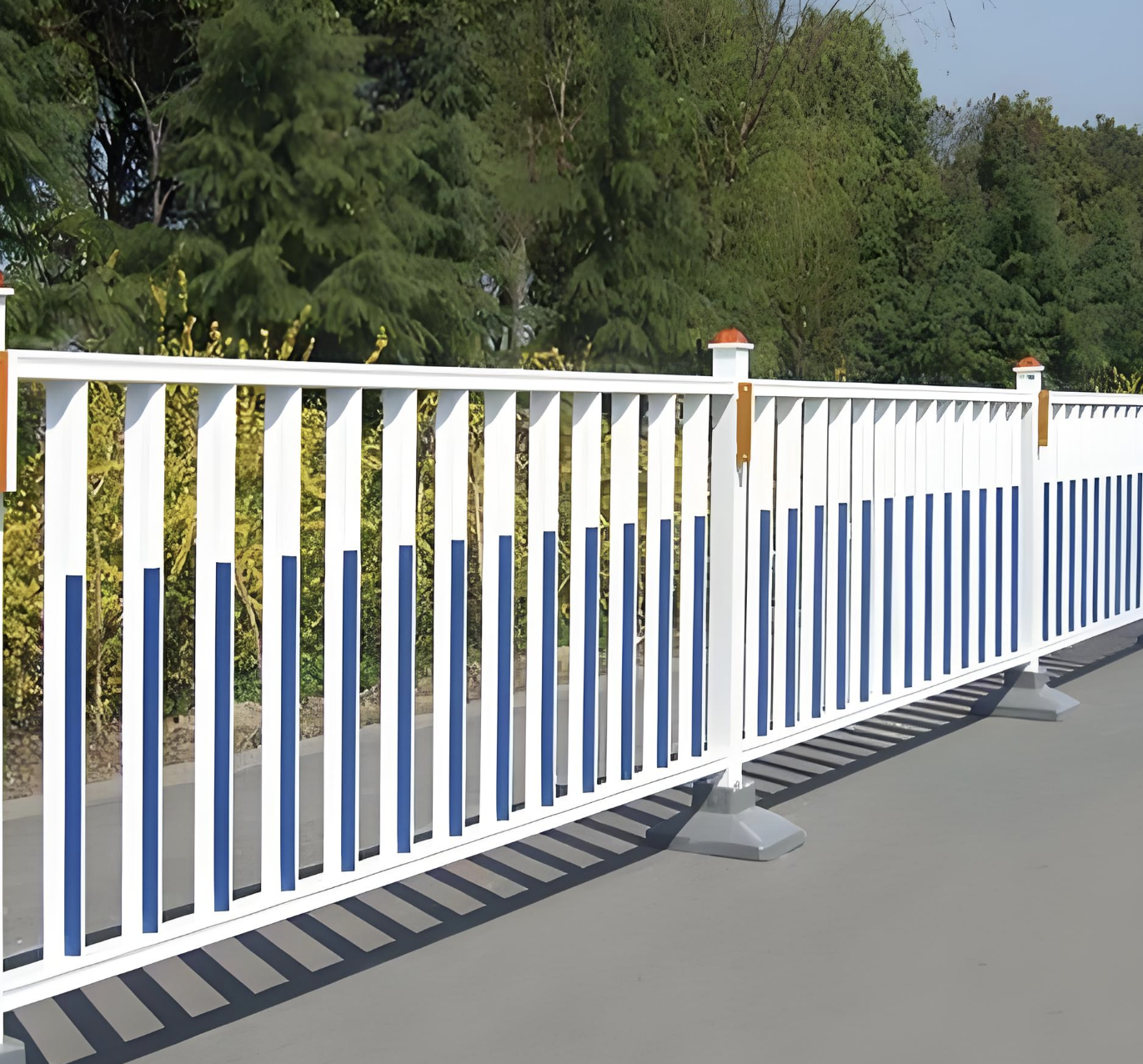
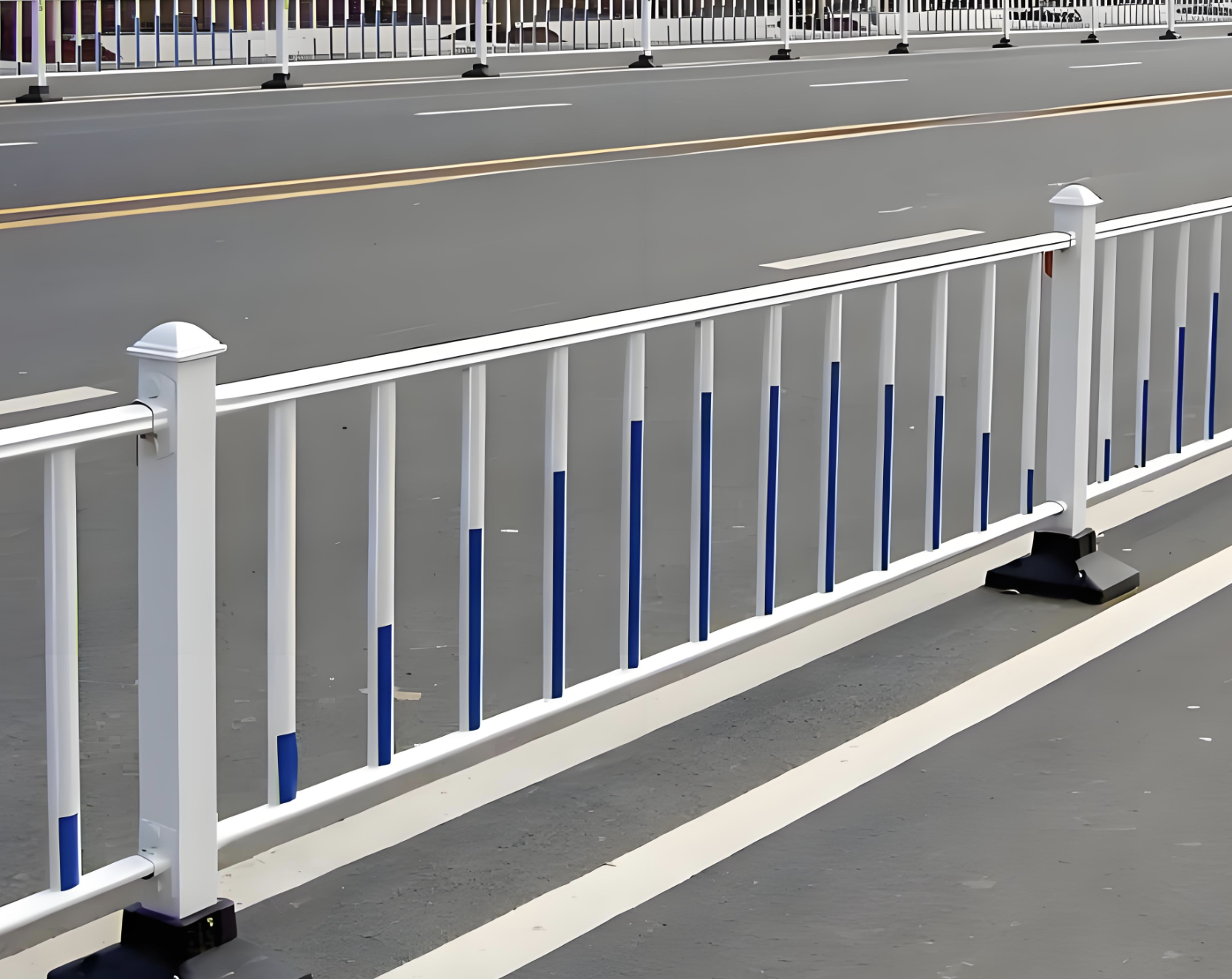


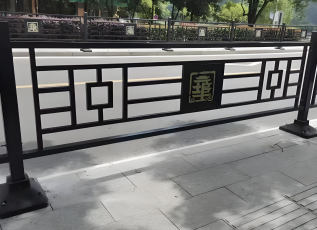
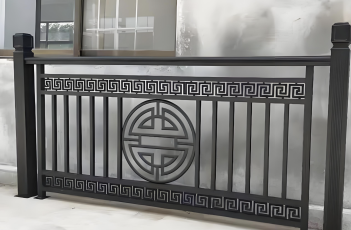
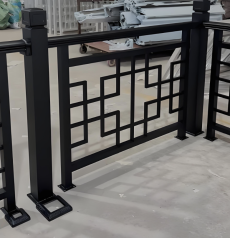
The Municipal Road Crash-Resistant Iron Fence offers key advantages for urban traffic applications. Its high-strength Q355 carbon steel construction provides a tensile strength of 450-630 MPa, allowing it to absorb impact energy from colliding vehicles and prevent them from crossing into opposite lanes or pedestrian areas. The hot-dip galvanization process creates a zinc coating of 100μm thickness, ensuring superior corrosion resistance against road salt, exhaust fumes, and rainwater. The polyester powder coating adds a bright, reflective traffic white finish that increases visibility, reducing the risk of nighttime accidents. The flange plate installation method with concrete pouring ensures a stable foundation, eliminating the risk of the fence shifting or collapsing under impact. Unlike standard road fences, this model features rounded edge designs to minimize injury to pedestrians and vehicle occupants in the event of a collision, addressing critical safety pain points in urban traffic management.
Standing at 1200mm in height, the Municipal Road Crash-Resistant Iron Fence meets international traffic safety standards for lane separation. Each fence panel is 2500mm wide, with 20mm diameter vertical bars spaced 150mm apart to provide structural integrity while maintaining visibility. The horizontal rails are 40mm x 60mm rectangular steel tubes, offering enhanced rigidity. The hot-dip galvanized coating meets ISO 12944-5 C4 corrosion resistance standards, suitable for industrial and urban environments with moderate to high pollution levels. The polyester powder coating is 70μm thick, providing a fade-resistant finish that retains its reflective properties for over 10 years. The flange plates are 200mm x 200mm x 10mm steel plates, secured with four M16 bolts into a concrete foundation of 300mm x 300mm x 400mm. The fence can withstand a horizontal impact load of 5 kN, exceeding EN 1317 crash resistance standards.
This iron fence is specifically designed for municipal road infrastructure, including urban main roads, secondary roads, and traffic intersections, where it can separate opposing traffic lanes, protect pedestrian sidewalks, and guide vehicle flow. It is also suitable for bus-only lanes, bike lanes, and highway on-ramps to prevent unauthorized vehicle access and improve traffic efficiency. In addition, it can be installed around construction zones to create a temporary safety barrier that protects workers and pedestrians from falling debris and moving construction vehicles. The traffic white finish makes it ideal for urban areas with high pedestrian traffic, as it enhances visibility and reduces the risk of accidents. It is widely used in cities with cold climates, where road salt is commonly used, thanks to its superior corrosion resistance against salt damage.









 Post RFQ


 Chat
Chat





 ALL CATEGORIES