

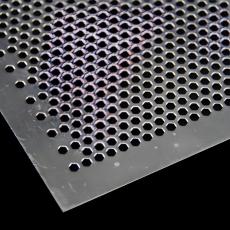
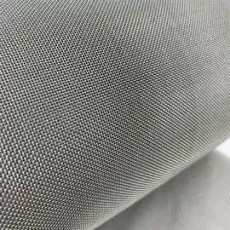
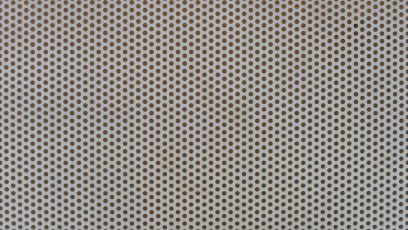

The primary advantage of this sieve screen is its duplex 2205 stainless steel construction, which delivers a tensile strength of ≥800MPa and yield strength of ≥550MPa—twice that of 316L stainless steel—enabling it to withstand the impact of large, heavy ore chunks without warping or cracking. Its perforated plate design provides superior wear resistance compared to woven screens, with no wires to break or stretch, ensuring consistent sorting performance over time. Sandblasting creates a rough surface texture that reduces material buildup, preventing clogging and maintaining high throughput rates. The screen offers exceptional chloride ion corrosion resistance, making it suitable for coastal mining operations and ore processing facilities where water contains high levels of salt. Bent edge reinforcements with a 90° angle and 20mm height enhance structural stability, preventing plate deformation under continuous vibratory stress. Certified to API and ISO9001 standards, it guarantees consistent quality and compliance with global mining equipment regulations. Custom hole diameters and spacing options are available to optimize sorting efficiency for different ore types, from iron ore to copper ore.
Manufactured from duplex 2205 stainless steel with a density of 7.8g/cm³, this perforated sieve screen features a 6mm thick plate that provides exceptional impact resistance and structural integrity. Its 20mm hole diameter and 10mm hole spacing are arranged in a staggered (staggered) pattern to maximize material throughput and prevent clogging. The standard dimensions are 1.5m wide and 5m long, with custom sizes available for specialized mining equipment. It offers an extreme temperature resistance range of -60℃ to 900℃, suitable for cold underground mines and high-temperature metallurgical processing. Sandblasting creates a surface roughness Ra ≥3.2μm, enhancing wear resistance and reducing material adhesion. Bent edge reinforcements with a 90° bend and 20mm height provide additional structural support, preventing plate deformation under vibratory loads. The screen weighs approximately 47kg per square meter, providing a stable base for heavy vibratory sieves, and complies with NACE MR0103 standards for chloride ion corrosion resistance. It can withstand continuous vibratory frequencies up to 1000 cycles per minute and acceleration forces up to 10g without fatigue failure.
This mining-grade sieve screen is engineered for high-intensity ore sorting and material processing applications in corrosive, high-wear environments. In open-pit and underground mines, it is used in linear and circular vibratory sieves to separate ore from gangue, withstanding the impact of large, heavy rock chunks and reducing downtime from screen replacement. In metallurgical facilities, it sorts scrap metal by size and separates molten metal slag from usable metal, withstanding high temperatures and corrosive slag components. In coastal mining operations, it screens sand and gravel contaminated with saltwater, resisting chloride ion corrosion that would degrade traditional stainless steel screens. It is also used in coal processing plants to sort coal by size and remove rock impurities, improving coal quality and reducing transportation costs. The screen integrates seamlessly with large-scale mining equipment like linear vibratory sieves,弛张筛 (flip-flow sieves), and conveyor systems, and its API certification ensures compliance with global oil and gas industry standards for equipment used in mineral processing. It is a cost-effective solution for mining companies looking to extend screen service life, reduce maintenance costs, and improve operational efficiency in demanding environments.







 Post RFQ


 Chat
Chat


 ALL CATEGORIES