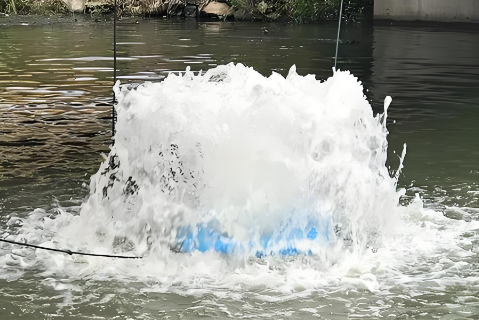
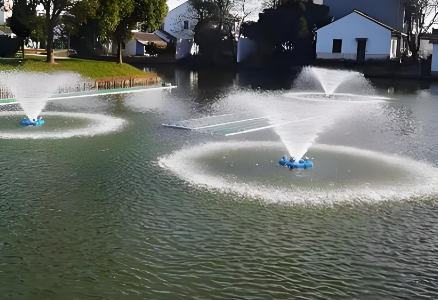






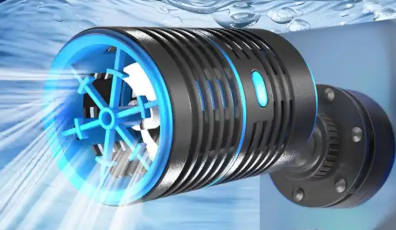
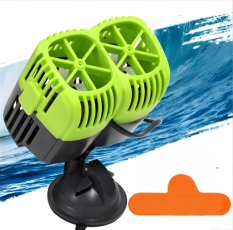
The aquaculture wave maker & aerator has three key competitive advantages: First, its dual-function design integrates wave circulation and high-efficiency oxygenation, eliminating the need for separate wave makers and aerators, thereby reducing equipment investment and installation space. Second, it uses a bidirectional impeller to create horizontal circulation waves, which can effectively break the water surface tension to increase oxygen dissolution, and the circulation flow eliminates dead zones in the pond, preventing the accumulation of residual feed and feces. Third, the automatic oxygen level control system uses built-in sensors to monitor water oxygen levels in real time, adjusting the operation intensity automatically to maintain optimal oxygen concentration (5-8mg/L), reducing unnecessary energy consumption. It also has a corrosion-resistant 304 stainless steel structure, suitable for long-term use in high-salt seawater aquaculture environments.
.
The equipment’s technical parameters meet aquaculture industry standards: Rated power is 750W, with a voltage range of 110-240V AC for global use. Oxygenation efficiency reaches 12kg O₂/h, which is 20% higher than traditional aerators. The bidirectional wave circulation flow rate is 150m³/h, covering a pond area of 50-150㎡. The main body is made of 304 stainless steel with a thickness of 3mm, and the impeller is made of food-grade PP material to avoid contamination of aquaculture water. The total weight is 35kg, and dimensions are 600×450×300mm (L×W×H). It supports timing settings from 1-24 hours and automatic oxygen level control, with a standby power consumption of less than 3W. The IP67 waterproof rating ensures it can withstand splashing water and temporary immersion, and it comes with a 10-meter power cable, a floating buoy, and a fixed bracket for optional installation methods (floating or fixed to the pond bank).
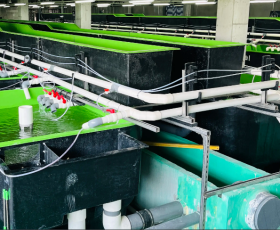
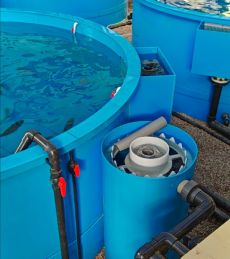
This dual-function equipment is suitable for various aquaculture scenarios: 1. Freshwater Fish Farms: It improves water quality for carp, tilapia, and catfish farming, increasing survival rates and growth speed by 15-20%. 2. Seawater Shrimp and Crab Farms: It creates stable wave circulation to maintain optimal oxygen levels and water flow, reducing the risk of disease outbreaks in high-density shrimp and crab farming. 3. Shellfish Aquaculture Bases: It promotes uniform distribution of plankton and nutrients, enhancing the growth quality of oysters, mussels, and scallops. 4. Industrial Recirculating Aquaculture Systems (RAS): It supports water circulation and oxygenation in closed-loop RAS facilities, reducing water exchange costs and improving system efficiency. Additionally, it can be used in ornamental fish breeding facilities to maintain clean, oxygen-rich water for high-value ornamental fish such as koi and tropical marine fish.









 Post RFQ


 Chat
Chat


 ALL CATEGORIES