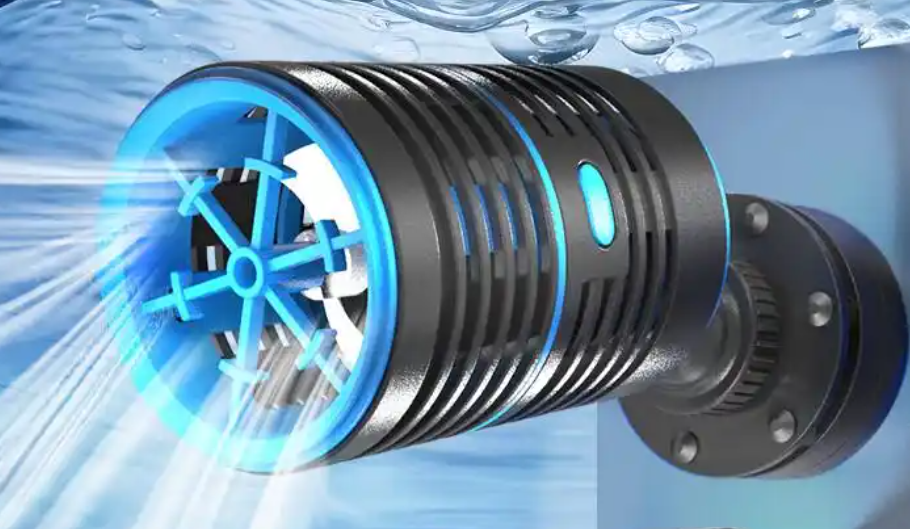
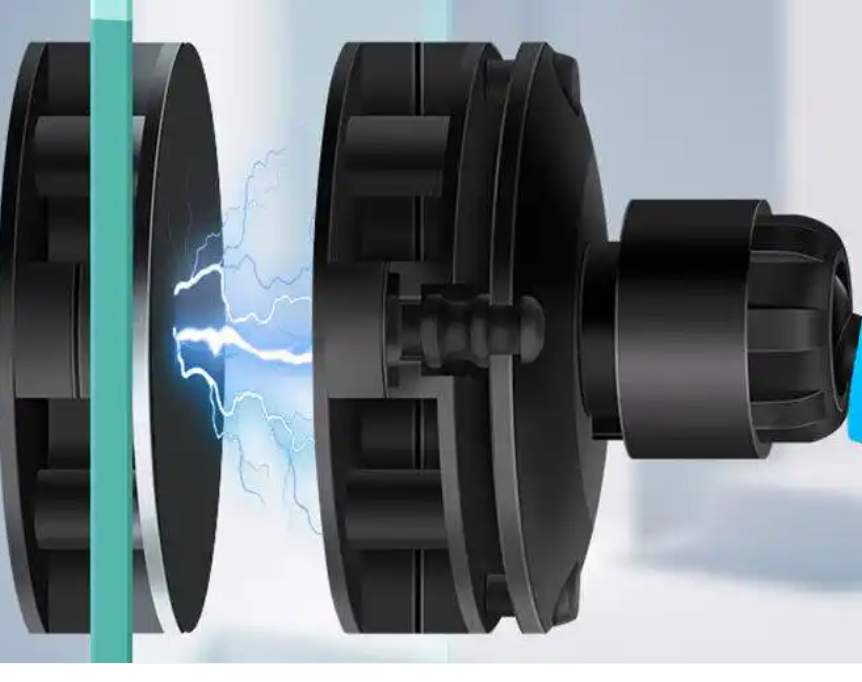








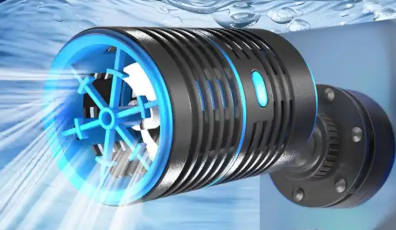
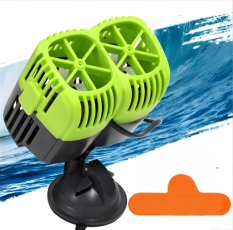
The Aquarium Circulation Wave Machine’s key feature is its ability to replicate four natural wave patterns, which are crucial for maintaining a healthy aquatic ecosystem. The natural current mode provides a constant, gentle flow that mimics ocean currents, while the pulse mode offers intermittent flow to simulate tidal changes. The surge mode creates rising and falling water movement, similar to coastal waves, and the custom mode allows users to adjust flow frequency and amplitude to meet specific needs. Its ultra-quiet operation (under 35dB) is achieved through advanced motor technology, ensuring it doesn’t stress fish or corals, which are sensitive to noise. The dual mounting options—suction cup and magnetic base—allow users to attach the device to any part of the tank, including glass and acrylic surfaces, providing flexibility for optimal water circulation. Constructed from food-grade silicone and stainless steel 316L, it is non-toxic and safe for all aquatic life, even sensitive species like corals and seahorses. The ENERGY STAR certified design reduces power consumption by 20% compared to similar models, keeping electricity costs low. The digital controller features an LCD screen that displays real-time flow rates and wave patterns, and the smartphone app allows remote control from anywhere. The IP68 waterproof rating ensures it can be fully submerged in water without damage. Additionally, it includes a 2-year limited warranty that covers parts and labor, providing peace of mind for aquarium owners.
The Aquarium Circulation Wave Machine has a flow rate range of 12,000 to 30,000 liters per hour, with adjustable flow rates in 1,000-liter increments. It operates on an 80W power supply and is compatible with both 110V and 220V AC voltage, making it suitable for use in most countries. It is designed for tanks with volumes between 500 and 3,000 liters, ensuring it can accommodate large home aquariums and small public exhibits. The system offers four wave patterns: natural current (constant flow), pulse (intermittent flow every 10-60 seconds), surge (rising and falling flow with a 1-5 second cycle), and custom (adjustable frequency and amplitude). The control type includes a digital LCD controller and a smartphone app (compatible with iOS and Android), allowing users to adjust settings easily. The mounting style features a suction cup for glass surfaces and a magnetic base for acrylic surfaces, ensuring secure attachment. Constructed from food-grade silicone and stainless steel 316L, it is highly resistant to corrosion from saltwater and aquarium chemicals. The noise level is measured at less than 35dB at a 1-meter distance, making it one of the quietest wave machines on the market. It has a waterproof rating of IP68, allowing full submersion in water up to 10 meters deep. The dimensions are 300mm x 150mm x 100mm, and it weighs 5kg, making it easy to handle and install. The operating temperature range is 10°C to 30°C, suitable for most tropical and cold-water aquariums. It includes an auto-shutoff feature that activates if the motor overheats, protecting the device and aquatic life.
This wave machine is ideal for large home aquariums, where it creates a natural environment for fish, corals, and other marine organisms. It is also widely used in public aquarium exhibits, enhancing visitor experiences by showing realistic aquatic habitats that mimic the natural world. Aquaculture research facilities use it to study the effect of water currents on the growth and behavior of aquatic life, providing precise control over flow rates and wave patterns. Coral propagation tanks benefit from its natural current mode, which promotes healthy coral growth by simulating the nutrient-rich currents found in the ocean. Marine biology labs use it to conduct experiments on the impact of different water movements on aquatic species, helping to advance our understanding of marine ecosystems. Commercial fish breeding farms use it to simulate natural spawning conditions, increasing breeding success rates. Additionally, it is suitable for freshwater aquariums, where it creates river-like currents that benefit species like tetras and catfish. Koi ponds and decorative water features can also use this system to create natural-looking water movement, enhancing their aesthetic appeal. Finally, it is used in educational settings, such as schools and museums, to teach students about aquatic ecosystems and the importance of water circulation for marine life.









 Post RFQ


 Chat
Chat


 ALL CATEGORIES