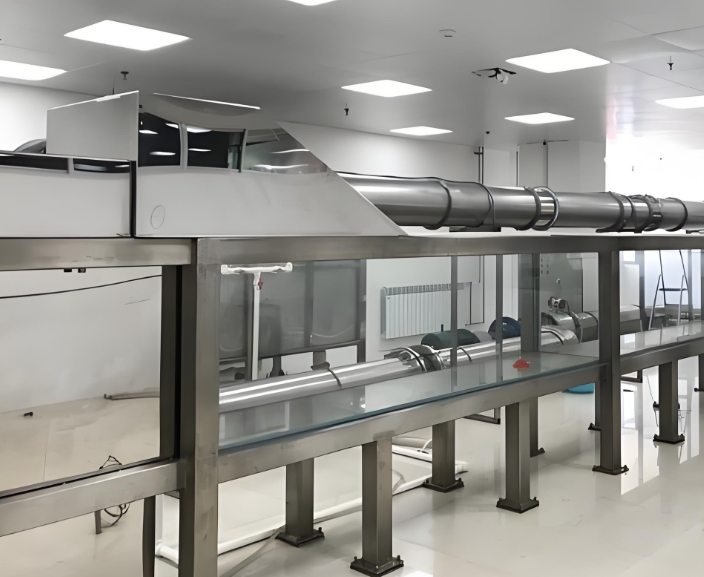
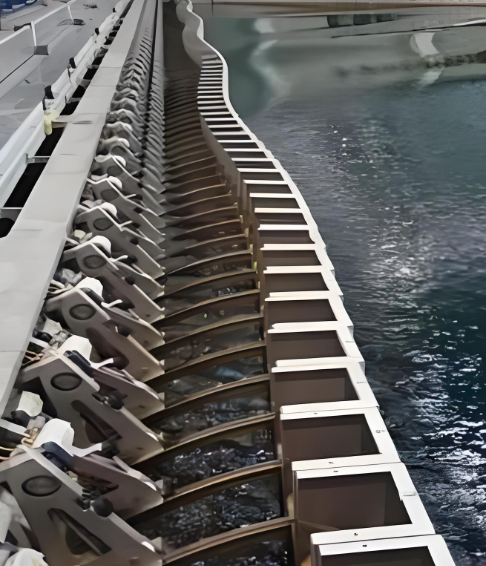





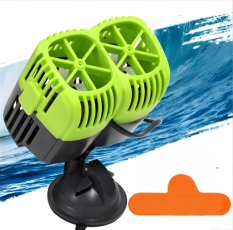
This precision wave maker stands out with its computer-controlled software interface, which allows researchers to program complex wave patterns, including sinusoidal, random, and custom time-series waves, with accuracy. The USB connection enables seamless data transfer between the system and research computers, facilitating real-time monitoring and adjustment of wave parameters during experiments. Its wave frequency accuracy of ±0.01 Hz ensures that wave conditions remain consistent throughout experiments, critical for obtaining reliable, repeatable data in marine biology and oceanography studies. The 0.8 HP brushless motor delivers smooth, stable wave formation, with adjustable wave heights from 0.05m (0.16 feet) for delicate larval studies to 0.5m (1.6 feet) for coastal erosion testing. Constructed with food-grade acrylic and stainless steel 304, the system is easy to clean and sterilize, making it suitable for use with sensitive marine organisms. Its quiet operation (<55 dB) ensures it doesn’t interfere with lab equipment or research observations, and the compact tabletop design saves valuable lab space.
The Marine Research Lab Precision Wave Maker features a 0.8 HP brushless motor, operating on 110V/220V dual voltage to adapt to different lab power standards, with a power consumption rate of 0.6 kW during full operation. Its wave height ranges from 0.05 meters (0.16 feet) for micro-wave experiments to 0.5 meters (1.6 feet) for moderate current simulations, with frequency settings adjustable from 0.1-5.0 Hz and an accuracy of ±0.01 Hz. The main unit measures 400mm (15.7 inches) in length, 300mm (11.8 inches) in width, and 250mm (9.8 inches) in height, weighing 12kg (26.5 pounds) for easy tabletop installation on research tanks. The wave generation plate is made of 5mm thick clear acrylic, allowing researchers to observe wave formation and organism behavior simultaneously. The software control interface is compatible with Windows and macOS operating systems, offering pre-programmed wave templates (sinusoidal, random, tidal) and a custom programming mode for creating unique wave profiles. It also includes a data logging feature that records wave parameters over time, enabling researchers to analyze experiment data in detail. The system’s overload protection and temperature sensors ensure safe operation during long experiment sessions, and its detachable components make cleaning and maintenance simple.
This precision wave maker is essential for marine research labs conducting controlled experiments on wave-dependent phenomena. Marine biologists use it to study the effects of different wave patterns on the behavior and survival of marine organisms, such as larval fish settlement, coral polyp feeding, and mussel attachment strength. Oceanography researchers rely on it to simulate coastal wave conditions, testing the effectiveness of erosion control structures or studying wave energy conversion technologies. Coastal engineering facilities use it to model small-scale wave interactions with seawalls, breakwaters, and other coastal infrastructure, providing data to optimize design and improve storm resilience. University marine science departments incorporate it into educational labs, allowing students to learn about wave dynamics and conduct hands-on experiments in a controlled environment. Its compact size, quiet operation, and high precision make it suitable for use in small lab tanks, where space and noise are limited, and its saltwater compatibility ensures it can support both freshwater and marine research applications.









 Post RFQ


 Chat
Chat


 ALL CATEGORIES