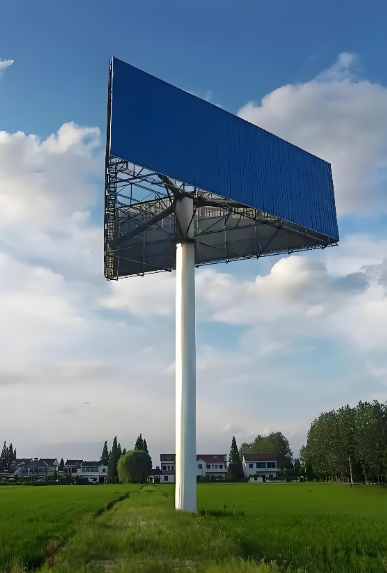
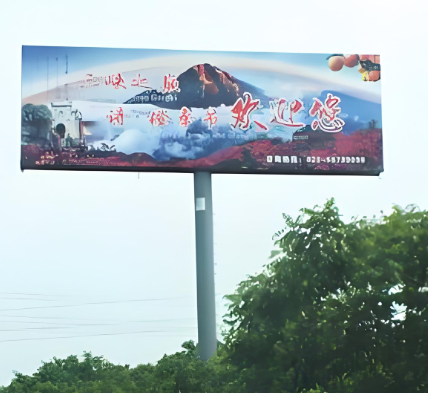


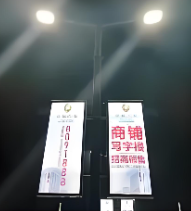
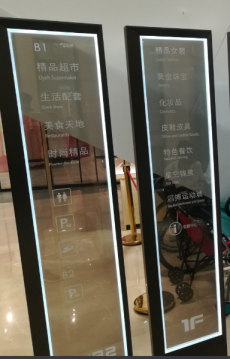
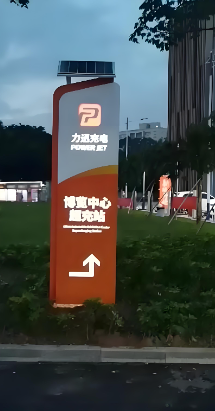
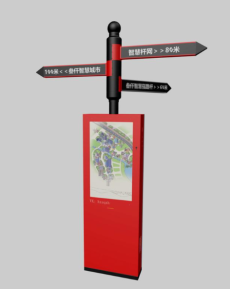
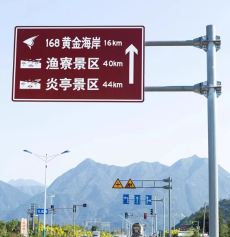
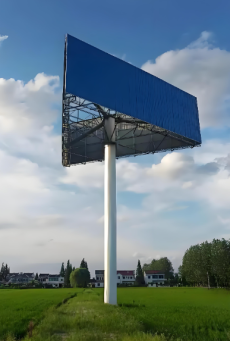
This signage is constructed with Q235B structural steel, featuring a hot-dip galvanized surface treatment followed by powder coating, providing double protection against corrosion and extending its service life to 15 years. It is designed to withstand 12-level typhoons, with a reinforced foundation structure that can resist wind speeds of up to 177km/h, ensuring stability even in extreme weather conditions. The high-strength PVC panel is covered with high-reflective film, with a reflection coefficient of ≥300cd/lx/㎡, ensuring clear visibility from over 2000 meters away day and night. The large 6m*2m panel provides ample space for creative brand designs, and the modular panel design allows for easy replacement of damaged parts, reducing maintenance costs. Additionally, its elevated installation position ensures unobstructed view for passing vehicles, maximizing advertising exposure.
The signage has a total height of 18m, with a column diameter of 325mm and a wall thickness of 8mm. The display panel measures 6m (W) * 2m (H), made of 5mm thick high-strength PVC with a high-reflective film overlay. The total weight of the signage is 1200kg, with the panel itself weighing 120kg. The foundation requires a 2.5m*2.5m*2m concrete base, reinforced with 8 steel bars of diameter 25mm, ensuring stable support for the entire structure. The hot-dip galvanizing layer has a thickness of ≥85μm, providing excellent corrosion resistance. The working temperature range is -40℃ to 60℃, and it can withstand relative humidity up to 95% non-condensing. The reflective film meets the ASTM D4956 standard, ensuring long-term reflectivity retention even after years of outdoor exposure. Installation requires professional construction teams with experience in heavy steel structure installation.
This signage is primarily installed along highways, provincial roads, and urban ring roads, where it targets a large audience of drivers and passengers. Automotive brands use it to promote new models or sales campaigns, as highway traffic includes a high proportion of potential car buyers. FMCG companies use it to build regional brand awareness, reaching consumers in multiple cities or regions along the highway. Tourism operators use it to promote scenic spots, hotels, or travel packages, attracting travelers passing through the area. It is also used by local governments to display public service announcements, traffic safety reminders, or regional development promotions. Its large size and long visible distance make it a perfect choice for any brand looking to reach a wide, mobile audience across large geographic areas.










 Post RFQ


 Chat
Chat


 ALL CATEGORIES