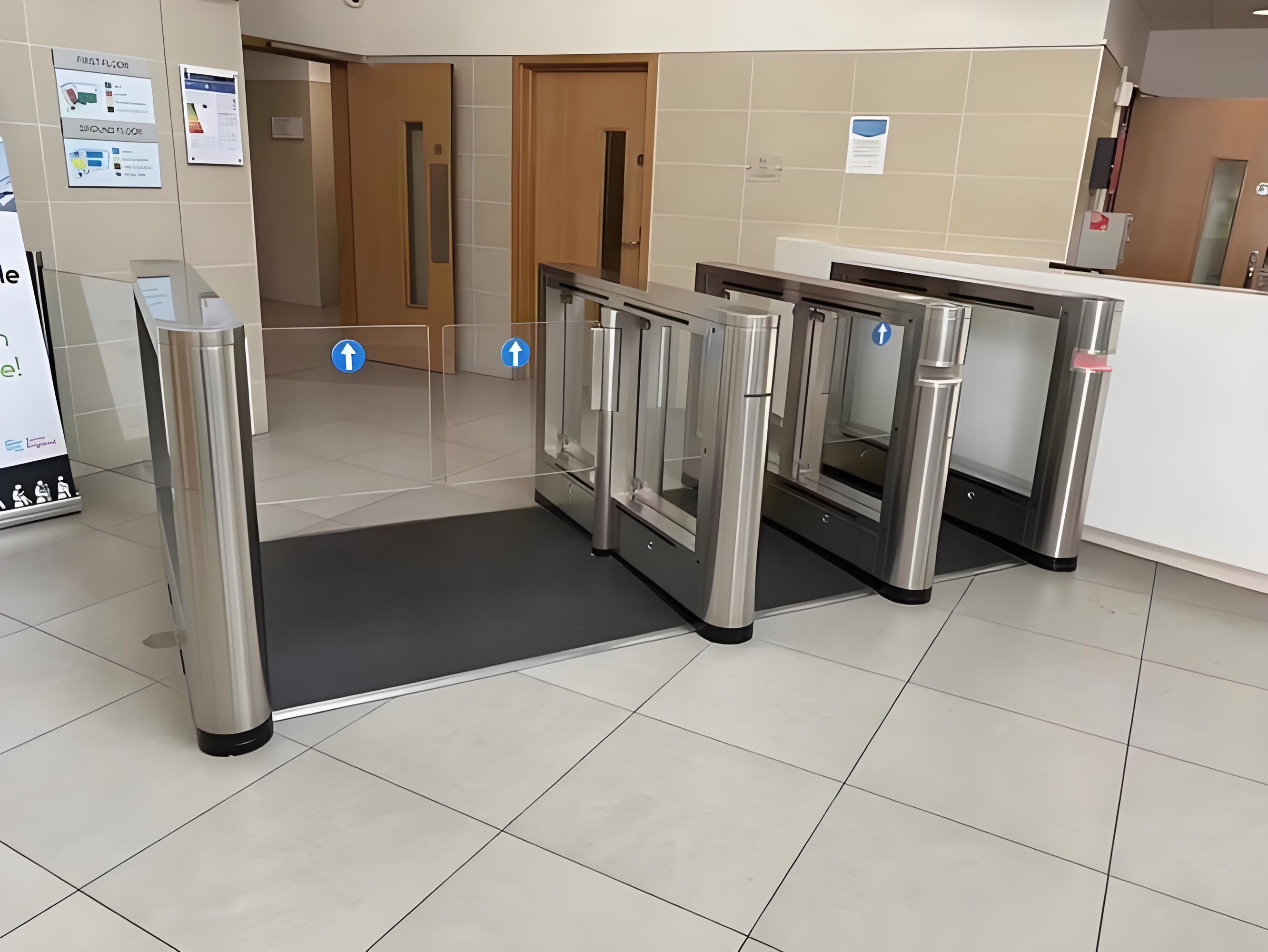
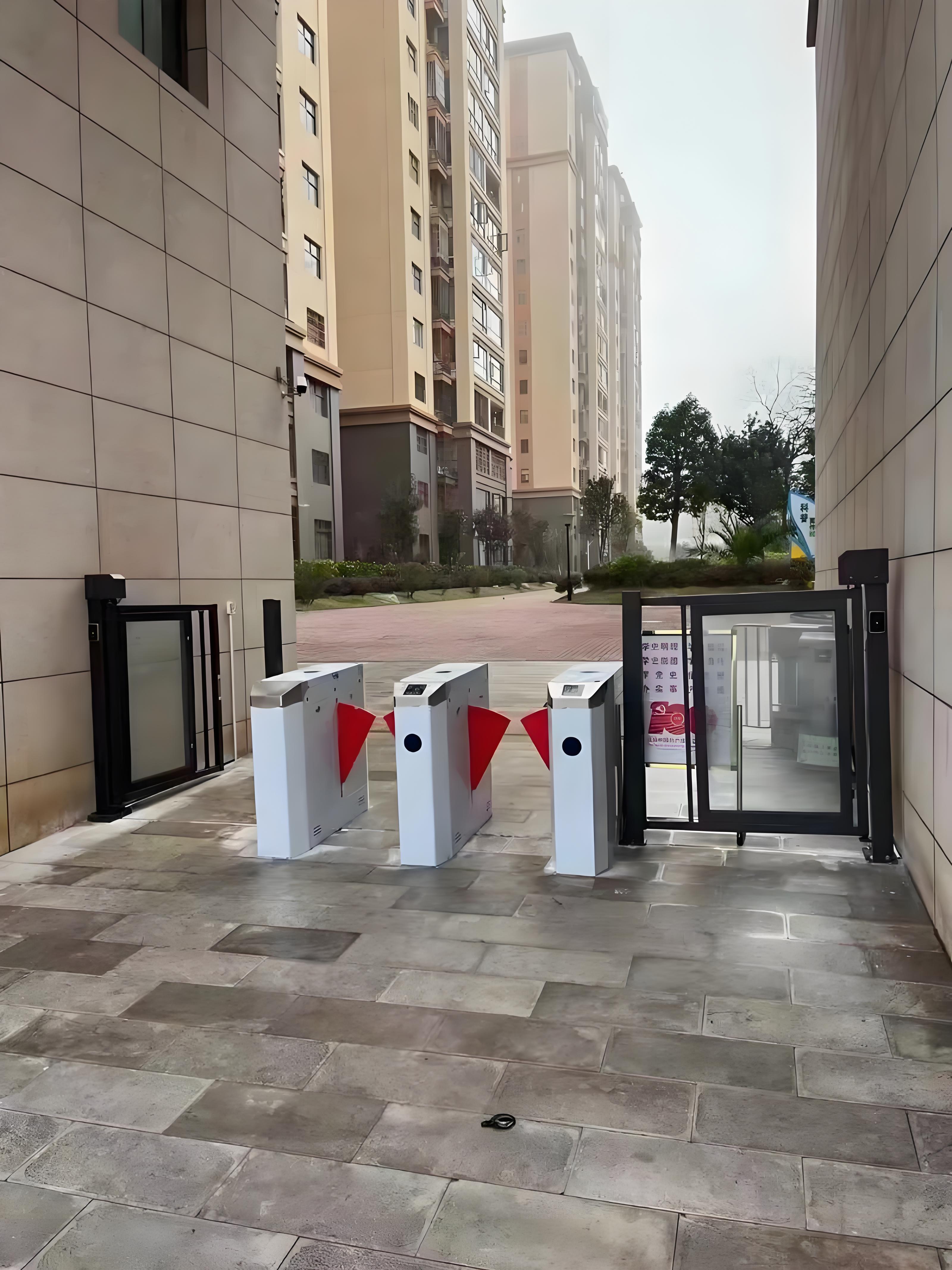


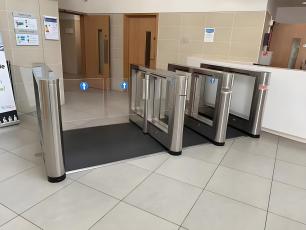
The core feature of this flap barrier gate is its multi-mode biometric recognition system, which supports face recognition with a recognition speed of ≤0.3 seconds and an accuracy rate of 99.7%, enabling fast passage without contact, especially suitable for post-pandemic public places. The anti-pinch system combines infrared induction and mechanical anti-pinch mechanisms, which will immediately stop the flap movement when detecting obstacles, avoiding injury to pedestrians. It supports linkage with visitor management systems, allowing administrators to generate temporary QR codes for visitors and set access time limits, improving visitor management efficiency. The emergency opening function can manually release the flap in case of power failure, ensuring the smoothness of emergency evacuation channels. The 304 stainless steel main body with anti-corrosion treatment has a long service life and is easy to clean and maintain, making it suitable for high-frequency use scenarios.
The main body dimensions of a single passage are 1200mm (L) × 280mm (W) × 980mm (H), and the passage width can be adjusted between 600-900mm according to user needs. The main body is made of 1.5mm thick 304 stainless steel, with a total weight of about 80kg per single passage. The flap material is PC transparent material with a thickness of 10mm, which is impact-resistant and not easy to break. The power supply can be AC220V/50Hz or DC24V, and the power consumption in standby mode is 10W, while in operation it is 30W. The recognition distance of face recognition is 0.5-1.5 meters, and the recognition angle is ±30 degrees. The operating temperature range is -25℃ to 65℃, and the humidity range is 10%-90% (no condensation). The protection grade is IP54, which can prevent dust intrusion and withstand splashing rainwater, suitable for semi-outdoor scenarios such as scenic spot entrances.
This biometric flap barrier gate is widely used in scenic spots, office buildings, universities, commercial centers, and subway stations. In scenic spots, it can quickly verify tourist tickets through QR code scanning or face recognition, reducing manual ticket checking time and improving tourist experience. In office buildings, it can identify employees through face ID or employee cards, restrict unauthorized personnel from entering, and record access data for attendance management. In universities, it can manage student and teacher access, ensuring campus security and preventing external personnel from entering without permission. In commercial centers, it can control access to VIP areas or employee-only areas, improving site security. In subway stations, it can integrate with public transport systems to achieve fast passage of passengers, reducing crowd congestion and improving traffic efficiency. It is an ideal access control solution for all types of places with high pedestrian flow and safety requirements.







 Post RFQ


 Chat
Chat


 ALL CATEGORIES