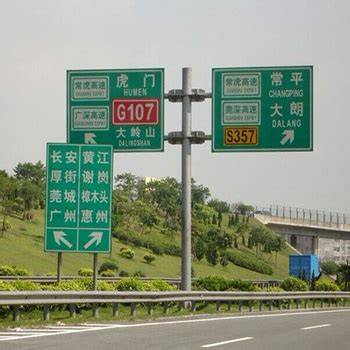
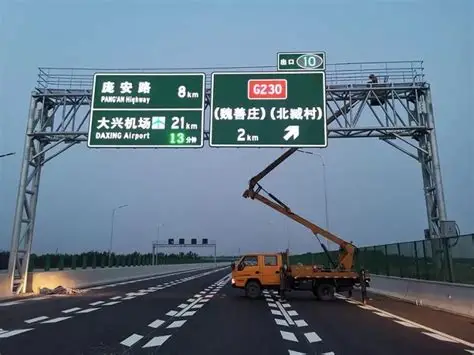





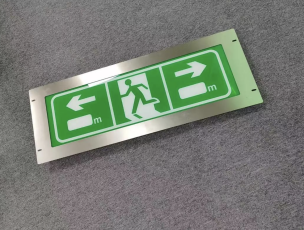
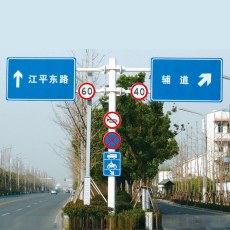
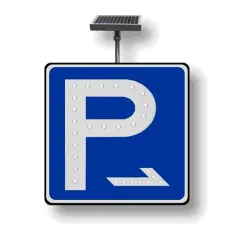
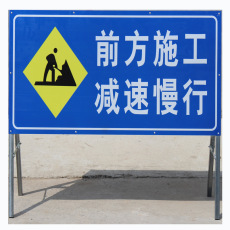

This highway traffic sign has three key differentiating advantages. First, it adopts a 3mm thick high-strength galvanized steel plate with an 80μm thick hot-dip galvanized layer, which achieves a 12-level wind resistance rating, far exceeding the national standard for highway signs, and can withstand strong winds of up to 120km/h, solving the problem of traditional signs being blown down or deformed during typhoons. Second, the super-grade reflective film has a reflectivity of 500cd·lx⁻¹·m⁻², which is 2 times that of engineering-grade films, ensuring clear visibility for drivers at a distance of 1500m at night, effectively reducing the reaction time of drivers on high-speed roads. Third, the surface is coated with a UV-resistant fluorocarbon coating, which has excellent anti-fading and anti-corrosion performance, ensuring that the reflective film and sign color remain unchanged for 15 years, reducing the frequency of sign replacement and maintenance costs. Additionally, the sign’s edge is treated with rounded corners to prevent injury to maintenance personnel and reduce wind resistance.
The sign measures 1500*1500mm, with a 3mm thick hot-dip galvanized steel substrate that meets GB/T 13912 standards, ensuring no rusting for 15 years. The super-grade reflective film is imported from 3M, meeting ASTM D4956 Type III standards, with a service life of 10 years. The fluorocarbon coating has a pencil hardness of 2H, adhesion level 1, and can withstand 1000 hours of salt spray testing without corrosion. The wind resistance rating is 12 levels, suitable for highway sections with high wind speeds. The installation hole diameter is 16mm, matching standard cantilever brackets and column mounts. The working temperature range is -30°C to 70°C, adapting to the temperature changes in northern and southern regions of China. The sign text and patterns are printed using high-temperature baking technology, ensuring no fading for 10 years.
This product is specifically designed for highway scenarios, including expressway main lines with high vehicle speeds, mountain curves with poor visibility, tunnel entrances where light changes drastically, service area entrances and exits with concentrated vehicle flow, and highway construction sections with temporary traffic control. Highway management bureaus can install it on typhoon-prone coastal highways to enhance sign stability; road construction companies can use it in highway expansion projects to provide long-distance guidance for drivers; and transportation departments can deploy it in mountain highway sections to reduce the risk of accidents caused by sudden curves. In addition, it is suitable for national highway sections with heavy sandstorms, as its anti-corrosion and wind-resistant design can maintain normal performance in harsh environments, ensuring continuous traffic guidance for drivers.






 Post RFQ


 Chat
Chat



 ALL CATEGORIES