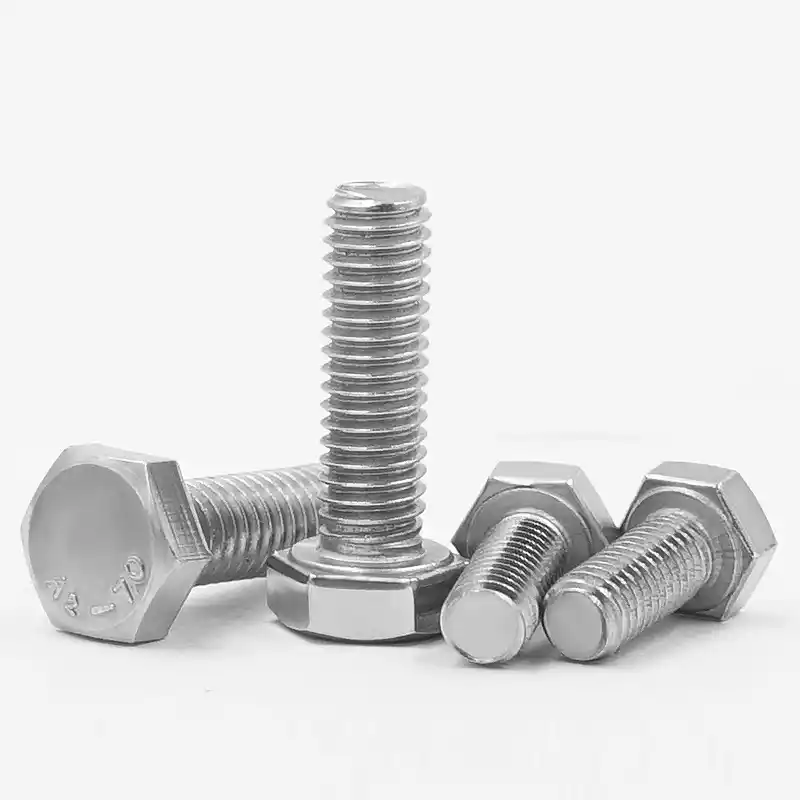
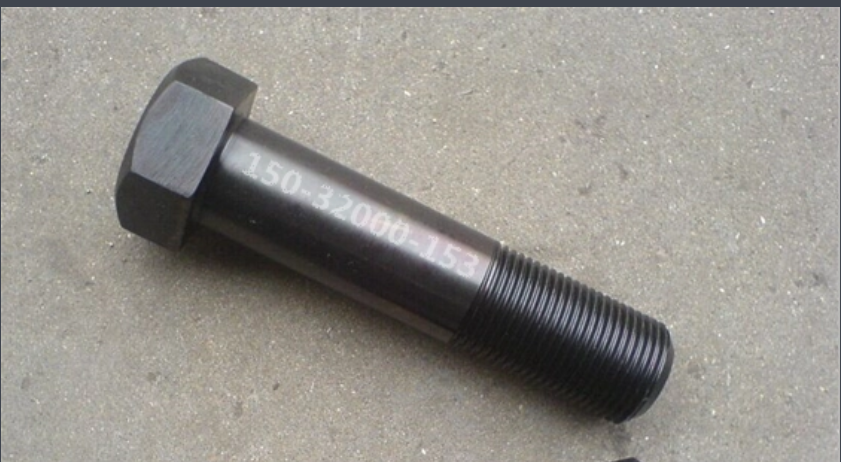


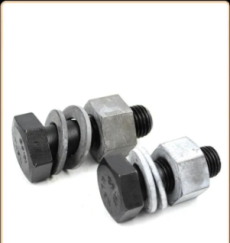
Optimized via alloy composition and heat treatment for excellent strength-toughness balance. Key features: 1) High strength ratio: Tensile strength ≥1000MPa, yield ratio ≥0.9; 2) Good low-temperature toughness: Charpy impact energy ≥27J at -50°C; 3) High resistance to delayed fracture and low hydrogen embrittlement sensitivity; 4) Dacromet coating withstands salt spray test ≥1000 hours, far exceeding standard zinc plating; 5) Stable torque coefficient (0.10-0.15) for precise preload control; 6) Fatigue life >2×10⁶ cycles (Δσ=150MPa); 7) Dimensional accuracy meets 6g thread tolerance; 8) Uniform hardness after heat treatment, core-to-surface difference ≤3HRC.
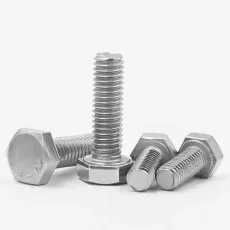
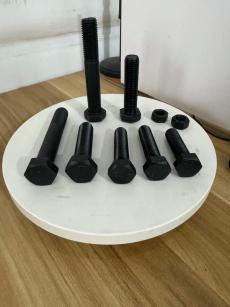
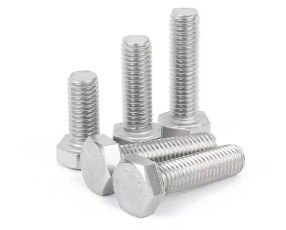
Covers standard sizes M12 to M36, lengths 30-300mm. Key parameters: 1) Head width strictly per GB/T 3106; 2) Head thickness tolerance ±0.3mm; 3) Rolled threads with surface roughness Ra≤3.2μm; 4) Shank straightness ≤0.3mm/100mm; 5) Thread runout ≤2P (P=Pitch); 6) Bearing surface perpendicularity to thread axis ≤1°; 7) Plain shank diameter tolerance h11; 8) Head chamfer 45°±5°; 9) Clear marking includes grade and manufacturer ID; 10) Mechanical test report provided per batch.
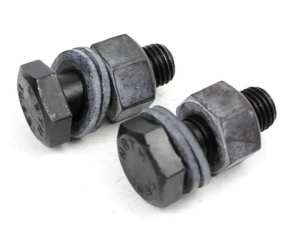
Primarily for: 1) Steel structures: Beam-column connections, bracing system nodes (use with hardened washers); 2) Bridge engineering: Steel box girder splicing, deck system connections (regular torque inspection required); 3) Heavy machinery: Excavator chassis, crane boom connections (preload should reach 0.7×yield strength); 4) Wind power: Tower flange connections (consider wind-induced vibration); 5) Pressure vessels: Flange bolting (consider stress relaxation from thermal cycles); 6) Mining equipment: Vibrating screen, crusher connections (anti-loosening required); 7) Railway vehicles: Bogie, car body connections; 8) Offshore platforms: Jacket node connections (special consideration for corrosive environment).








 Post RFQ


 Chat
Chat


 ALL CATEGORIES