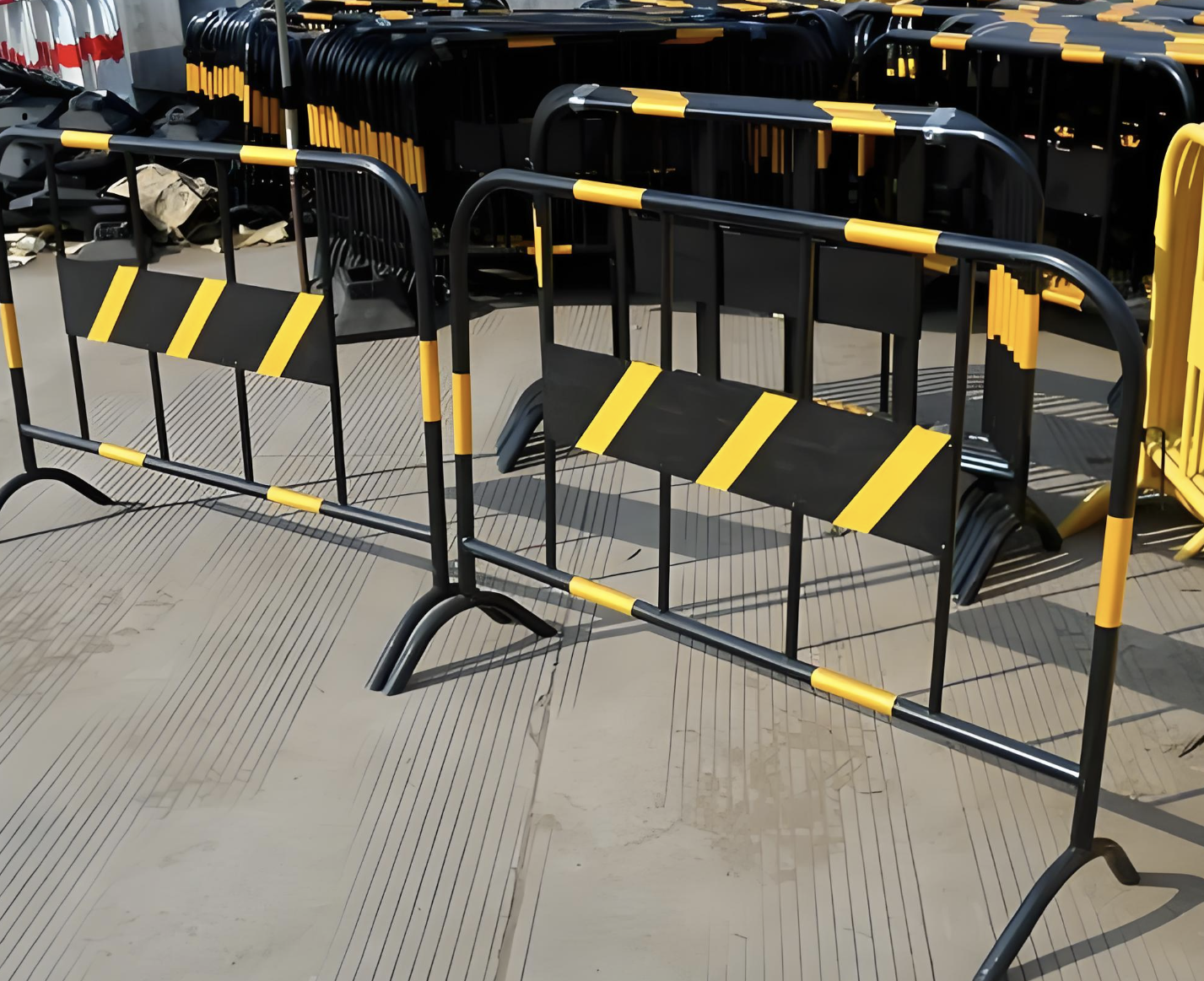
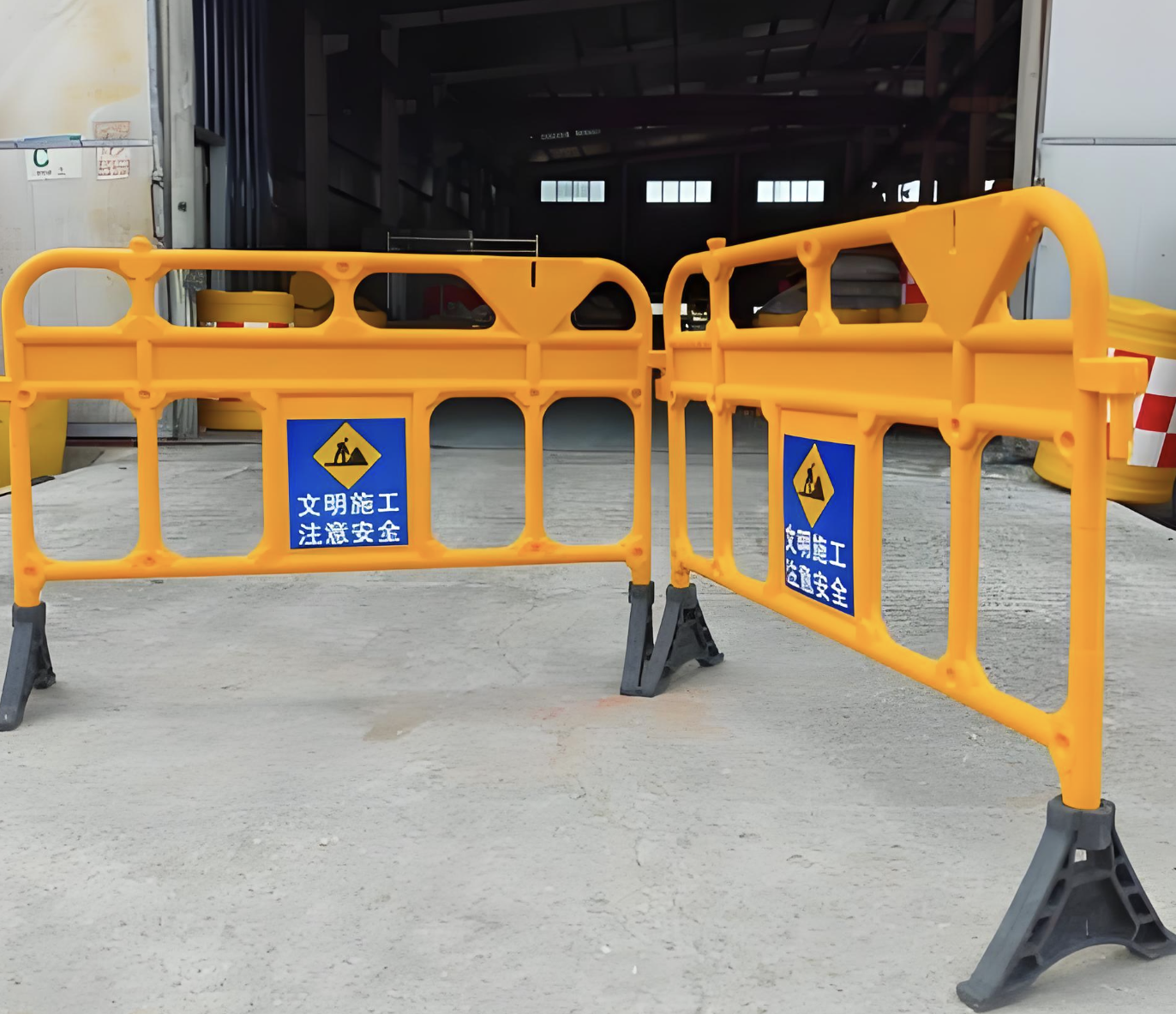


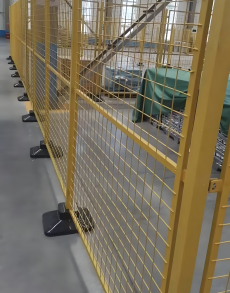
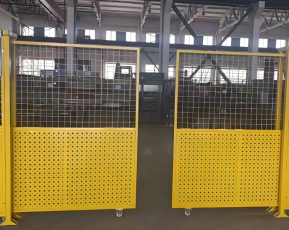
This mobile fence’s key advantage is its tool-free interlocking connection system, which allows workers to assemble a 100-meter long barrier in less than 30 minutes, significantly reducing setup time compared to traditional bolted temporary fences. The electro-galvanized coating provides reliable corrosion resistance for 5+ years of repeated use in outdoor construction environments, including exposure to rain and dirt. Integrated stabilizing feet with non-slip bases ensure stability on uneven terrain, eliminating the need for additional weights or concrete anchors. The bright yellow reflective strip, positioned 1500mm above ground level, meets OSHA visibility standards, alerting motorists and pedestrians to the fence’s presence at night or in foggy conditions. Unlike disposable plastic fencing, this steel barrier is durable enough to withstand accidental collisions from construction vehicles, reducing replacement costs and addressing common temporary fencing pain points such as slow installation, instability, and low visibility.
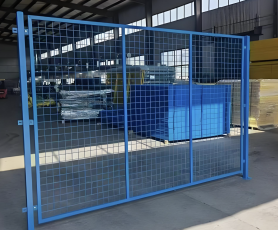
Each mobile fence panel measures 1800mm in height and 2000mm in width, with a 50x50mm mesh size to prevent unauthorized access while maintaining site visibility. The low-carbon steel mesh wires have a diameter of 3.5mm, and the frame tubes have a 1.5mm wall thickness, providing sufficient strength for construction site use. The electro-galvanization coating has a thickness of 20μm, meeting ASTM B633 standards for temporary corrosion protection. A 100mm wide yellow reflective strip is affixed to the upper section of each panel, with a visibility range of 500 meters at night. Integrated stabilizing feet are 300x300mm in size, made of high-strength plastic with steel inserts for stability. Each panel weighs 22kg and features interlocking male/female connectors on all four sides for quick assembly. It complies with OSHA 29 CFR 1926 safety standards for temporary construction barriers.
The Temporary Construction Mobile Fence Barrier is essential for a wide range of short-term applications, including construction site perimeter fencing to restrict unauthorized access and protect tools and materials, road construction traffic control barriers to direct motorists and pedestrians around work zones, large event crowd control barriers to manage attendee flow and ensure safety, demolition site fencing to prevent debris from entering public areas, and temporary parking lot fencing to define temporary parking spaces. It is also suitable for use in disaster relief zones, utility repair sites, and outdoor festival perimeters. Target industries include construction, municipal public works, event management, and utility companies, where flexible, quick-setup temporary security solutions are required.










 Post RFQ


 Chat
Chat




 ALL CATEGORIES