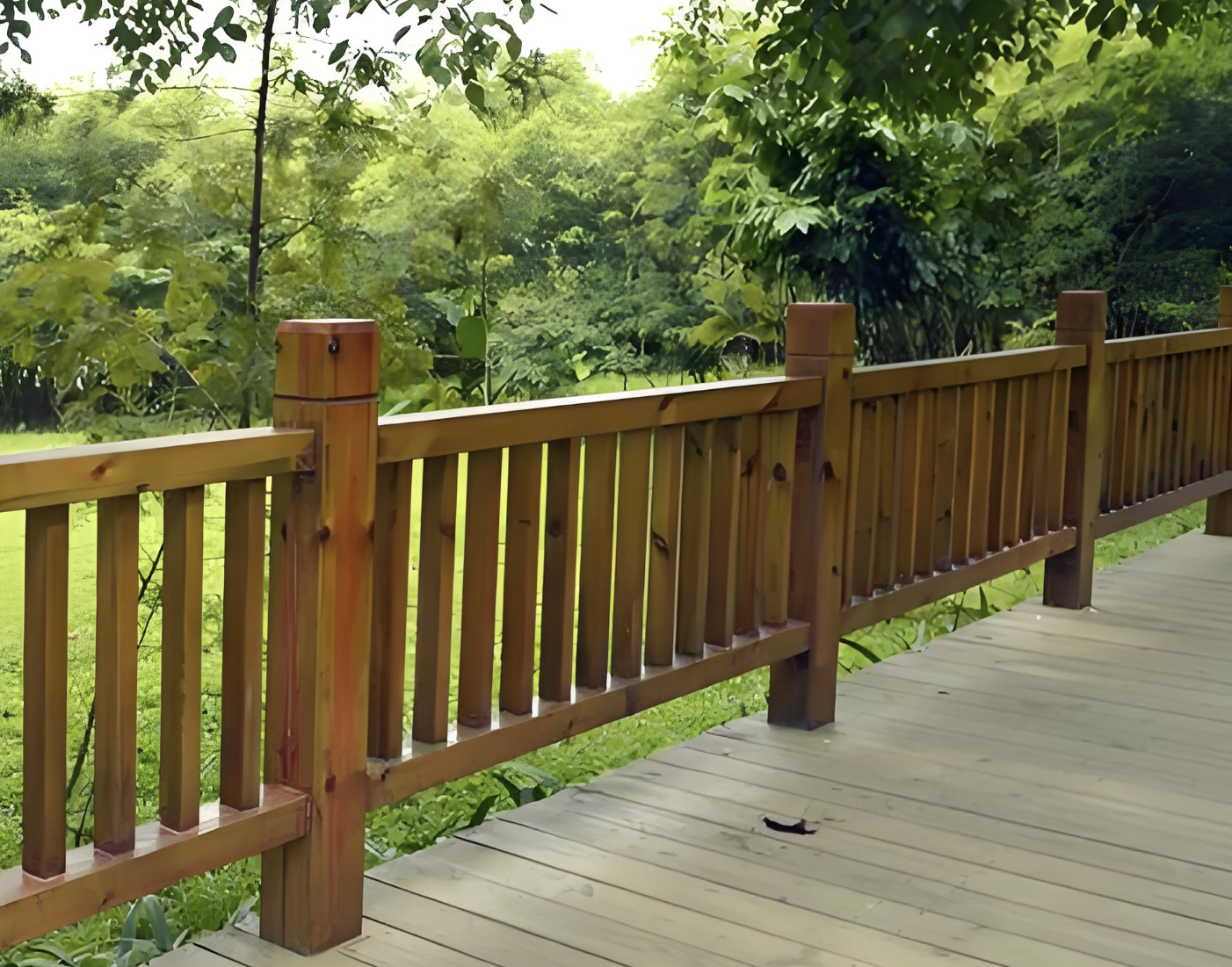
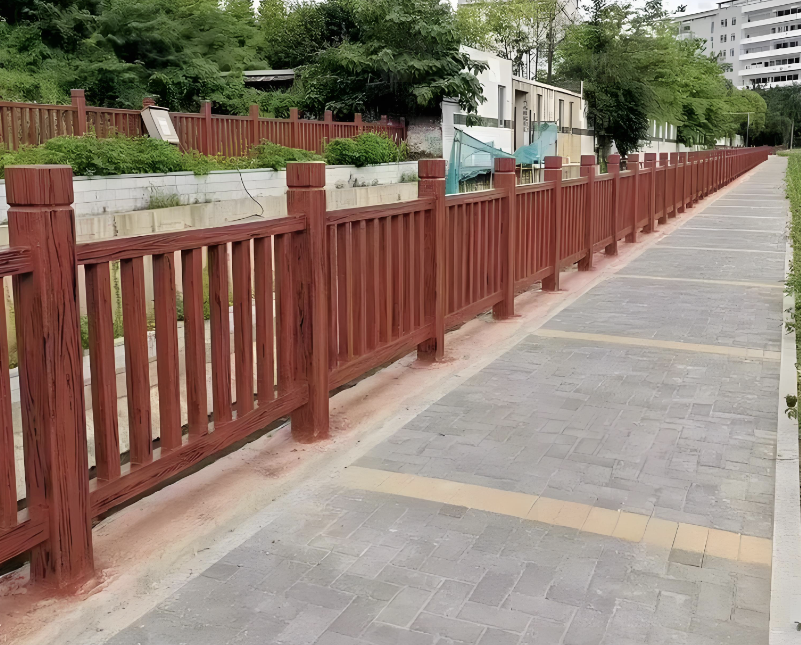


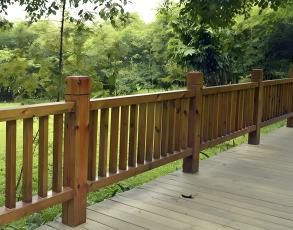
Crafted from FSC-certified pine wood treated with ACQ (ammoniacal copper quat) via pressure impregnation, the NatureGuard guardrail offers 15 years of anti-rot and anti-termite protection, far exceeding the lifespan of untreated wood guardrails. The ACQ treatment is EPA-compliant, non-toxic to plants and wildlife, making it suitable for sensitive ecological areas. The 304 stainless steel hardware prevents rust stains on the wood, maintaining its natural appearance over time. With a lateral load resistance of 1000kg, it can withstand accidental impacts from pedestrians or small vehicles. The modular section design allows for easy adaptation to uneven terrain, such as mountain trails or lakeside slopes. It solves common pain points of traditional wood guardrails, such as rapid rot, termite infestation, and frequent maintenance. Backed by a 15-year anti-rot warranty, it ensures long-term performance in harsh outdoor environments.
Each 2500mm-long section of the NatureGuard guardrail has a standard height of 1100mm, with rail dimensions of 150mm×50mm and support post dimensions of 100mm×100mm. The ACQ pressure impregnation process achieves a minimum treatment depth of 10mm, ensuring full penetration of the eco-friendly preservative. The UV-resistant paint coating has a thickness of 0.5mm, protecting the wood from fading due to sun exposure. The guardrail complies with FSC COC (Chain of Custody) standards, ensuring sustainable wood sourcing, and EPA guidelines for non-toxic preservatives. It undergoes a 2000-hour accelerated aging test without significant rot or deformation. Each section weighs 18kg, making it easy to transport and install in remote scenic areas. Custom height options (900mm-1300mm) are available for special trail sections.
This guardrail is primarily used in natural scenic areas, including mountain trails, forest paths, lakeside walkways, and wetland boardwalks. It protects visitors from accidental falls into valleys, lakes, or steep slopes while maintaining the area’s natural beauty. It is suitable for national parks, provincial scenic areas, eco-tourism resorts, and urban botanical gardens. Park authorities can use it to guide visitor flow along designated trails, preventing off-trail exploration that damages fragile ecosystems. It is also ideal for historic sites or cultural heritage areas, where it provides safety protection without compromising the site’s historical aesthetics. Target industries include eco-tourism, park management, scenic area development, and environmental conservation. Typical clients include national park management bureaus, local tourism boards, and eco-resort operators.








 Post RFQ


 Chat
Chat




 ALL CATEGORIES