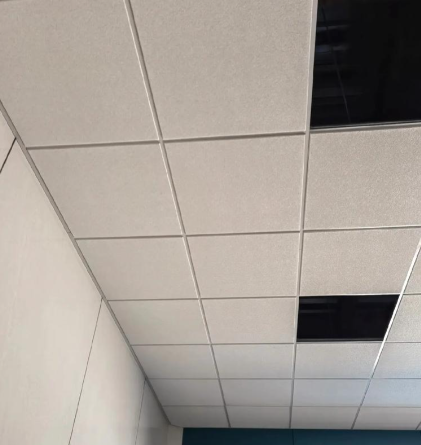
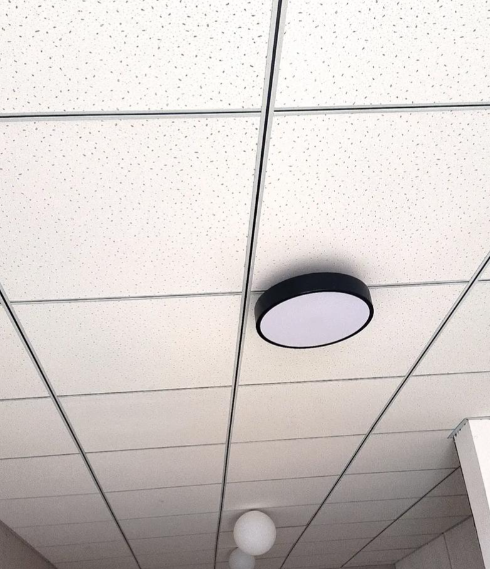



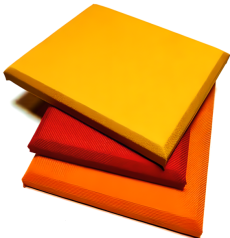
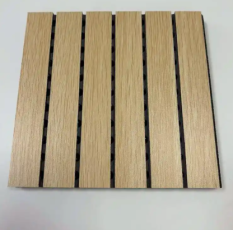
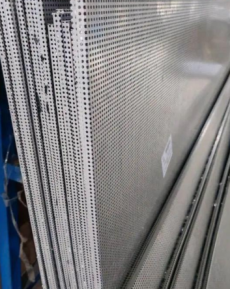

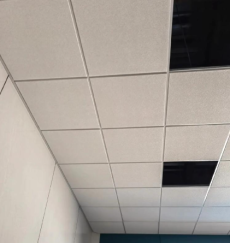
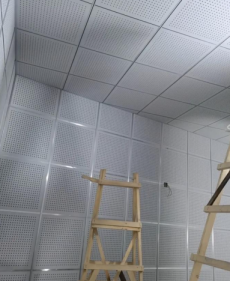
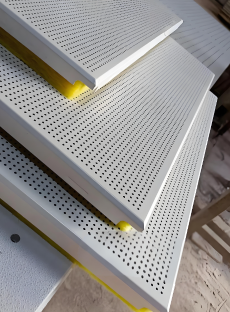
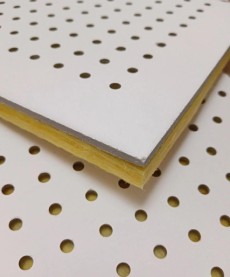
This mineral wool acoustic ceiling panel has multiple core competitive advantages. First, it uses natural basalt mineral wool as raw material, and the fire rating reaches Class A1, which is non-combustible, meeting the fire protection requirements of large public places. Its sound absorption coefficient reaches 0.78 at 500Hz, which can effectively reduce the reverberation noise of large spaces and improve the clarity of speech. It is coated with a waterproof moisture-proof layer, which can adapt to humid environments such as shopping malls and canteens, and will not deform or mold easily. The perforated surface design not only ensures sound absorption performance, but also has a neat and beautiful appearance. The T-bar grid installation method is simple and efficient, and damaged panels can be replaced individually, which is convenient for later maintenance. In addition, it has excellent thermal insulation performance, which can effectively reduce the loss of air conditioning energy.
The standard size of this mineral wool acoustic ceiling panel is 600mm × 600mm, with a single block area of about 3.87 square feet. The thickness is 18mm, and the unit weight is about 1.2kg per piece. The perforation rate is 15%, which can ensure good sound absorption performance. The thermal conductivity is ≤0.038W/(m·K), and the thermal insulation value reaches R-3.2. It has a dust-proof rate of ≥99%, which can effectively reduce the accumulation of dust and facilitate cleaning. It is suitable for all standard T-bar ceiling keel systems on the market, and can be matched with matching installation accessories.
This mineral wool acoustic ceiling panel is widely used in school classrooms, shopping mall atriums, office building ceilings, hospital waiting areas, industrial workshops and other large public indoor spaces. In school classrooms, it can improve the clarity of teaching speech and create a good learning environment for students. In shopping malls and office lobbies, it can reduce the interference of background noise and improve the comfort of the public environment. It can also be used in underground garages and other industrial spaces to reduce the propagation of mechanical noise.









 Post RFQ


 Chat
Chat


 ALL CATEGORIES