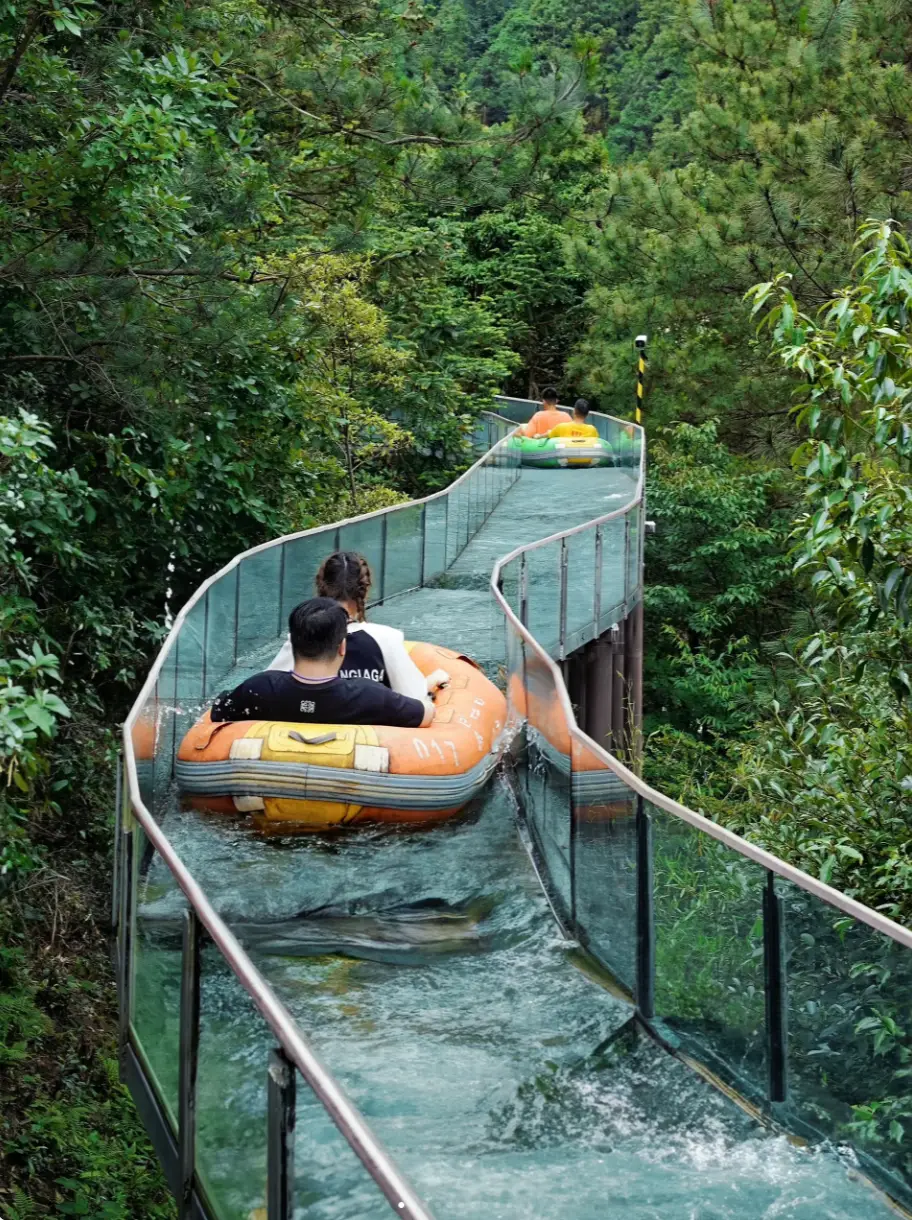
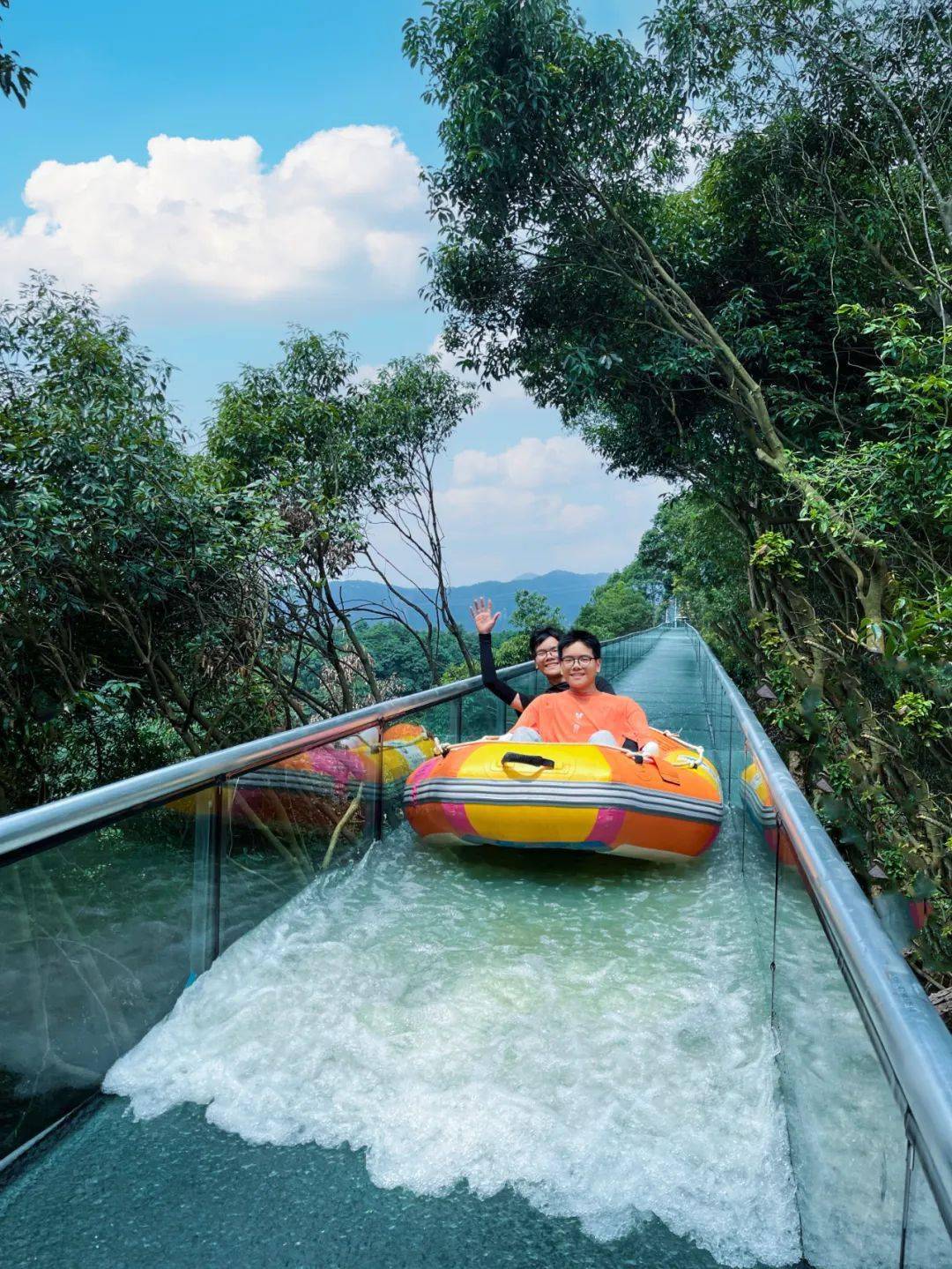





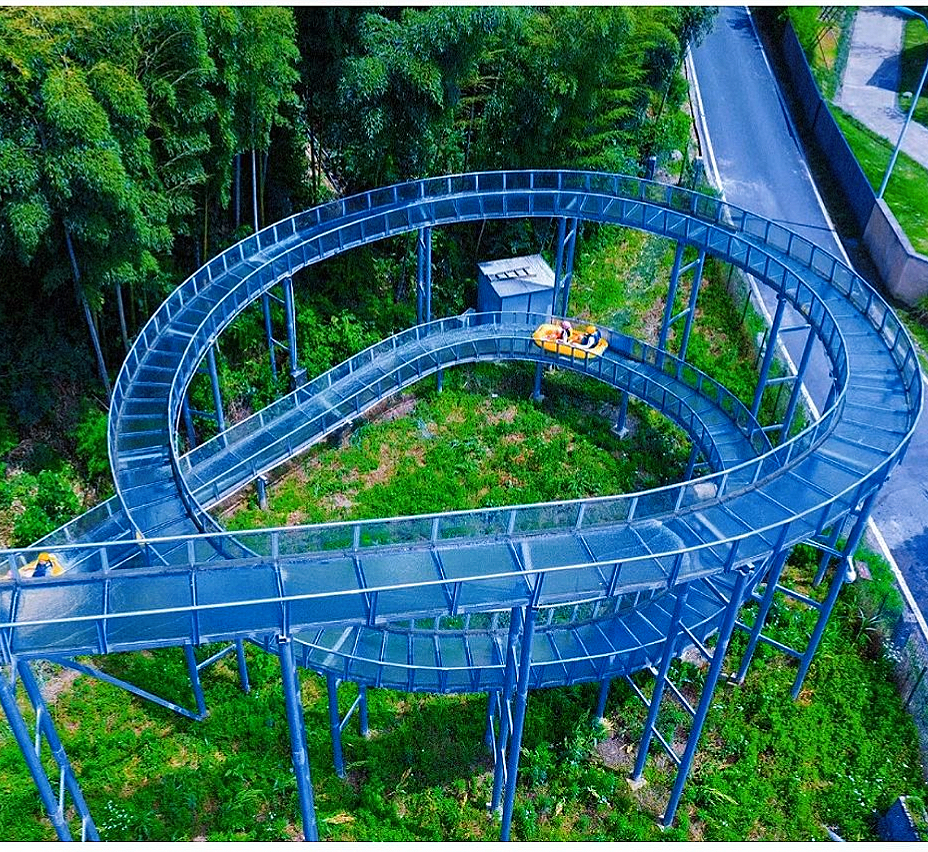
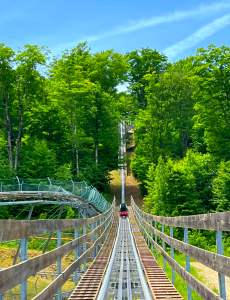
The core competitiveness of this eco-friendly slide lies in its minimal environmental impact and immersive viewing experience. The embedded bracket design uses non-destructive mountain drilling technology, avoiding large-scale excavation of mountain terrain and protecting original vegetation and soil structure. The carbon fiber composite brackets have high strength and light weight, reducing the load on mountain slopes. The 92% high-transmittance tempered glass provides an unobstructed view of forest canopies, bird habitats, and understory ecosystems, integrating entertainment with environmental education. The bottom sound-absorbing cotton reduces sliding noise by 60%, avoiding disturbance to wildlife in the scenic area. Additionally, the solar-powered LED lighting system uses clean energy, reducing carbon emissions by 80% compared to traditional electric lighting. The Carbon Trust certification confirms its low-carbon performance, meeting the development requirements of eco-tourism.
The slide’s total length can be customized from 200 to 1000 meters, with a width of 1.1 meters to balance viewing comfort and environmental adaptability. The main glass material is 7mm tempered glass with a light transmittance of 92%, which can resist UV radiation and prevent yellowing for over 15 years. The slope is set between 10° and 20° to ensure a smooth sliding speed of 6-10 km/h, allowing riders to fully appreciate the surrounding natural scenery. Each scenic view node is a 2-meter-wide platform with a rest area and interpretive signs introducing local plants and animals. The support brackets are made of galvanized steel and carbon fiber composite materials, with a corrosion resistance service life of over 25 years. The solar-powered LED system has a battery life of 12 hours, providing soft warm light for night sliding. The installation period is 25-35 days, with minimal disturbance to the surrounding ecosystem.
This ecosystem-integrated glass water slide is suitable for eco-tourism scenic spots, national forest parks, natural reserve peripheral tourism areas, and ecological education bases. Typical application scenarios include: forest eco-tourism routes, where riders can slide through the forest canopy and learn about local biodiversity; night tourism events, where the solar LED lighting creates a magical forest sliding experience; and environmental education activities for students, combining sliding with popular science lectures on forest protection. It can also be combined with forest hiking, bird watching, and other eco-friendly projects to form a green tourism itinerary. In addition, it is applicable to mountain resorts that focus on eco-living, providing guests with a unique leisure experience close to nature. Its low environmental impact design makes it compliant with the development regulations of natural protected areas.








 Post RFQ


 Chat
Chat


 ALL CATEGORIES