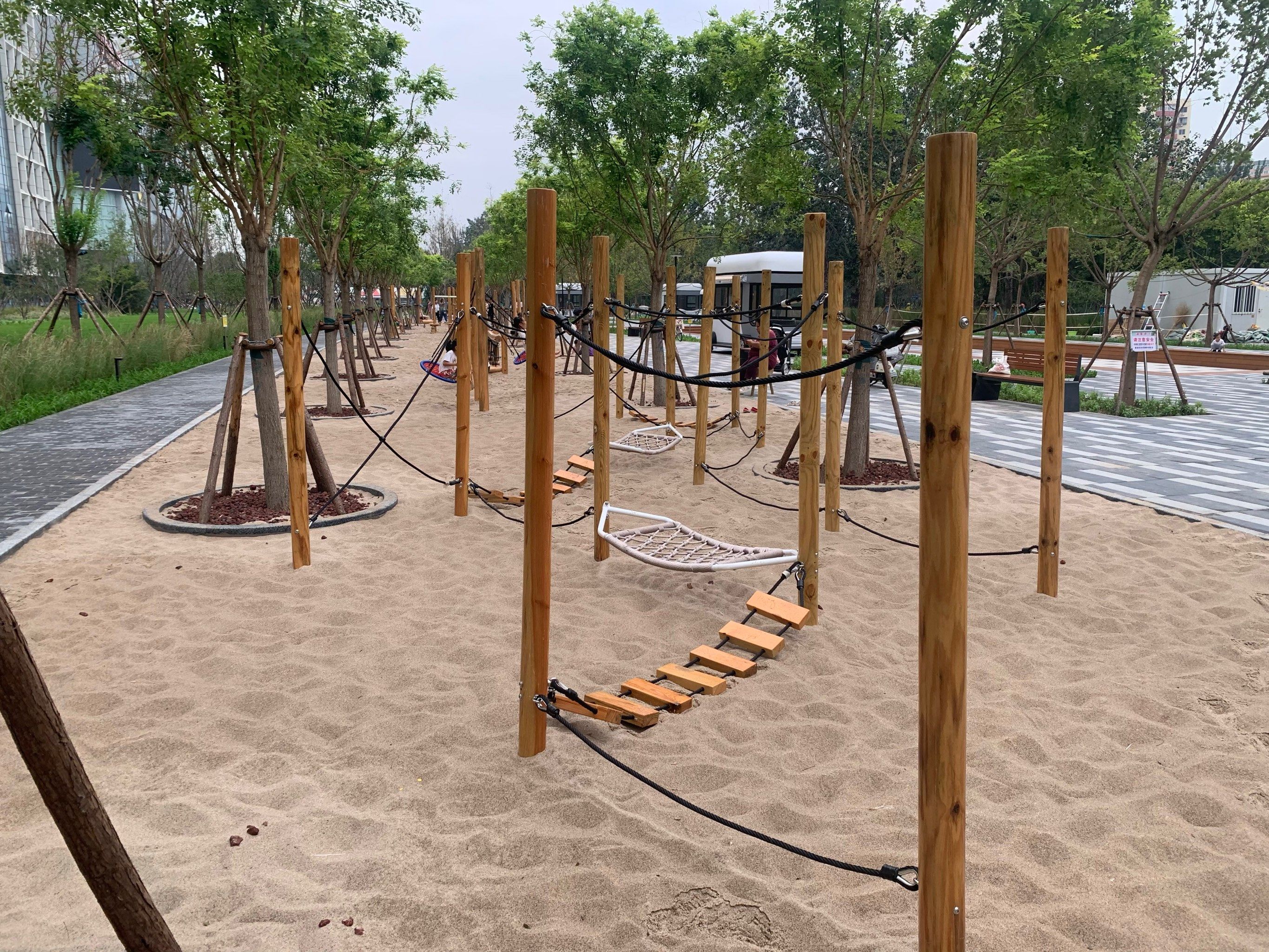
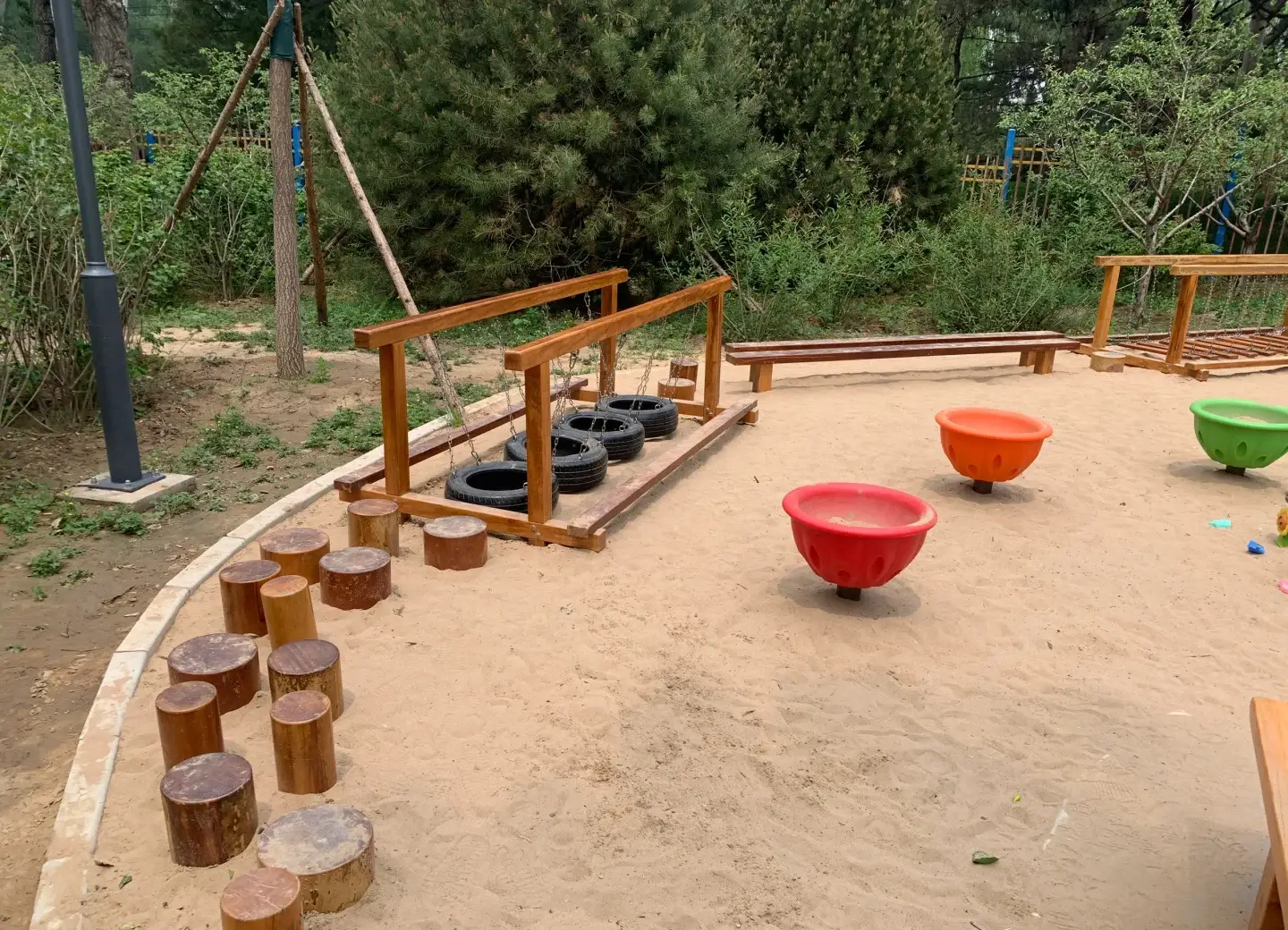



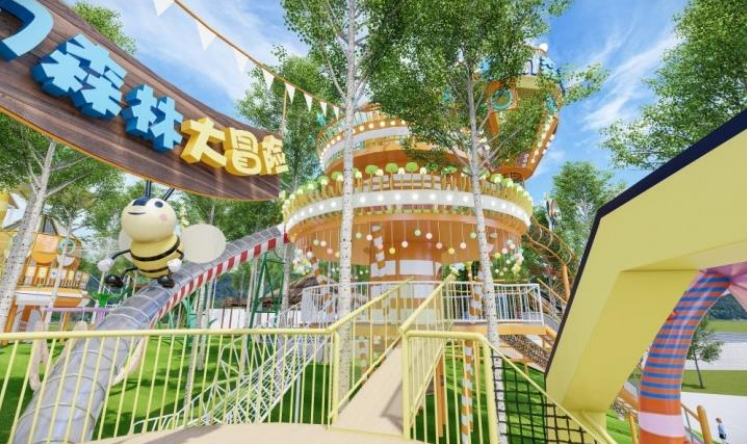
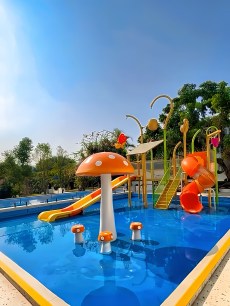
The sand pool is surrounded by 12mm thick eco-friendly HDPE boards, which are non-toxic, tasteless, and resistant to impact and deformation. The inner wall is equipped with a waterproof and leak-proof membrane to prevent sand loss and water seepage. The natural pine wood climbing frame is treated with anti-corrosion and anti-insect processes, ensuring long-term use without decay or moth damage. The water play module adopts a recirculation water system, which saves water resources and keeps the water clean. The small slide is made of soft PVC material, with a smooth surface and a curved design to prevent children from getting hurt during sliding. The sand pool is equipped with a removable cover, which can prevent dust and debris from falling into the sand when not in use, reducing daily maintenance work.
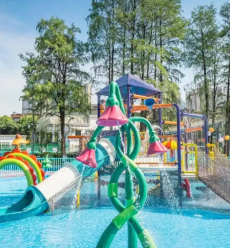
The overall size of the sand pool is 8×7.5 meters, with a depth of 30 cm, and it can hold up to 18 cubic meters of natural play sand. The small slide has a length of 3 meters, a height of 1.2 meters, and a slope of 25 degrees, suitable for toddlers' sliding ability. The pine wood climbing frame has a height of 1.8 meters, with 3 climbing steps and 2 non-slip handles. The water play module includes a 1-meter-high small water tower and 3 curved water pipes, with a water flow rate of 5 liters per minute. The total weight of the equipment is 420 kg, and each part is connected by stainless steel screws, which is firm and stable. The surface of the HDPE board is printed with patterns of small animals and plants, adding fun to the play space. The installation can be completed within 1 day with 2 workers.
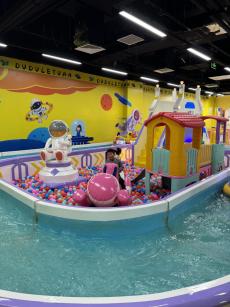
This facility is widely used in urban central parks, commercial plazas, residential communities, and early education centers. In commercial plazas, it can become a traffic attraction, attracting families with children to stay and consume, effectively driving the sales of surrounding businesses. In residential communities, it provides a safe and fun outdoor activity space for children, promoting interaction between neighbors. In early education centers, it can be integrated into sensory training courses to help children develop touch and cognitive abilities through sand and water play. In urban parks, it enriches the types of children's play facilities, making the park more family-friendly. It is recommended to replace the play sand every 6 months and clean the water system once a month to ensure a hygienic play environment.











 Post RFQ


 Chat
Chat


 ALL CATEGORIES