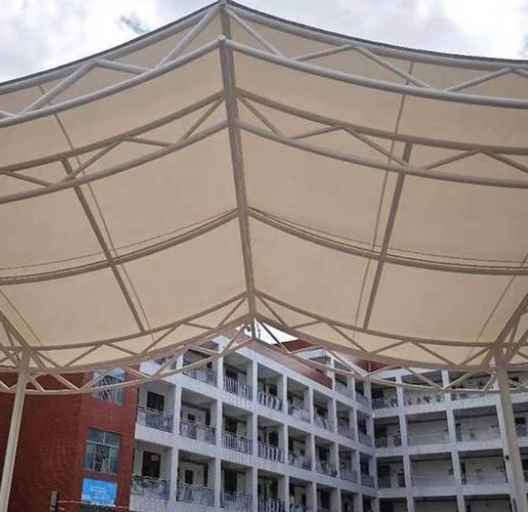
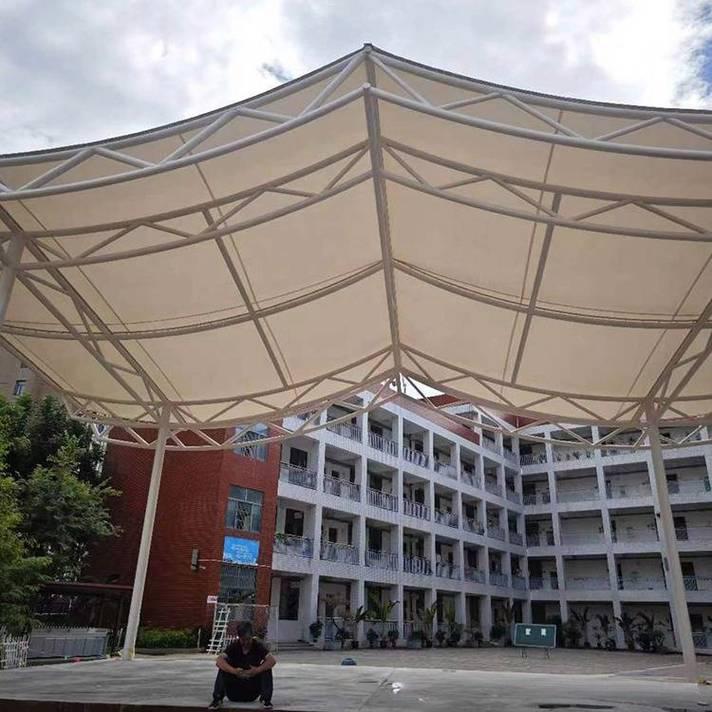


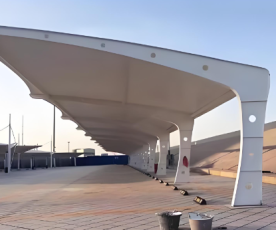
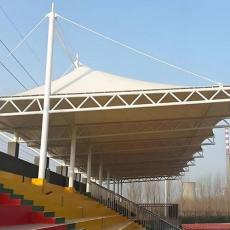
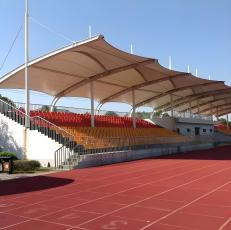
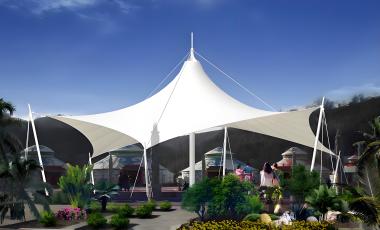
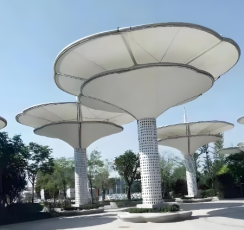
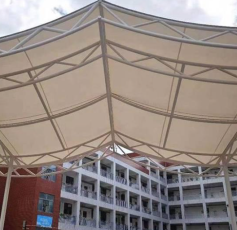

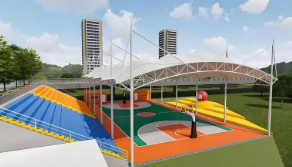
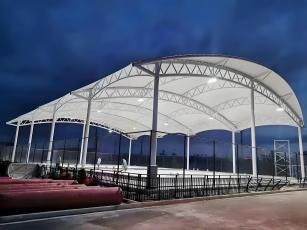
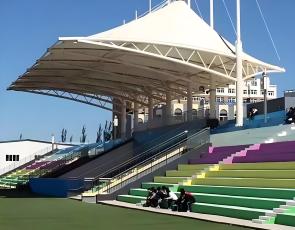
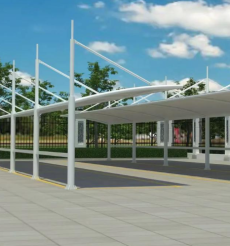
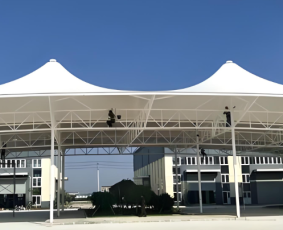
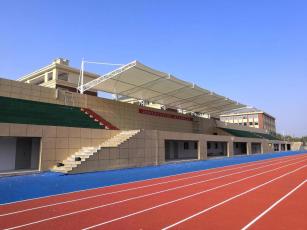
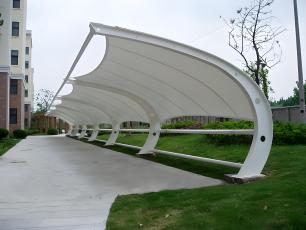
The core advantage of this upgraded stand lies in its all-weather adaptability and campus-specific design. The PVDF membrane material not only has a higher sun shading rate of 95% but also has excellent self-cleaning function, which can automatically remove surface dust through rainwater, reducing later maintenance costs. The use of aluminum alloy joints reduces the overall weight while improving the corrosion resistance of the frame. The side sun blinds can be retracted freely, which can be opened in strong sunlight to block ultraviolet rays and closed in good weather to ensure good ventilation. The built-in drainage gutter can effectively collect rainwater on the membrane surface and discharge it to the ground through supporting pipelines, avoiding water accumulation that may cause membrane damage. It also meets the campus safety standards, with no sharp protrusions on the surface, ensuring the safety of teachers and students during use.
The overall size of this upgraded stand is 18m in length × 5.2m in width × 3.8m in height. The single-row seat spacing is 60cm, and the single seat width is 45cm. The frame steel pipe has a diameter of φ76mm and a wall thickness of 3.0mm, and the aluminum alloy joint has a load-bearing capacity of 500kg per set. The thickness of the PVDF membrane material is 0.9mm, with the tensile strength of 5200N/5cm in the warp direction and 4500N/5cm in the weft direction. The total self-weight is about 420kg. The supporting accessories include 8 sets of retractable side sun blinds, 2 sets of drainage gutters and matching connecting pipelines, as well as safety handrails on both sides of the stand.
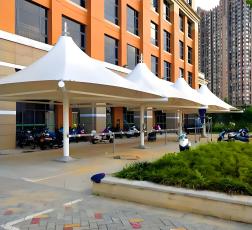
It is mainly applicable to campus outdoor playgrounds, school track and field stadiums, campus activity squares and other school public spaces. It can be used for teachers and students to watch sports competitions, hold school opening ceremonies, parent meetings, outdoor art performances and other activities. It can also be used as a viewing area for school outdoor lectures and summer camp activities. The target users are primary and secondary schools, universities and vocational colleges, which can improve the functional diversity and grade of campus public facilities.











 Post RFQ


 Chat
Chat


 ALL CATEGORIES